Retinoids are among the most powerful and widely used ingredients in modern skincare, known for their ability to improve skin texture, reduce wrinkles, and treat acne. However, their effectiveness comes with an important consideration: increased sensitivity to sunlight. When combined with exposure to ultraviolet (UV) radiation, retinoids can make the skin more vulnerable to damage. Understanding how retinoids interact with the UV index is essential for maintaining healthy skin and avoiding unwanted side effects. Proper use allows you to benefit from retinoids while protecting your skin from harm.
What Are Retinoids
Retinoids are derivatives of vitamin A that promote skin cell turnover and stimulate collagen production. They are commonly used in both over-the-counter and prescription skincare products.
Common Types
- Retinol (milder, widely available)
- Retinal (more potent than retinol)
- Tretinoin (prescription-strength)
- Adapalene (often used for acne treatment)
“Retinoids accelerate skin renewal, but this also makes the skin more sensitive to environmental factors like UV radiation.”
What Is the UV Index
The UV index is a scale that measures the intensity of ultraviolet radiation from the Sun at a given place and time.
UV Index Levels
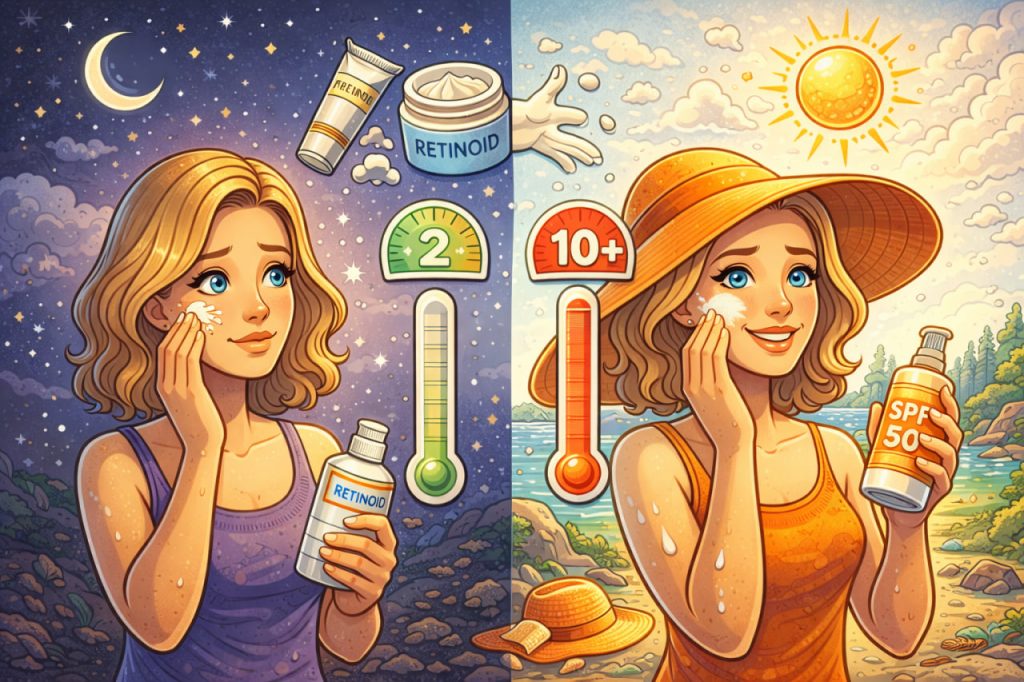
- 0–2 — Low risk
- 3–5 — Moderate
- 6–7 — High
- 8–10 — Very high
- 11+ — Extreme
Higher values mean greater potential for skin damage, including sunburn and long-term aging effects.
How Retinoids Affect Sun Sensitivity
Retinoids increase the rate at which skin cells renew. While this leads to smoother and clearer skin, it also reduces the thickness of the outer protective layer.
Effects
- Increased sensitivity to sunlight
- Higher risk of sunburn
- Greater vulnerability to UV damage
- Temporary redness and irritation
This makes sun protection especially important when using retinoids.
Why UV Protection Is Essential
UV radiation can cause premature aging, pigmentation, and skin damage. When combined with retinoids, these effects can become more pronounced if proper precautions are not taken.
Key Protective Measures
- Use broad-spectrum sunscreen (SPF 30 or higher) daily
- Apply sunscreen even on cloudy days
- Reapply every 2–3 hours when outdoors
- Wear protective clothing and hats
Best Practices for Using Retinoids
To safely use retinoids while minimizing UV-related risks:
Smart Routine
- Apply retinoids at night only
- Start with low concentrations and increase gradually
- Combine with moisturizers to reduce irritation
- Avoid direct sun exposure during peak UV hours
Balancing Benefits and Risks
Retinoids offer significant benefits for skin health, but their proper use requires awareness of environmental factors like the UV index. With the right precautions, they can be safely incorporated into a daily routine without compromising skin protection.
Why It Matters
Understanding the relationship between retinoids and UV exposure helps:
- Prevent skin damage
- Maximize skincare results
- Maintain long-term skin health
Responsible use ensures that retinoids remain one of the most effective tools in skincare.
Interesting Facts
- Retinoids are derived from vitamin A.
- They are considered a gold standard in anti-aging skincare.
- UV radiation is strongest around midday.
- Even indoor light exposure can affect sensitive skin.
- Sunscreen is essential when using active skincare ingredients.
Glossary
- Retinoids — vitamin A derivatives used in skincare.
- UV Index — a measure of ultraviolet radiation intensity.
- SPF — Sun Protection Factor indicating sunscreen effectiveness.
- Collagen — a protein that maintains skin structure.
- Photosensitivity — increased sensitivity to light.