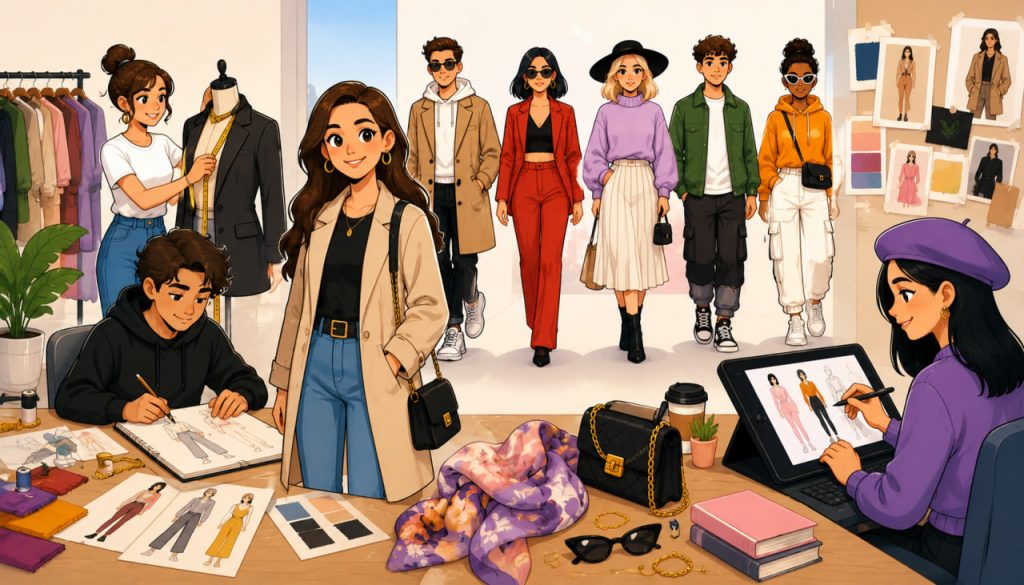
Fashion is much more than:
- Expensive clothing
- Seasonal trends
- Runway shows
Fashion is a complex social phenomenon connected to:
- Identity
- Culture
- Psychology
- Art
- Economics
- Human behavior
Every society throughout history developed its own forms of:
- Dress
- Decoration
- Style
- Appearance rules
Clothing has always communicated important information about:
- Social status
- Profession
- Group identity
- Personality
- Wealth
- Cultural belonging
Modern fashion became one of the world’s largest industries influencing:
- Media
- Entertainment
- Advertising
- Politics
- Social perception
At the same time, fashion also reflects deeper human needs involving:
- Self-expression
- Creativity
- Recognition
- Social acceptance
Scientists, psychologists, historians, and sociologists study fashion because it reveals how humans interact with:
- Society
- Trends
- Identity
- Group behavior
Understanding fashion helps explain why appearance affects:
- Confidence
- First impressions
- Social interaction
- Consumer culture
and why humans constantly reinvent how they present themselves to the world.
What Is Fashion?
Fashion can be defined as:
- Popular styles and trends accepted by society during a certain period of time.
Fashion includes:
- Clothing
- Hairstyles
- Accessories
- Makeup
- Footwear
- Jewelry
It constantly changes as societies evolve.
Unlike simple clothing used only for protection, fashion carries:
- Social meaning
- Symbolism
- Emotional expression
Fashion Exists in Every Culture
Fashion is not a modern invention.
Ancient civilizations including:
- Egypt
- Rome
- China
- Persia
already used clothing to represent:
- Power
- Religion
- Wealth
- Social rank
Kings, priests, warriors, and ordinary citizens often dressed differently according to:
- Social rules
Throughout history, fashion reflected:
- Culture
- Climate
- Technology
- Economy
Why Humans Care About Appearance
Humans are highly social creatures.
The brain naturally evaluates:
- Appearance
- Body language
- Clothing
very quickly.
Psychologists believe clothing helps humans communicate:
- Identity
- Group membership
- Personality
- Status
without words.
Fashion therefore functions partly as:
- Nonverbal communication.
Fashion and Self-Expression
Many people use fashion to express:
- Mood
- Creativity
- Lifestyle
- Beliefs
- Personality
Clothing choices may reflect:
- Confidence
- Rebellion
- Elegance
- Simplicity
- Professionalism
Fashion allows individuals to create a visual identity recognized by:
- Society
- Friends
- Social groups
Why Fashion Trends Change
Fashion constantly changes because humans balance two opposite desires:
- Wanting to belong
- Wanting to stand out
People often imitate popular styles to:
- Feel socially accepted
At the same time:
- Individuals also seek uniqueness
This creates endless cycles of:
- Trends
- Innovation
- Cultural shifts
Fashion industries continuously introduce new styles partly to:
- Maintain consumer interest.
The Psychology of Fashion
Clothing affects not only:
- How others perceive a person
but also:
- How individuals feel about themselves
Psychologists call this:
- Enclothed cognition
Research suggests clothing may influence:
- Confidence
- Mood
- Attention
- Behavior
For example:
- Formal clothing may increase feelings of professionalism
- Athletic wear may encourage active behavior
Fashion therefore affects both:
- External perception
and: - Internal psychology.
Fashion and Social Status
Historically, fashion often signaled:
- Wealth
- Power
- Class
Rare fabrics and expensive materials were once available mainly to:
- Nobility
- Royal families
Even today, luxury brands frequently function as:
- Status symbols
Behavioral economists study how fashion relates to:
- Consumer psychology
- Social competition
- Identity signaling
Fashion Became a Global Industry
Modern fashion is now a massive international business involving:
- Designers
- Manufacturers
- Marketing
- Social media
- Celebrity culture
Fashion weeks in cities such as:
- Paris
- Milan
- New York
- London
influence global trends.
The fashion industry generates:
- Hundreds of billions of dollars annually
and strongly shapes:
- Popular culture.
Social Media Changed Fashion Completely
Platforms such as:
- TikTok
- YouTube
dramatically accelerated fashion trends.
Styles now spread globally within:
- Hours or days
instead of:
- Years
Influencers and celebrities strongly affect:
- Consumer behavior
- Fashion popularity
- Brand visibility
This created an era of:
- Fast fashion
- Rapid trend cycles
- Constant visual comparison.
The Rise of Fast Fashion
Fast fashion refers to:
- Rapid low-cost clothing production
designed to follow constantly changing trends.
Although fast fashion makes clothing cheaper and more accessible, critics raise concerns involving:
- Environmental damage
- Waste
- Labor conditions
- Overconsumption
Fashion therefore also became connected to:
- Sustainability debates.
Fashion and Identity
Fashion often helps people feel connected to:
- Communities
- Subcultures
- Social movements
Examples include:
- Punk fashion
- Hip-hop style
- Gothic aesthetics
- Business fashion
- Streetwear culture
Clothing becomes part of:
- Social identity formation.
Why Uniforms Matter
Uniforms are specialized forms of fashion designed for:
- Group identity
- Authority
- Functionality
Examples include:
- Military uniforms
- Medical clothing
- School uniforms
- Police uniforms
Uniforms immediately communicate:
- Role
- Responsibility
- Profession
to society.
Fashion and Gender
Fashion also reflects changing social ideas about:
- Masculinity
- Femininity
- Beauty
- Identity
Clothing norms changed dramatically throughout history.
Styles once considered:
- Unacceptable
or: - Radical
sometimes later became:
- Mainstream fashion.
Expert Opinion on Fashion Psychology
Psychologist Carolyn Mair explained:
“Fashion is one of the most immediate ways we express identity and communicate with others.”
Modern research increasingly supports the idea that fashion strongly influences:
- Social behavior
- Emotional perception
- Self-image
more deeply than many people realize.
Why Fashion Is More Than Clothing
Fashion combines:
- Art
- Psychology
- Sociology
- Business
- Culture
- Human biology
It affects:
- Confidence
- Social perception
- Communication
- Identity
- Consumer behavior
Fashion constantly evolves because human society itself constantly changes.
Even though trends may appear temporary, fashion reflects enduring human desires involving:
- Belonging
- Recognition
- Creativity
- Self-expression
In many ways, fashion became a visual language through which humanity communicates identity to the world.
Interesting Facts
- Ancient civilizations already used fashion to display social status.
- Fashion trends spread much faster because of social media.
- Clothing may psychologically affect confidence and behavior.
- Luxury fashion often functions as social signaling.
- The global fashion industry is worth hundreds of billions of dollars.
Glossary
- Fashion — Popular style accepted during a certain period.
- Enclothed Cognition — Psychological influence of clothing on thinking and behavior.
- Fast Fashion — Rapid mass production of trendy inexpensive clothing.
- Social Signaling — Communicating status or identity through appearance or behavior.
- Subculture — Smaller social group with distinct values or style.