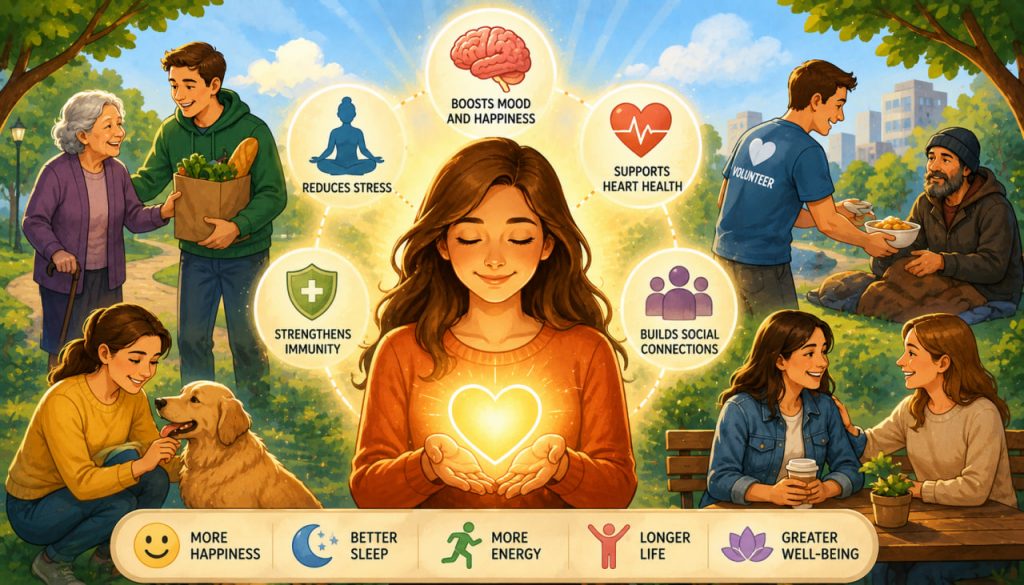
Kindness is often viewed as a moral virtue, a social skill, or simply a way to make the world a better place. However, modern research suggests that kindness may also have measurable effects on:
- Physical health
- Mental well-being
- Stress levels
- Longevity
- Social relationships
Acts of kindness can range from:
- Helping a stranger
- Supporting a friend
- Volunteering
- Donating to charity
- Offering encouragement
While these actions benefit others, scientists have discovered that they can also benefit the person performing them.
Researchers in psychology, neuroscience, and medicine increasingly study how prosocial behavior influences:
- The brain
- Hormones
- The immune system
- Overall health
The results suggest that kindness is more than just a social nicety—it may be an important factor in human well-being.
What Is Kindness?
Kindness refers to actions intended to:
- Help others
- Reduce suffering
- Promote well-being
Kind acts may be:
- Small and everyday
- Planned and deliberate
- Spontaneous and unexpected
Examples include:
- Holding a door open
- Listening to someone in need
- Helping a coworker
- Volunteering in the community
Kindness strengthens social bonds and encourages cooperation, which has helped humans survive and thrive throughout history.
Kindness and the Brain
When people perform acts of kindness, the brain often releases chemicals associated with:
- Reward
- Pleasure
- Social connection
These include:
- Dopamine
- Serotonin
- Oxytocin
Dopamine contributes to feelings of satisfaction and motivation.
Serotonin helps regulate:
- Mood
- Emotional stability
Oxytocin is sometimes called:
- The “bonding hormone”
because it strengthens trust and social connection.
Together, these chemicals can create positive emotional experiences after helping others.
Kindness Can Reduce Stress
Chronic stress affects millions of people worldwide.
Long-term stress may contribute to:
- Anxiety
- Depression
- Heart disease
- Sleep problems
- Weakened immunity
Research suggests that helping others may reduce stress responses.
Acts of kindness can promote:
- Feelings of control
- Positive emotions
- Social support
which may help buffer the effects of stressful situations.
Some studies have found that people who regularly volunteer report:
- Lower stress levels
- Greater life satisfaction
than those who do not.
Social Connection Improves Health
Humans are highly social beings.
Strong social relationships are linked to:
- Better mental health
- Lower mortality risk
- Improved resilience
Kindness helps build and maintain these relationships.
When individuals show compassion and support, they often strengthen:
- Friendships
- Family bonds
- Community connections
These social networks can provide emotional support during difficult times.
Kindness and Heart Health
Researchers have investigated possible links between kindness and:
- Cardiovascular health
Some evidence suggests that positive social interactions may help lower:
- Blood pressure
- Stress hormone levels
Oxytocin released during positive social experiences may contribute to:
- Relaxation
- Improved blood vessel function
Although kindness alone is not a substitute for healthy lifestyle habits, it may support overall cardiovascular well-being.
The “Helper’s High”
Psychologists sometimes describe a phenomenon called:
- The helper’s high
This refers to positive feelings experienced after helping others.
People often report:
- Happiness
- Warmth
- Increased energy
- Greater purpose
following acts of generosity.
Researchers believe this effect is linked to changes in brain chemistry involving:
- Dopamine
- Endorphins
which are associated with reward and pleasure.
Kindness and Mental Health
Mental health benefits are among the most consistently observed effects of kindness.
Studies suggest that helping others may contribute to:
- Reduced loneliness
- Improved mood
- Greater self-esteem
- Increased life satisfaction
Acts of kindness may also shift attention away from:
- Negative thoughts
- Excessive self-focus
allowing people to feel more connected to others.
Volunteering and Longevity
Several studies have found associations between volunteering and:
- Longer life expectancy
The reasons are likely complex and may involve:
- Increased social engagement
- Physical activity
- Purpose and meaning
- Reduced isolation
Researchers caution that correlation does not necessarily prove causation, but the relationship appears consistently positive.
Kindness May Support the Immune System
Scientists continue exploring how emotions and behavior influence immunity.
Positive social experiences may help reduce:
- Chronic stress
which can negatively affect immune function.
Lower stress levels are often associated with:
- Better immune responses
- Improved recovery
- Greater resilience
Although more research is needed, kindness may indirectly support immune health through its effects on stress and emotional well-being.
Kindness Is Contagious
One fascinating aspect of kindness is that it often spreads.
When people witness acts of kindness, they may become more likely to:
- Help others
- Cooperate
- Behave generously
This phenomenon creates positive ripple effects throughout:
- Families
- Workplaces
- Communities
A single kind act may influence far more people than the original participants realize.
Small Acts Matter
Many people assume kindness requires:
- Major sacrifices
- Large donations
- Extraordinary efforts
In reality, even small actions can make a difference.
Examples include:
- Smiling at someone
- Offering encouragement
- Expressing gratitude
- Listening attentively
These simple behaviors may improve both:
- The recipient’s day
- The giver’s well-being
Kindness Toward Yourself
Health experts increasingly emphasize:
- Self-compassion
Being kind to oneself involves:
- Accepting imperfections
- Avoiding excessive self-criticism
- Practicing healthy boundaries
Research suggests self-compassion may contribute to:
- Better emotional resilience
- Reduced anxiety
- Improved mental health
Kindness is therefore valuable both:
- Toward others
- Toward oneself
Expert Opinion on Kindness and Health
Psychologist Sonja Lyubomirsky has stated:
“Engaging in acts of kindness can increase happiness and strengthen social connections.”
Her research has helped demonstrate that intentional kindness can positively influence psychological well-being.
Why Kindness Matters
Kindness is often viewed as an ethical choice, but scientific research suggests it may also be:
- Beneficial for health
- Good for mental well-being
- Supportive of social relationships
Acts of kindness can influence:
- Brain chemistry
- Stress levels
- Emotional resilience
- Social connectedness
While kindness cannot replace:
- Exercise
- Healthy nutrition
- Medical care
it may complement these factors by supporting overall well-being.
In a world where stress and isolation are common challenges, kindness remains one of the simplest and most accessible ways to improve both individual and community health.
Interesting Facts
- The brain releases reward-related chemicals during acts of kindness.
- Volunteering has been associated with improved well-being and longevity.
- Oxytocin released during positive social interactions may help reduce stress.
- Kindness can encourage others to behave more generously.
- Even small acts of kindness can improve mood and social connection.
Glossary
- Oxytocin — Hormone associated with bonding, trust, and social connection.
- Dopamine — Neurotransmitter involved in reward and motivation.
- Serotonin — Chemical that helps regulate mood and emotional balance.
- Prosocial Behavior — Actions intended to benefit other people.
- Self-Compassion — Treating oneself with understanding and kindness during difficulties.