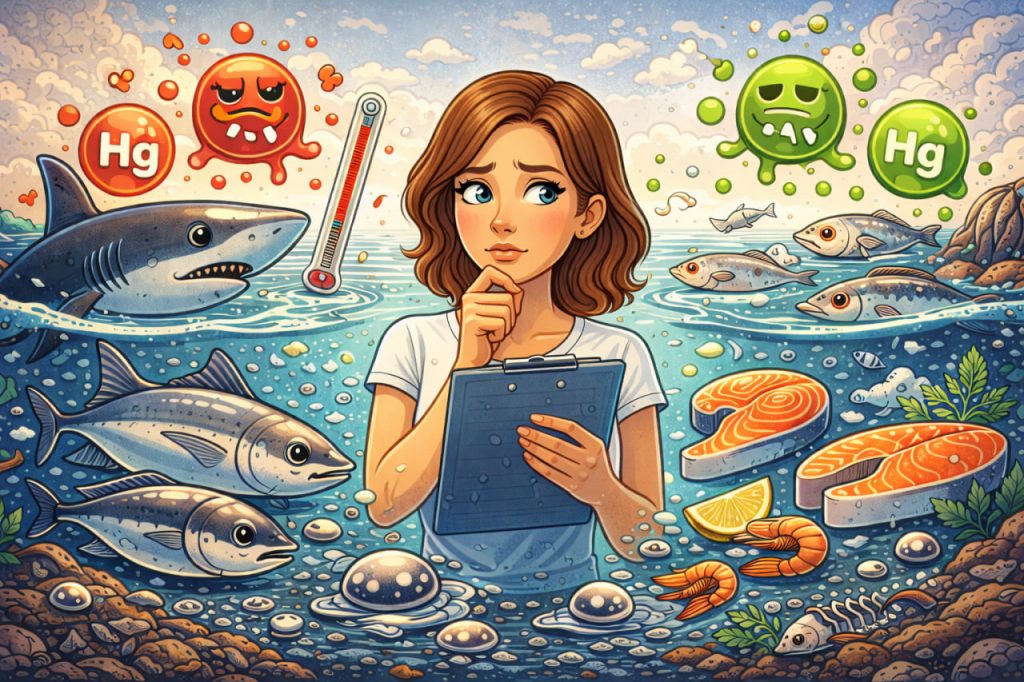
Seafood is widely considered a healthy and nutritious part of the diet, rich in protein, omega-3 fatty acids, and essential minerals. However, it can also be a source of mercury, a toxic element that accumulates in marine ecosystems. Understanding how mercury enters seafood and how it affects human health is essential for making safe and informed dietary choices. The key is not to avoid seafood entirely, but to know which types are safer and how often they should be consumed.
How Mercury Gets Into Seafood
Mercury enters oceans through both natural processes and human activities such as industrial emissions and coal burning. In water, it is converted by microorganisms into methylmercury, the most toxic form.
The Process
- Mercury enters water systems
- Microorganisms convert it into methylmercury
- Small organisms absorb it
- Fish eat smaller organisms
This leads to biomagnification, where mercury concentrations increase at each level of the food chain.
“The higher a fish is in the food chain, the more mercury it tends to contain.”
Which Seafood Contains the Most Mercury
Not all seafood is equally affected. Larger, long-living predatory fish tend to accumulate the highest levels.
High Mercury Fish
- Shark
- Swordfish
- King mackerel
- Tuna (especially large species)
These species live longer and consume many smaller fish, leading to higher toxin buildup.
Low Mercury and Safer Choices
Many types of seafood are low in mercury and can be safely included in a balanced diet.
Safer Options
- Salmon
- Sardines
- Shrimp
- Cod
- Anchovies
These species are generally smaller, have shorter lifespans, and accumulate less mercury.
Health Effects of Mercury
Methylmercury is a neurotoxin, meaning it affects the brain and nervous system.
Potential Risks
- Impaired brain development in children
- Memory and concentration problems
- Damage to the nervous system
- Cardiovascular effects
Pregnant women and young children are especially vulnerable, as mercury can affect developing brains.
Balancing Benefits and Risks
Seafood also provides important health benefits, especially omega-3 fatty acids, which support heart and brain health.
Smart Guidelines
- Choose low-mercury fish regularly
- Limit consumption of high-mercury species
- Vary seafood choices
- Follow dietary recommendations for sensitive groups
This balanced approach allows you to gain nutritional benefits while minimizing risks.
Global Monitoring and Safety
Many countries monitor mercury levels in seafood and provide guidelines for safe consumption. International efforts aim to reduce mercury pollution through agreements like the Minamata Convention.
Why It Matters
Understanding mercury in seafood helps protect:
- Human health, especially for vulnerable groups
- Food safety and nutrition
- Long-term environmental balance
Making informed choices ensures that seafood remains a healthy and sustainable part of the diet.
Interesting Facts
- Mercury accumulates more in large predatory fish.
- Cooking does not remove mercury from fish.
- Methylmercury easily passes into the human bloodstream.
- Oceans receive mercury from both natural and human sources.
- Some fish are both high in nutrients and low in mercury.
Glossary
- Mercury — a toxic metal found in the environment.
- Methylmercury — the most dangerous form of mercury in food.
- Biomagnification — increase of toxin levels up the food chain.
- Neurotoxin — a substance harmful to the nervous system.
- Omega-3 Fatty Acids — beneficial fats found in fish.