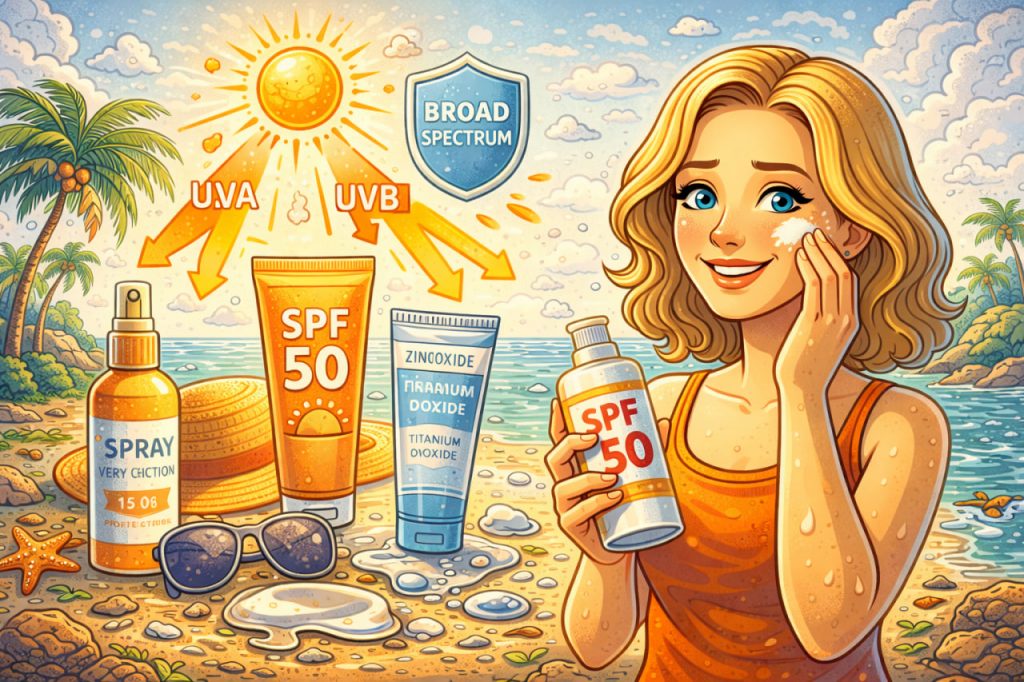
Sunscreens are one of the most important tools in protecting the skin from ultraviolet (UV) radiation, which can cause sunburn, premature aging, and increase the risk of skin cancer. While sunlight is essential for life, excessive exposure can damage skin cells at the molecular level. Sunscreens act as a protective barrier, helping to reduce this damage and maintain long-term skin health. Understanding how sunscreens work and how to use them correctly is key to effective protection.
What Is Sunscreen
Sunscreen is a product designed to protect the skin from harmful UV rays. It works by either absorbing or reflecting radiation, depending on its formulation.
Types of UV Radiation
- UVA — penetrates deeply, causing aging and wrinkles
- UVB — affects the surface, causing sunburn
- UVC — mostly absorbed by Earth’s atmosphere
A good sunscreen protects against both UVA and UVB, often labeled as “broad-spectrum.”
How Sunscreens Work
There are two main types of sunscreens:
Chemical Sunscreens
- Absorb UV radiation and convert it into heat
- Lightweight and easy to apply
- Often invisible on the skin
Physical (Mineral) Sunscreens
- Reflect and scatter UV rays
- Contain ingredients like zinc oxide or titanium dioxide
- Suitable for sensitive skin
“The best sunscreen is the one you use consistently and correctly.”
What Does SPF Mean
SPF stands for Sun Protection Factor, indicating how well a sunscreen protects against UVB radiation.
SPF Levels
- SPF 15 — blocks about 93% of UVB rays
- SPF 30 — blocks about 97%
- SPF 50 — blocks about 98%
Higher SPF offers slightly more protection, but no sunscreen blocks 100% of UV radiation.
Why Sunscreen Is Essential
Regular sunscreen use helps prevent:
- Sunburn
- Premature aging (wrinkles, dark spots)
- Skin cancer risk
- Hyperpigmentation
Even on cloudy days, UV radiation can reach the skin, making daily use important.
How to Use Sunscreen Correctly
Proper application is just as important as the product itself.
Best Practices
- Apply sunscreen 15–20 minutes before sun exposure
- Use enough to cover all exposed skin
- Reapply every 2 hours, or after swimming or sweating
- Do not forget areas like ears, neck, and hands
Common Mistakes
Many people use sunscreen incorrectly, reducing its effectiveness.
- Applying too little
- Not reapplying
- Skipping cloudy days
- Ignoring expiration dates
Avoiding these mistakes ensures better protection.
Sunscreen and Skin Health
Sunscreen is not only about preventing burns—it is a key part of long-term skin care. Combined with other protective measures like hats and shade, it helps maintain healthy, resilient skin over time.
Why It Matters
Sunscreen protects one of the body’s largest organs—the skin. By reducing UV damage, it supports both health and appearance, making it a daily essential rather than an occasional product.
Interesting Facts
- UV rays can penetrate clouds and windows.
- Skin damage can occur in as little as 15 minutes.
- Sunscreen should be used year-round, not just in summer.
- Water reflects sunlight, increasing exposure.
- Daily sunscreen use can significantly reduce skin aging signs.
Glossary
- Sunscreen — a product that protects skin from UV radiation.
- SPF — Sun Protection Factor measuring UVB protection.
- UVA/UVB — types of ultraviolet radiation affecting the skin.
- Broad-Spectrum — protection against both UVA and UVB rays.
- Hyperpigmentation — darkening of skin due to excess pigment.