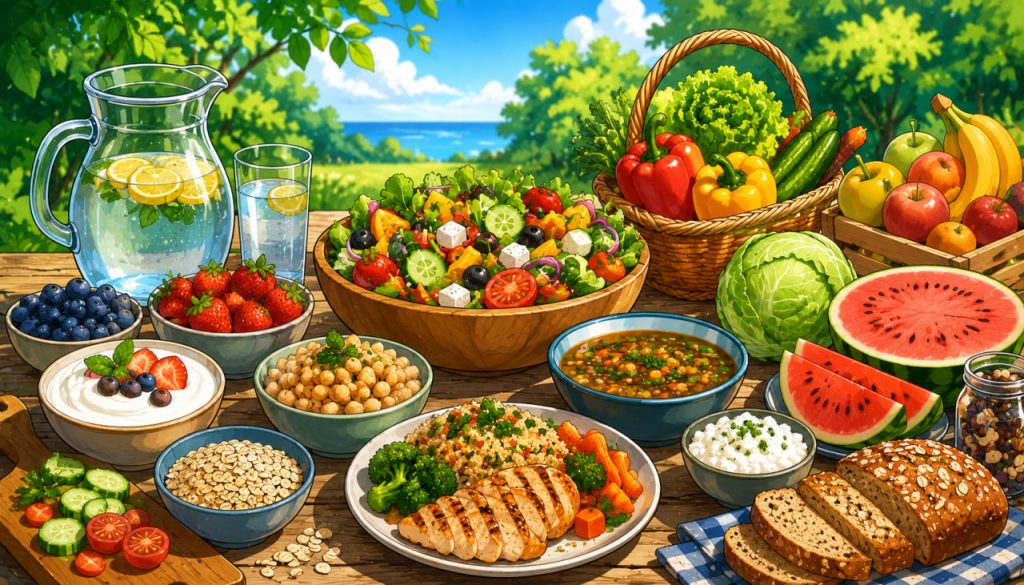
Healthy eating is often associated with:
- Expensive products
- Trendy diets
- Superfoods
- Luxury organic stores
However, nutrition experts increasingly emphasize that a healthy diet does not need to be:
- Complicated
or: - Extremely expensive
Summer is actually one of the best seasons for creating a:
- Budget-friendly healthy diet
because many nutritious foods become:
- Cheaper
- Fresher
- More accessible
Seasonal vegetables, fruits, grains, legumes, and simple protein sources can provide:
- Vitamins
- Fiber
- Protein
- Minerals
- Hydration
without requiring large financial costs.
A well-planned affordable summer diet may help improve:
- Energy levels
- Digestion
- Hydration
- Weight control
- Overall health
At the same time, avoiding excessive processed food can reduce:
- Sugar intake
- Unhealthy fats
- Artificial additives
Understanding how to eat healthy on a budget helps people build sustainable eating habits instead of following:
- Temporary restrictive diets.
Why Summer Is Ideal for Healthy Eating
During summer:
- Fresh produce becomes widely available
Many fruits and vegetables become:
- Less expensive
- More nutritious
- Easier to prepare
Hot weather also naturally encourages lighter meals involving:
- Salads
- Fruits
- Cold dishes
- Hydrating foods
This season often reduces cravings for:
- Heavy high-calorie foods.
Healthy Eating Does Not Require Expensive Superfoods
Many marketing campaigns promote:
- Exotic berries
- Expensive supplements
- Trendy “superfoods”
Yet affordable foods often provide excellent nutrition.
Examples include:
- Oats
- Eggs
- Beans
- Cabbage
- Carrots
- Seasonal berries
- Potatoes
- Rice
- Yogurt
Nutrition depends more on:
- Overall balance
than: - Expensive branding.
Seasonal Vegetables Save Money
Summer vegetables are often:
- Affordable
- Nutritious
- Versatile
Budget-friendly options include:
- Tomatoes
- Cucumbers
- Zucchini
- Cabbage
- Carrots
- Beets
- Bell peppers
These foods contain important:
- Fiber
- Vitamins
- Antioxidants
- Water
Seasonal local produce is often cheaper because:
- Transportation and storage costs are lower.
Fruits Provide Natural Sweetness
Summer fruits help reduce dependence on:
- Processed desserts
- Sugary drinks
Affordable healthy fruits may include:
- Watermelon
- Apples
- Bananas
- Peaches
- Seasonal berries
These foods contain:
- Vitamins
- Natural sugars
- Hydration
- Fiber
Fruit may help satisfy sweet cravings more healthfully than:
- Ultra-processed snacks.
Protein Does Not Have to Be Expensive
Protein is essential for:
- Muscles
- Hormones
- Immune function
- Cell repair
Yet healthy protein sources do not always require:
- Expensive meat products
Affordable protein options include:
- Eggs
- Lentils
- Beans
- Cottage cheese
- Yogurt
- Chicken
- Canned fish
Legumes especially provide:
- Protein
- Fiber
- Long-lasting fullness
at relatively low cost.
Whole Grains Help Maintain Energy
Simple carbohydrates such as:
- Sugary snacks
- White pastries
often cause:
- Energy crashes
Whole grains provide more stable energy because they digest more slowly.
Budget-friendly options include:
- Oatmeal
- Brown rice
- Buckwheat
- Whole grain bread
- Pasta
These foods are:
- Filling
- Affordable
- Easy to prepare.
Hydration Is Extremely Important in Summer
Hot weather increases:
- Water loss through sweating
Dehydration may cause:
- Fatigue
- Headaches
- Poor concentration
- Weakness
Water remains the best hydration source.
Experts often recommend limiting:
- Sugary sodas
- Excessive energy drinks
Fresh fruit, vegetables, and homemade cold teas may also help support hydration.
Processed Foods Often Cost More Long-Term
Cheap processed food sometimes appears:
- Convenient
but excessive consumption may contribute to:
- Obesity
- Diabetes
- Cardiovascular disease
- Digestive problems
Highly processed snacks often provide:
- Large calories
- Low nutritional value
Simple homemade meals are frequently:
- Healthier
- More filling
- More economical over time.
Meal Planning Saves Money
One of the best strategies for healthy affordable eating is:
- Meal planning
Planning meals helps reduce:
- Impulse purchases
- Food waste
- Unnecessary restaurant spending
Cooking larger portions may also reduce:
- Daily preparation costs.
Simple ingredients can create many healthy dishes.
Affordable Healthy Summer Meal Ideas
Examples of inexpensive healthy summer meals include:
- Vegetable salads with eggs
- Oatmeal with fruit
- Rice with beans and vegetables
- Yogurt with berries
- Chicken with seasonal vegetables
- Lentil soup
- Cottage cheese with fruit
These meals combine:
- Protein
- Fiber
- Vitamins
- Healthy carbohydrates
without requiring expensive ingredients.
Why Fiber Matters
Fiber supports:
- Digestion
- Blood sugar regulation
- Satiety
- Gut health
Budget-friendly fiber sources include:
- Vegetables
- Fruits
- Legumes
- Whole grains
Many modern diets lack sufficient fiber because of:
- Ultra-processed food consumption.
Expert Opinion on Healthy Eating
Nutrition scientist Walter Willett explained:
“Healthy diets can be affordable and accessible when built around minimally processed foods.”
Many nutrition experts increasingly encourage:
- Simpler eating patterns
rather than: - Extreme restrictive diets.
Healthy Eating Is About Consistency
One of the biggest misconceptions is that health requires:
- Perfect eating habits
In reality:
- Long-term consistency matters more than perfection.
Affordable healthy habits practiced regularly often provide greater benefits than:
- Short-term extreme dieting.
Why Cooking at Home Helps
Home cooking allows better control over:
- Ingredients
- Salt
- Sugar
- Portion sizes
- Oil usage
Restaurant and fast-food meals often contain:
- Excess calories
- Hidden sugars
- Excess sodium
Simple cooking skills can dramatically improve:
- Diet quality
- Financial savings.
Summer Can Help Reset Eating Habits
Summer creates favorable conditions for:
- Lighter eating
- Increased activity
- Better hydration
- More fresh foods
This makes it an ideal season for developing:
- Sustainable healthy routines
without requiring:
- Expensive diets
- Complicated meal systems.
Healthy Eating Should Be Sustainable
The healthiest diet is often the one people can maintain:
- Comfortably
- Affordably
- Long term
A budget-friendly summer diet built around:
- Seasonal produce
- Whole foods
- Adequate hydration
- Balanced nutrition
can support both:
- Physical health
and: - Financial stability
while proving that eating well does not require luxury products or extreme restrictions.
Interesting Facts
- Seasonal produce is often cheaper and fresher.
- Beans and lentils are among the world’s most affordable protein sources.
- Watermelon contains over 90% water.
- Whole grains digest more slowly than refined carbohydrates.
- Meal planning can significantly reduce food waste.
Glossary
- Whole Grains — Grains containing all natural grain components.
- Fiber — Plant material supporting digestion and gut health.
- Hydration — Maintaining proper body water balance.
- Processed Food — Food heavily modified industrially.
- Legumes — Plants such as beans, lentils, and peas rich in protein and fiber.