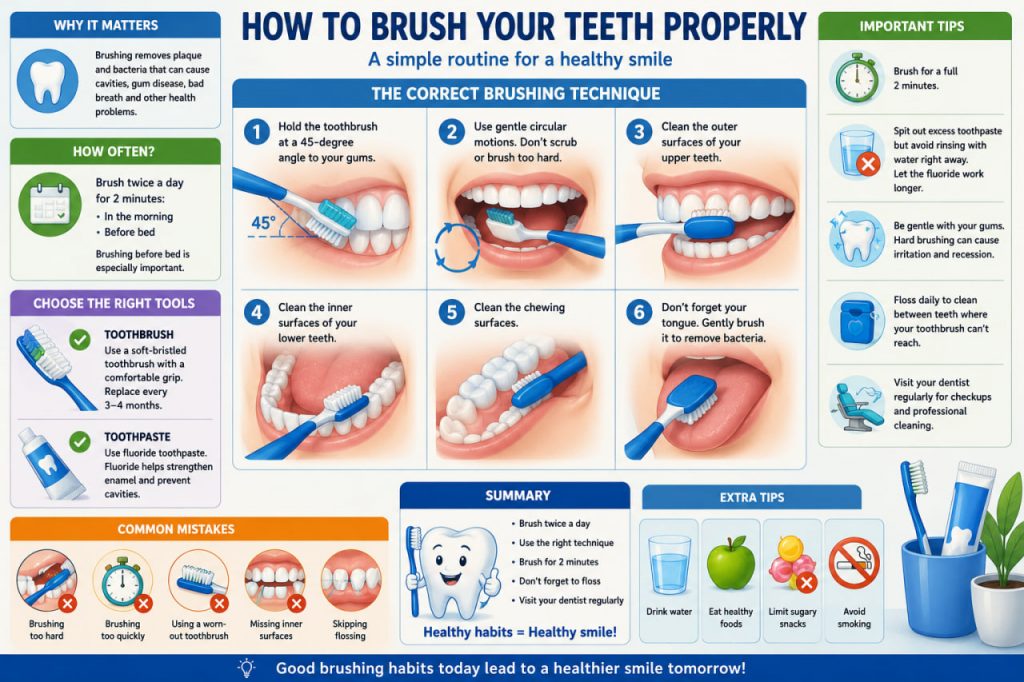
Brushing your teeth is one of the simplest and most important habits for maintaining good oral health. Most people brush their teeth every day, yet studies show that many do not use the most effective techniques. Improper brushing can leave behind plaque, contribute to cavities, and increase the risk of gum disease.
Good oral hygiene helps protect:
- Teeth
- Gums
- Breath freshness
- Overall health
In fact, oral health is increasingly linked to broader health conditions, including:
- Heart disease
- Diabetes
- Respiratory infections
Learning how to brush correctly can make a significant difference in maintaining a healthy smile for life.
Why Brushing Matters
Throughout the day, bacteria naturally accumulate in the mouth.
These bacteria combine with:
- Food particles
- Saliva
to form a sticky layer called:
- Plaque
If plaque is not removed regularly, it can lead to:
- Cavities
- Tooth decay
- Gum inflammation
- Bad breath
Over time, hardened plaque can become:
- Tartar
which requires professional dental cleaning.
Brushing is the first line of defense against these problems.
How Often Should You Brush?
Most dental organizations recommend brushing:
- Twice per day
Ideally:
- Once in the morning
- Once before bedtime
Brushing before sleep is especially important because saliva production decreases during the night, allowing bacteria to multiply more easily.
Some people may benefit from brushing after meals, but excessive brushing can potentially wear down enamel if done too aggressively.
Choosing the Right Toothbrush
A good toothbrush should have:
- Soft bristles
- Comfortable grip
- Appropriate head size
Most dentists recommend:
Soft-bristled toothbrushes
because they clean effectively while minimizing damage to:
- Tooth enamel
- Gum tissue
Electric toothbrushes can also be highly effective and may improve plaque removal for some individuals.
Choosing the Right Toothpaste
Toothpaste does more than freshen breath.
Most quality toothpastes contain:
- Fluoride
Fluoride helps:
- Strengthen enamel
- Prevent cavities
- Reduce tooth decay
Many dentists consider fluoride one of the most important advances in preventive dentistry.
The Correct Brushing Technique
Many people brush too hard or too quickly.
A proper technique involves:
- Holding the toothbrush at approximately a 45-degree angle toward the gums.
- Using small, gentle circular motions.
- Cleaning all tooth surfaces.
These include:
- Outer surfaces
- Inner surfaces
- Chewing surfaces
Gentle brushing is usually more effective than aggressive scrubbing.
Don’t Forget the Gum Line
Plaque often accumulates near:
- The gum line
This area deserves special attention.
Careful brushing along the gums helps reduce the risk of:
- Gingivitis
- Gum disease
Healthy gums are essential for maintaining healthy teeth throughout life.
How Long Should You Brush?
Dental professionals generally recommend:
- Two minutes
per brushing session.
Many people brush for far less time.
A useful strategy is dividing the mouth into four sections and spending approximately:
- 30 seconds
on each section.
Some electric toothbrushes include built-in timers to help maintain proper brushing duration.
Cleaning the Tongue Matters Too
The tongue can harbor large numbers of bacteria.
These bacteria may contribute to:
- Bad breath
- Oral bacterial growth
After brushing the teeth, gently cleaning the tongue can help improve:
- Oral hygiene
- Breath freshness
Many toothbrushes include tongue-cleaning surfaces on the back of the brush head.
Should You Rinse Immediately?
Many dentists now suggest avoiding vigorous rinsing immediately after brushing.
Why?
Because fluoride remains on the teeth and continues working after brushing.
Spitting out excess toothpaste while avoiding excessive rinsing may allow fluoride to provide greater protection.
The Importance of Flossing
Brushing alone cannot fully clean the spaces between teeth.
These areas often trap:
- Food particles
- Plaque
Dental floss helps remove debris from places toothbrush bristles cannot easily reach.
Most dental professionals recommend:
- Daily flossing
as part of a complete oral hygiene routine.
Electric vs. Manual Toothbrushes
Both types can be effective when used correctly.
Electric toothbrushes may offer advantages such as:
- Consistent brushing motion
- Built-in timers
- Easier use for some individuals
Manual toothbrushes remain highly effective when proper technique is used.
The best toothbrush is often the one a person uses consistently and correctly.
Common Brushing Mistakes
Many people unknowingly make mistakes such as:
- Brushing too hard
- Using a worn-out toothbrush
- Brushing too quickly
- Forgetting inner tooth surfaces
- Skipping flossing
These habits can reduce cleaning effectiveness and potentially damage oral tissues.
When Should You Replace Your Toothbrush?
Most dentists recommend replacing a toothbrush every:
- Three to four months
or sooner if:
- Bristles become frayed
- The brush shows visible wear
Worn bristles clean less effectively and may irritate gums.
Brushing and Overall Health
Oral health affects more than just the mouth.
Researchers have found links between gum disease and conditions involving:
- Cardiovascular health
- Diabetes management
- Inflammation
Although brushing alone cannot prevent systemic diseases, maintaining good oral hygiene supports overall well-being.
Expert Opinion on Proper Brushing
According to the American Dental Association, brushing twice daily with fluoride toothpaste and cleaning between teeth regularly are among the most effective ways to prevent tooth decay and maintain oral health.
These recommendations are supported by decades of scientific research.
Why Proper Brushing Is Worth the Effort
Brushing your teeth correctly requires only a few minutes each day, yet it provides substantial long-term benefits.
Proper brushing helps:
- Prevent cavities
- Protect gums
- Maintain fresh breath
- Preserve natural teeth
Combined with:
- Flossing
- Regular dental checkups
- Healthy dietary habits
good brushing technique forms the foundation of lifelong oral health.
A healthy smile is not only about appearance—it is an important part of overall health and quality of life.
Interesting Facts
- Tooth enamel is the hardest substance in the human body.
- Plaque can begin forming on teeth within hours after cleaning.
- Most people brush for less than the recommended two minutes.
- Fluoride helps rebuild weakened enamel.
- Electric toothbrushes were introduced in the 1950s.
Glossary
- Plaque — Sticky bacterial film that forms on teeth.
- Tartar — Hardened plaque that requires professional removal.
- Fluoride — Mineral that strengthens tooth enamel.
- Gingivitis — Early stage of gum disease characterized by inflammation.
- Enamel — Hard outer protective layer of the tooth.