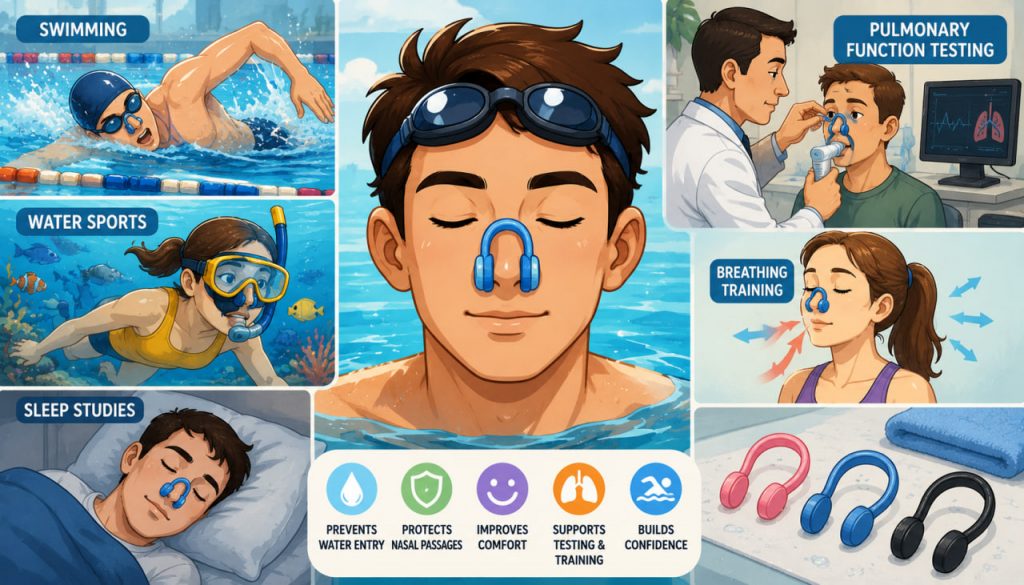
At first glance, a nose clip may seem like a very simple device. It is usually a small piece of plastic, silicone, or metal designed to gently pinch the nostrils shut. Despite its simplicity, the nose clip serves important purposes in:
- Sports
- Swimming
- Medical therapy
- Breathing exercises
- Sleep-related treatments
Many people associate nose clips only with swimmers, but their uses extend far beyond the swimming pool. Depending on the situation, a nose clip may help improve:
- Comfort
- Safety
- Breathing control
- Water protection
- Training efficiency
Understanding when and why nose clips are used can help determine whether they are beneficial for a particular activity or health condition.
What Is a Nose Clip?
A nose clip is a small device worn externally on the nose.
Its primary function is:
- Closing or partially restricting the nostrils
Most models are made from:
- Soft silicone
- Plastic
- Spring-loaded materials
They are designed to be:
- Lightweight
- Reusable
- Comfortable
while remaining secure during movement.
Why Swimmers Use Nose Clips
Swimming is by far the most common use for nose clips.
Many swimmers experience problems when water enters:
- The nasal passages
- The sinuses
This can cause:
- Irritation
- Discomfort
- Temporary breathing difficulties
A nose clip helps prevent water from entering the nose during:
- Diving
- Turns
- Underwater swimming
- Synchronized swimming
For beginners, nose clips often increase confidence in the water.
Competitive Swimming and Nose Clips
Some professional swimmers use nose clips regularly.
They can help athletes:
- Focus on technique
- Maintain body position
- Avoid distractions caused by water entering the nose
Nose clips are especially popular in:
- Artistic swimming
- Synchronized swimming
where athletes spend significant time underwater.
Protection During Water Sports
Nose clips may also be useful in:
- Snorkeling
- Water aerobics
- Recreational diving
- Surf training
People who are sensitive to:
- Chlorinated water
- Saltwater
- Pool chemicals
sometimes find nose clips particularly helpful.
Breathing Training and Respiratory Exercises
Certain breathing exercises intentionally restrict nasal airflow.
In some training methods, nose clips are used temporarily to:
- Encourage mouth breathing
- Study breathing patterns
- Evaluate respiratory performance
Researchers sometimes use nose clips during physiological experiments to standardize breathing conditions.
Nose Clips in Sleep Studies
Medical professionals occasionally use nose clips in:
- Sleep research
- Respiratory testing
They help scientists investigate:
- Airflow patterns
- Breathing mechanics
- Oxygen intake
under controlled conditions.
However, nose clips are generally not intended as treatments for sleep disorders unless specifically recommended by healthcare professionals.
Use in Pulmonary Function Testing
Doctors and respiratory specialists frequently use nose clips during:
- Spirometry
Spirometry measures how well the lungs function.
A nose clip ensures that:
- All airflow passes through the mouthpiece
This improves measurement accuracy.
Without a nose clip, some air could escape through the nose, reducing the reliability of the results.
Can Nose Clips Improve Athletic Performance?
Some athletes experiment with nose clips as part of breathing-focused training.
Potential goals include:
- Breathing awareness
- Respiratory control
- Technique refinement
However, evidence that nose clips directly improve athletic performance remains limited.
Most benefits appear related to:
- Comfort
- Breathing management
- Specific training objectives
rather than dramatic performance enhancement.
Are Nose Clips Helpful for Snoring?
Some people mistakenly assume nose clips can reduce:
- Snoring
In reality, most standard swimming-style nose clips block nasal airflow and are not intended for this purpose.
Products designed for snoring typically work differently by:
- Opening nasal passages
rather than closing them.
The distinction is important.
Choosing the Right Nose Clip
Different activities require different designs.
Common features include:
- Soft silicone pads
- Adjustable fit
- Lightweight construction
- Water resistance
For swimming, comfort and secure fit are usually the most important factors.
For medical use, healthcare professionals typically provide appropriate equipment.
Advantages of Nose Clips
Potential benefits include:
- Preventing water entry
- Improving comfort during swimming
- Assisting respiratory testing
- Supporting specific breathing exercises
- Reducing nasal irritation
Many users appreciate their:
- Simplicity
- Portability
- Reusability
Possible Disadvantages
Nose clips are not ideal for everyone.
Some individuals may experience:
- Pressure discomfort
- Skin irritation
- Slippage during activity
Improperly fitted clips can feel:
- Uncomfortable
- Restrictive
Fortunately, most modern designs are relatively gentle.
Hygiene and Maintenance
Because nose clips come into direct contact with the skin, regular cleaning is important.
After use, especially in swimming pools, they should be:
- Rinsed
- Dried
- Stored properly
Good hygiene helps prevent:
- Skin irritation
- Bacterial buildup
and extends product lifespan.
Nose Clips and Water Confidence
For beginners learning to swim, nose clips can provide a psychological benefit.
Fear of getting water in the nose is common among:
- Children
- New swimmers
- Recreational swimmers
By reducing this concern, nose clips may help people:
- Relax
- Practice skills
- Build confidence
more comfortably.
Expert Opinion on Swimming Nose Clips
Swimming coaches often note that nose clips can be valuable training aids, particularly for swimmers who struggle with water entering the nasal passages.
Many instructors recommend using them when they improve comfort and confidence, especially during skill development and synchronized swimming activities.
Who Should Consider Using a Nose Clip?
A nose clip may be useful for:
- Swimmers
- Artistic swimmers
- Snorkelers
- Individuals undergoing respiratory testing
- People sensitive to water entering the nose
It may be less necessary for experienced swimmers who have already developed effective:
- Breathing techniques
- Water adaptation skills
The decision often depends on personal preference and specific activity requirements.
Why Nose Clips Matter
Although simple in design, nose clips solve a surprisingly common problem.
They help protect the nasal passages from:
- Water
- Irritants
- Unwanted airflow variations
and play important roles in:
- Sports
- Medicine
- Scientific research
For many people, a small nose clip can make activities such as swimming more comfortable, enjoyable, and confidence-building.
Their effectiveness demonstrates how even simple tools can significantly improve everyday experiences.
Interesting Facts
- Nose clips are widely used in synchronized swimming competitions.
- Spirometry testing often requires a nose clip for accurate results.
- Most swimming nose clips are made from silicone and lightweight plastic.
- Many beginner swimmers feel more confident when using a nose clip.
- Professional aquatic athletes often spend hours training with nose clips.
Glossary
- Nose Clip — A device that gently closes the nostrils.
- Spirometry — A medical test that measures lung function.
- Respiratory System — The organs involved in breathing.
- Artistic Swimming — A sport formerly known as synchronized swimming.
- Nasal Passage — The internal airway through the nose.