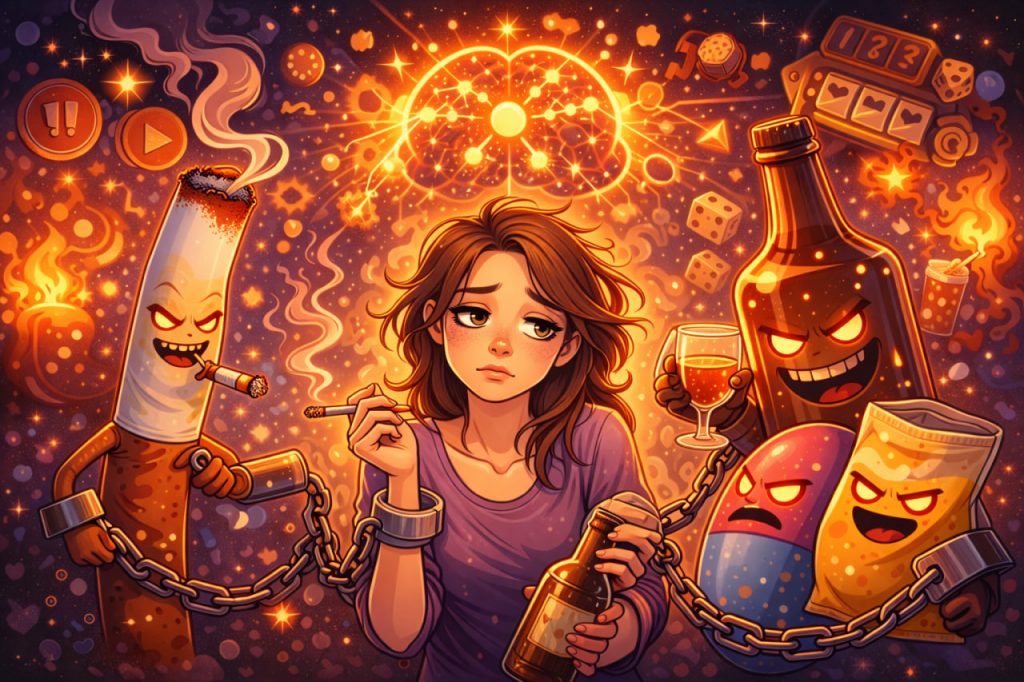
Addiction is not simply a matter of weak willpower—it is a complex process involving brain chemistry, behavior, and environment. It develops gradually, often beginning with voluntary actions that over time become difficult to control. Whether related to substances or behaviors, addiction reshapes the brain’s reward system, reinforcing habits and creating powerful cravings. Understanding how addiction forms helps explain why it is so difficult to overcome and why effective treatment requires more than just self-control. It is a condition rooted in both biology and experience, affecting millions of people worldwide.
The Brain’s Reward System
At the core of addiction is the brain’s reward system, which is designed to encourage behaviors essential for survival, such as eating and social interaction. When we engage in pleasurable activities, the brain releases dopamine, a neurotransmitter associated with pleasure and motivation. Addictive substances or behaviors can trigger abnormally high dopamine release, creating a strong sense of reward. According to neuroscientist Dr. Emily Carter:
“Addiction hijacks the brain’s reward system,
turning normal desires into powerful compulsions.”
Over time, the brain begins to associate the addictive stimulus with pleasure, reinforcing repeated use.
Tolerance and Escalation
As addiction develops, the brain adapts to repeated exposure by reducing its sensitivity to dopamine. This leads to tolerance, meaning a person needs more of the substance or behavior to achieve the same effect. What once produced strong pleasure becomes less effective, pushing individuals to increase usage. This cycle accelerates the progression of addiction and deepens dependence.
Cravings and Loss of Control
Addiction also affects areas of the brain responsible for decision-making and self-control. Strong cravings can override rational thinking, making it difficult to resist urges even when negative consequences are clear. Environmental cues—such as places, people, or emotions—can trigger intense wishes, reinforcing the cycle of addiction.
The Role of Environment and Psychology
While biology plays a major role, environmental and psychological factors are equally important. Stress, trauma, social influences, and mental health conditions can increase vulnerability to addiction. Early experiences and repeated exposure shape how the brain responds to rewards and stress, influencing the likelihood of developing dependence.
Breaking the Cycle
Recovery from addiction involves rewiring the brain and developing healthier patterns of behavior. This often requires a combination of medical treatment, therapy, and social support. Understanding that addiction is a condition—not a moral failure—helps create more effective and compassionate approaches to treatment.
Interesting Facts
- Dopamine is central to the brain’s reward and motivation system.
- Addiction can change brain structure and function over time.
- Both substances and behaviors (like gambling) can cause addiction.
- Stress significantly increases the risk of developing dependence.
- Recovery is possible, but it often requires long-term support.
Glossary
- Addiction — a condition characterized by compulsive engagement in a behavior despite negative consequences.
- Dopamine — a neurotransmitter associated with pleasure and reward.
- Tolerance — reduced response to a substance after repeated use.
- Craving — a strong desire for a substance or behavior.
- Neurotransmitter — a chemical that transmits signals in the brain.