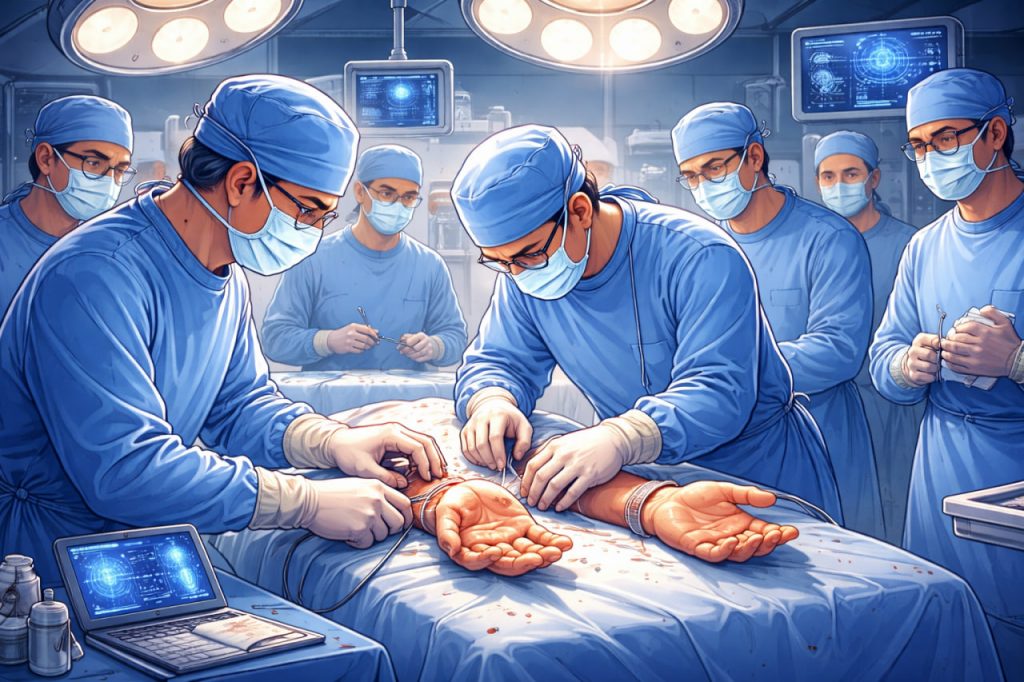
The transplantation of both hands is one of the most intricate and challenging procedures in modern medicine, combining advanced surgical precision with long-term rehabilitation and immunological management. Unlike traditional organ transplants, this operation involves not only reconnecting blood vessels and nerves but also restoring function, sensation, and movement in a highly complex system. The success of such procedures represents a major milestone in reconstructive surgery and offers hope to patients who have lost limbs due to trauma, disease, or congenital conditions. Each bilateral hand transplant is a unique case, requiring months of preparation and years of recovery. These operations highlight the extraordinary capabilities of modern medicine and the resilience of the human body.
What Makes This Surgery So Complex
A bilateral hand transplant is far more complicated than most surgical procedures because it involves reconnecting multiple systems simultaneously. Surgeons must carefully align and attach bones, tendons, muscles, nerves, and blood vessels, ensuring that each component functions correctly after the operation. The surgery can last 10–20 hours and requires a large multidisciplinary team working in perfect coordination. Even a small error in nerve alignment or blood flow can affect the final outcome. According to reconstructive surgeon Dr. Andrew Collins:
“This is not just a surgery — it is a reconstruction of identity, function, and independence.”
The complexity lies not only in the operation itself but also in achieving long-term functionality.
The Role of the Immune System
One of the greatest challenges after transplantation is preventing the body from rejecting the new hands. Since the transplanted limbs come from a donor, the immune system recognizes them as foreign and may attempt to attack them. Patients must take immunosuppressive medications for life to reduce this risk. However, these medications can have side effects, including increased susceptibility to infections. Balancing immune suppression while maintaining overall health is a critical part of post-operative care.
Rehabilitation and Recovery
Recovery from a bilateral hand transplant is a long and demanding process that can take years. Patients must undergo intensive physical therapy to retrain muscles and restore movement. Nerves grow slowly, often taking months before sensation begins to return. Daily exercises help the brain reconnect with the new hands, gradually improving coordination and strength. Psychological support is also essential, as patients must adapt to their new limbs both physically and emotionally.
Ethical and Psychological Considerations
Beyond the medical challenges, bilateral hand transplantation raises important ethical and psychological questions. Patients must weigh the risks of lifelong medication against the potential benefits of regained function. The psychological adaptation to new hands can be complex, requiring support from specialists. Surgeons and patients must carefully consider these factors before proceeding with the operation.
Breakthrough Cases and Medical Progress
Over the past decades, several successful bilateral hand transplants have demonstrated the potential of this procedure. Advances in surgical techniques, imaging, and rehabilitation have improved outcomes significantly. These cases provide valuable insights that continue to refine the process and increase success rates. Each successful operation contributes to the growing field of vascularized composite allotransplantation, paving the way for future innovations.
Interesting Facts
- The first successful bilateral hand transplant was performed in 2000.
- Some surgeries involve over 20 surgeons and specialists working simultaneously.
- Nerve regeneration occurs at about 1 millimeter per day.
- Patients often regain the ability to perform everyday tasks like writing or holding objects.
- Psychological adaptation is considered as important as physical recovery.
Glossary
- Bilateral Transplant — a procedure involving the transplantation of both sides of the body, such as both hands.
- Immunosuppression — medical treatment that reduces the activity of the immune system.
- Nerve Regeneration — the process by which damaged nerves slowly regrow and restore function.
- Rehabilitation — therapy aimed at restoring movement, strength, and coordination after surgery.
- Allotransplantation — transplantation of tissue between genetically different individuals.