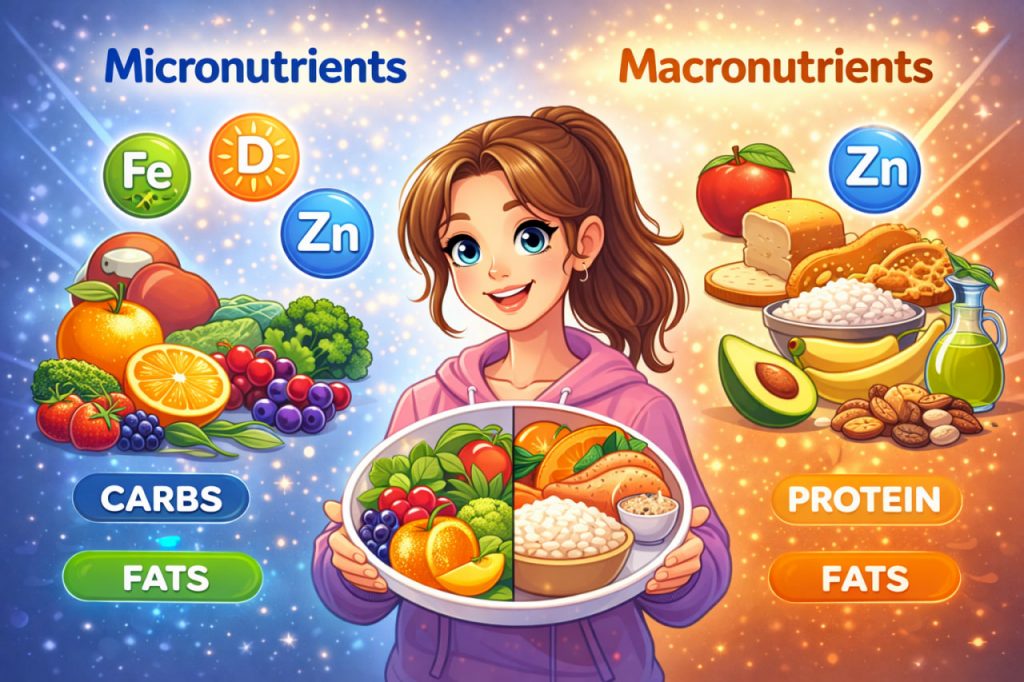
Nutrition is built on two essential pillars: macronutrients and micronutrients, both of which are vital for maintaining health, energy, and overall bodily function. While macronutrients provide the energy needed for daily activities, micronutrients support the complex biochemical processes that keep the body functioning efficiently. A balanced diet requires the right combination of both, as deficiencies or imbalances can lead to fatigue, weakened immunity, and long-term health issues. Understanding how these nutrients work together helps individuals make more informed dietary choices and maintain optimal well-being. Even though they differ in quantity and function, both types of nutrients are equally important for sustaining life and supporting the body’s systems.
Macronutrients: The Body’s Primary Energy Source
Macronutrients are nutrients required in large amounts because they provide the body with energy and structural components. The three main macronutrients are carbohydrates, proteins, and fats, each playing a unique role in maintaining health. Carbohydrates are the body’s primary fuel source, especially for the brain and muscles during physical activity. Proteins are essential for tissue repair, muscle growth, and the production of enzymes and hormones. Fats, often misunderstood, are crucial for cell structure, hormone production, and the absorption of fat-soluble vitamins. According to nutrition expert Dr. Laura Bennett:
“Macronutrients are not just fuel — they are the building blocks that determine how the body grows, repairs, and performs.”
Balancing these nutrients ensures stable energy levels and supports long-term health.
Micronutrients: Small but Essential
Unlike macronutrients, micronutrients are required in much smaller amounts, but their impact on health is enormous. These include vitamins and minerals, which regulate immune function, bone health, nerve signaling, and many other processes. For example, vitamin C supports the immune system, calcium strengthens bones, and iron is essential for oxygen transport in the blood. Even slight deficiencies can lead to noticeable health problems, such as fatigue, weakened immunity, or impaired cognitive function. Micronutrients do not provide energy, but they are critical for enabling the body to use macronutrients effectively.
How Macronutrients and Micronutrients Work Together
The body relies on a delicate interaction between macro- and micronutrients to function properly. Macronutrients provide the energy and raw materials, while micronutrients act as regulators and catalysts in metabolic processes. For example, B vitamins help convert carbohydrates into usable energy, and magnesium supports muscle and nerve function. Without sufficient micronutrients, the body cannot fully utilize macronutrients, even if calorie intake is adequate. This synergy highlights why a diet focused only on calories is incomplete without considering nutrient quality.
Sources of Macronutrients and Micronutrients
A balanced diet includes a variety of whole foods that provide both types of nutrients naturally. Macronutrients are found in foods such as grains, meats, dairy, nuts, and oils. Micronutrients are abundant in fruits, vegetables, seeds, and whole grains. Colorful foods often indicate a rich variety of vitamins and minerals, making them especially valuable for health. Whole, minimally processed foods typically offer the best combination of nutrients, while highly processed foods may provide calories without sufficient micronutrient content.
The Importance of Nutrient Balance
Maintaining the right balance between macronutrients and micronutrients is essential for long-term health. Too much or too little of either can disrupt bodily functions and lead to health issues. For example, excessive intake of macronutrients without sufficient micronutrients can result in energy without proper metabolic support. Conversely, inadequate macronutrient intake can leave the body without enough fuel, even if micronutrient levels are adequate. Achieving balance involves variety, moderation, and consistency in dietary choices.
Interesting Facts
- The body needs over 30 different vitamins and minerals to function properly.
- Macronutrients provide calories, while micronutrients do not contain energy.
- Vitamin D acts like a hormone in the body, influencing many systems.
- The brain relies heavily on glucose, a carbohydrate, for energy.
- Even mild micronutrient deficiencies can affect mood and concentration.
Glossary
- Macronutrients — nutrients required in large amounts that provide energy, including carbohydrates, proteins, and fats.
- Micronutrients — vitamins and minerals needed in small amounts for proper body function.
- Carbohydrates — the body’s main source of energy, found in foods like grains and fruits.
- Proteins — nutrients made of amino acids that support tissue repair and growth.
- Fats — essential nutrients that support cell function, hormone production, and energy storage.