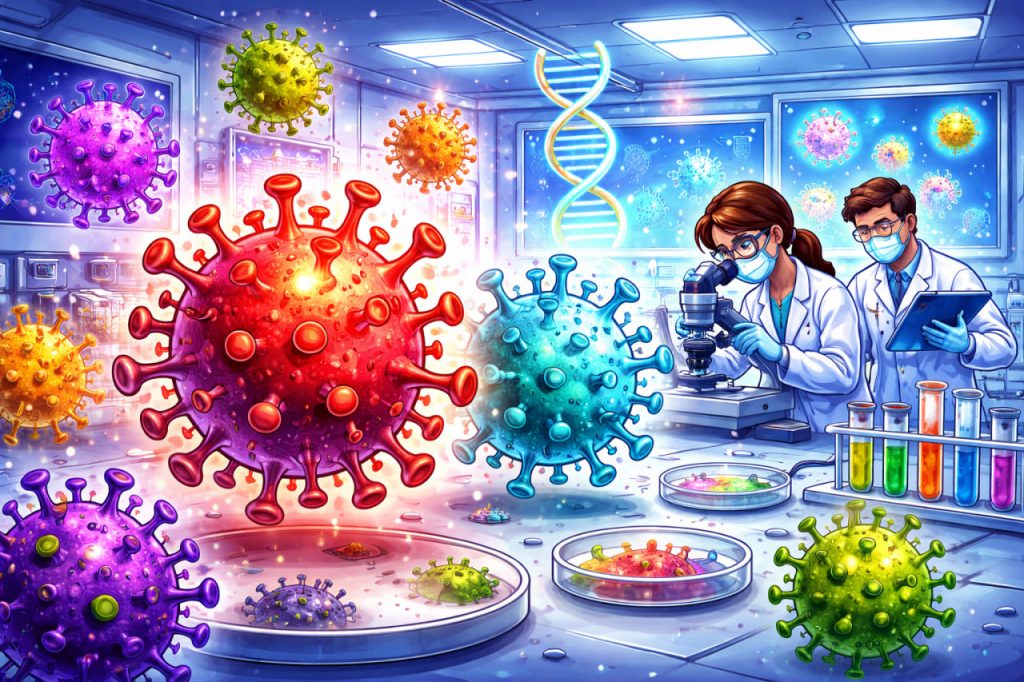
A virus strain is a specific genetic variant of a virus that differs slightly from other versions of the same virus. Viruses constantly change over time through mutations, which occur when their genetic material is copied with small errors. These mutations can lead to the formation of new strains with different characteristics. Some strains may spread more easily, while others may cause more severe symptoms or behave differently in the body. The concept of strains is important for understanding how viruses evolve and adapt to new environments. It also plays a critical role in medicine, especially in vaccine development and disease control. Studying virus strains helps scientists track outbreaks and respond more effectively to public health challenges.
How Virus Strains Form
Virus strains form through a natural process of mutation and evolution. When a virus replicates inside a host, its genetic material is copied many times. During this process, small changes can occur in the genetic code. Virologist Dr. Elena Petrova explains:
“Mutations are a normal part of viral replication,
and over time they lead to the emergence of new strains.”
Most mutations have little or no effect, but some can change how the virus behaves. These changes may affect how easily the virus spreads or how it interacts with the immune system. Over time, successful variants become more common. This is how different strains emerge and persist.
Differences Between Strains
Not all virus strains are the same, even if they belong to the same virus species. Some strains may be more contagious, while others may cause milder or more severe illness. Differences can also affect how the virus responds to treatments or vaccines. Scientists study these differences to understand how the virus evolves. Identifying specific strains helps track the spread of disease across regions. It also allows health organizations to adjust strategies accordingly. Understanding these variations is essential for controlling outbreaks.
Strains and Variants
The terms “strain” and “variant” are sometimes used interchangeably, but they can have slightly different meanings. A variant refers to a virus with genetic differences, while a strain often implies that these differences lead to noticeable changes in behavior. For example, a strain may have altered transmissibility or severity. Not all variants become distinct strains. Scientists carefully analyze genetic and functional changes before classifying them. This distinction helps maintain clarity in scientific communication. It also improves the accuracy of research and public health responses.
Why Strains Matter in Medicine
Virus strains are especially important in medicine and public health. Vaccines and treatments must be effective against circulating strains. If a virus changes significantly, existing vaccines may need to be updated. Monitoring strains helps scientists predict how a virus might evolve. It also allows early detection of potentially dangerous changes. This information is crucial for preventing large outbreaks. Continuous research ensures that medical responses remain effective.
How Scientists Track Strains
Scientists use genetic sequencing to identify and track virus strains. This involves analyzing the virus’s genetic code and comparing it with other samples. By doing this, researchers can see how the virus is changing over time. Global databases allow scientists to share information and monitor trends. This collaborative approach improves our ability to respond to emerging threats. Tracking strains also helps identify sources of outbreaks. It is a key tool in modern epidemiology.
Why Understanding Strains Is Important
Understanding virus strains helps society respond more effectively to infectious diseases. It provides insight into how viruses evolve and spread. This knowledge supports the development of vaccines, treatments, and prevention strategies. It also helps reduce uncertainty during outbreaks. By studying strains, scientists can anticipate future challenges. This makes it easier to protect public health. Knowledge about virus strains is essential in a globalized world.
Interesting Facts
- Viruses mutate frequently during replication
- Not all mutations lead to new strains
- Some strains spread faster than others
- Genetic sequencing is used to track virus evolution
- Vaccines may be updated to match new strains
Glossary
- Strain — a genetic variant of a virus with distinct traits
- Mutation — change in genetic material
- Variant — version of a virus with genetic differences
- Replication — process of virus copying itself
- Genetic Sequencing — analysis of genetic code