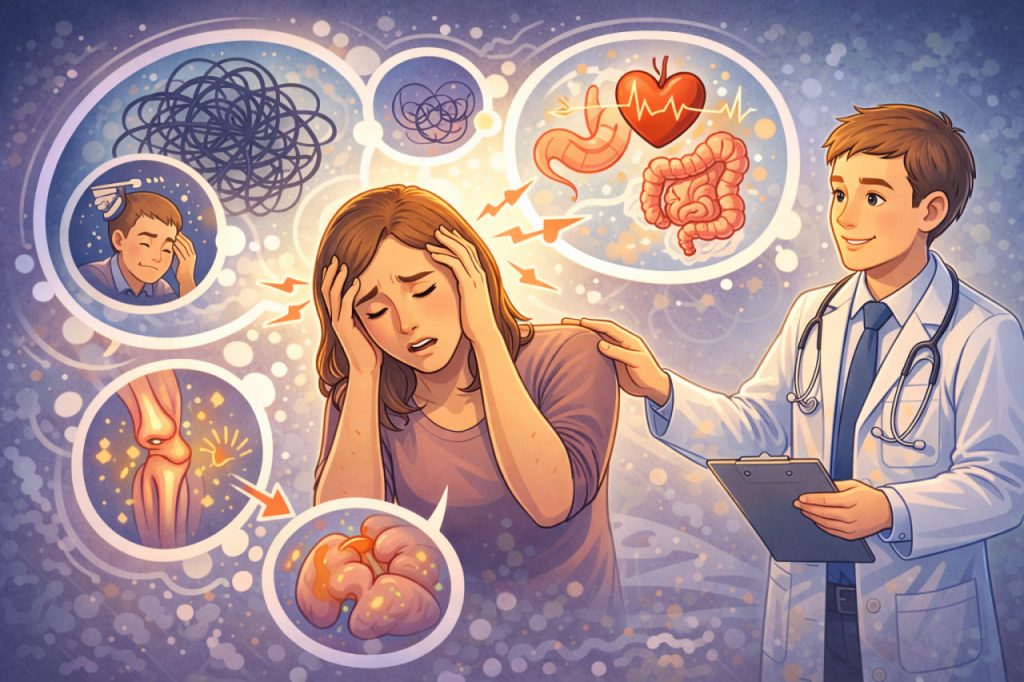
Psychosomatic disorders are conditions in which psychological factors directly influence physical health, leading to real and sometimes severe bodily symptoms. Although these disorders are rooted in emotional or mental processes, the physical manifestations are genuine and not imagined. Stress, anxiety, and unresolved emotional conflicts can trigger or worsen symptoms such as pain, fatigue, or gastrointestinal issues. The connection between mind and body is complex, involving the nervous, endocrine, and immune systems. Understanding psychosomatic disorders helps bridge the gap between mental and physical health. It also highlights the importance of treating the whole person rather than focusing only on symptoms.
What Are Psychosomatic Disorders?
Psychosomatic disorders occur when emotional or psychological stress is expressed through physical symptoms. These symptoms can affect various parts of the body, including the heart, digestive system, skin, and muscles. Common examples include tension headaches, irritable bowel syndrome, and stress-related hypertension. Psychologist Dr. Laura Mitchell explains:
“The body often speaks when the mind cannot,
turning emotional distress into physical signals.”
This reflects how closely mental and physical processes are connected.
How Stress Affects the Body
Chronic stress activates the body’s fight-or-flight response, leading to prolonged release of stress hormones such as cortisol. Over time, this can disrupt normal bodily functions and contribute to illness. Muscle tension, inflammation, and changes in digestion are common effects. When stress is not managed, it can create a cycle where physical symptoms increase emotional distress, which in turn worsens the condition.
Common Symptoms and Conditions
Psychosomatic symptoms vary widely but often include chronic pain, fatigue, headaches, digestive problems, and sleep disturbances. These symptoms may not always have a clear medical cause, making diagnosis challenging. However, this does not mean the symptoms are not real. Proper assessment requires considering both physical and psychological factors.
Treatment and Management
Effective treatment of psychosomatic disorders involves a holistic approach. This may include psychotherapy, stress management techniques, lifestyle changes, and, in some cases, medication. Cognitive-behavioral therapy (CBT) is commonly used to help individuals understand and manage the connection between thoughts, emotions, and physical symptoms. Relaxation techniques such as meditation and breathing exercises can also be beneficial.
The Importance of Mind–Body Balance
Recognizing the connection between mind and body is essential for maintaining overall health. Addressing emotional well-being can significantly improve physical symptoms and quality of life. By adopting a balanced approach that includes both mental and physical care, individuals can better manage psychosomatic conditions and prevent future issues.
Interesting Facts
- Stress can directly influence the immune and digestive systems.
- Psychosomatic symptoms are real physical experiences, not imaginary.
- Chronic stress is linked to conditions such as hypertension and ulcers.
- The brain and gut are closely connected through the gut-brain axis.
- Psychological therapy can significantly reduce physical symptoms.
Glossary
- Psychosomatic — relating to the interaction between mind and body.
- Stress Response — the body’s reaction to perceived threats.
- Cortisol — a hormone released during stress.
- Cognitive-Behavioral Therapy (CBT) — a psychological treatment focusing on thoughts and behaviors.
- Gut-Brain Axis — the connection between the digestive system and the brain.