Body weight is one of the most discussed health topics in the modern world. Many people wonder what their “normal” or healthy weight should be and how to calculate it accurately. While there is no single perfect number for every person, science provides several reliable methods for estimating a healthy weight range. Understanding these methods helps people focus on overall health rather than unrealistic beauty standards.
What Is a Normal Body Weight?
A normal body weight is a range where the body functions efficiently and health risks are minimized.
Healthy weight depends on several factors:
- Height
- Age
- Sex
- Muscle mass
- Bone structure
Two people with the same weight may have very different body compositions and health conditions.
Why Healthy Weight Matters
Maintaining a healthy weight is important because it affects many body systems.
A balanced weight can help:
- Reduce stress on joints
- Improve cardiovascular health
- Lower risk of diabetes
- Support energy levels
Both underweight and overweight conditions may increase health risks.
Body Mass Index (BMI)
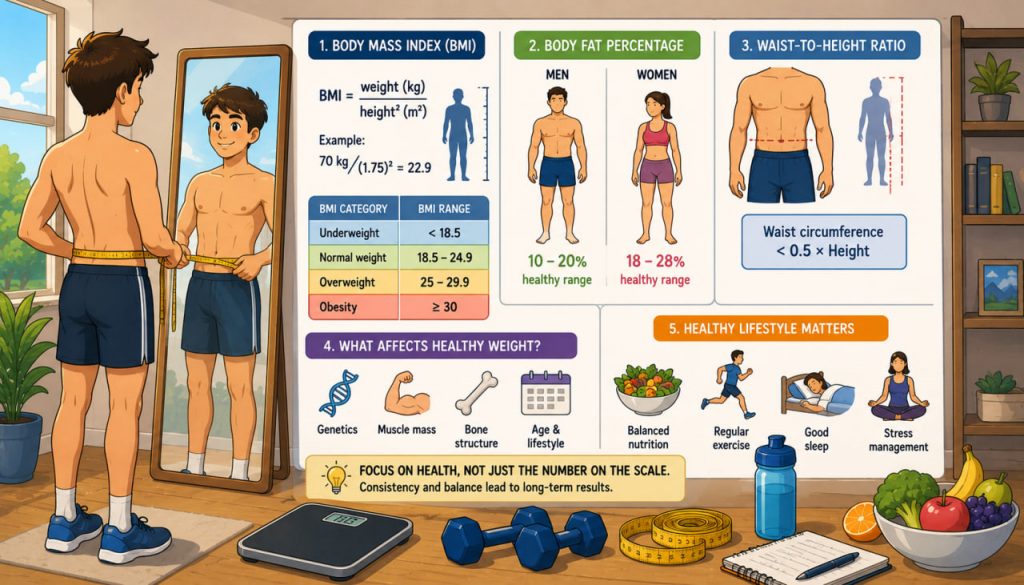
One of the most common methods for estimating healthy weight is the Body Mass Index (BMI).
BMI compares:
- Weight
- Height
The formula is:
BMI=weight (kg)height (m)2BMI = \frac{weight\,(kg)}{height\,(m)^2}BMI=height(m)2weight(kg)
Example:
- Weight = 70 kg
- Height = 1.75 m
Result:
- BMI ≈ 22.9
BMI Categories
According to the World Health Organization:
- Underweight: BMI below 18.5
- Normal weight: BMI 18.5–24.9
- Overweight: BMI 25–29.9
- Obesity: BMI 30 and above
BMI is useful for general screening but does not measure body fat directly.
Limitations of BMI
BMI has important limitations.
It does not account for:
- Muscle mass
- Athletic build
- Fat distribution
For example:
- Athletes may have high BMI but low body fat
- Elderly people may have normal BMI but low muscle mass
BMI should be viewed as a guideline, not a perfect measurement.
Body Fat Percentage
Another useful indicator is body fat percentage.
This measures:
- How much of the body is fat tissue
Healthy ranges vary:
- Men: about 10–20%
- Women: about 18–28%
This method often provides a more accurate picture of health.
Waist-to-Height Ratio
Fat distribution also matters.
Excess abdominal fat increases risk for:
- Heart disease
- Diabetes
- Metabolic disorders
A common guideline:
Waist Circumference<0.5×HeightWaist\;Circumference < 0.5 \times HeightWaistCircumference<0.5×Height
This means waist size should generally be less than half of a person’s height.
Role of Muscle Mass
Muscle weighs more than fat by volume.
This means:
- Fit individuals may weigh more
- Weight alone does not define health
Body composition matters more than a number on a scale.
Expert Insight
Nutrition researcher Dr. Walter Willett from Harvard University explains:
“Healthy weight is not about achieving perfection, but about maintaining a body composition and lifestyle that support long-term health.”
This highlights the importance of focusing on overall wellness.
Healthy Weight and Lifestyle
Healthy weight is strongly connected to lifestyle habits.
Important factors include:
- Balanced nutrition
- Regular exercise
- Sleep quality
- Stress management
Long-term habits matter more than short-term diets.
Why Extreme Dieting Is Dangerous
Rapid weight loss methods can harm the body.
Possible effects include:
- Muscle loss
- Hormonal imbalance
- Nutrient deficiencies
Sustainable changes are safer and more effective.
How Doctors Evaluate Healthy Weight
Healthcare professionals often consider:
- BMI
- Blood pressure
- Blood tests
- Body composition
- Physical activity level
This provides a broader understanding of health.
Why There Is No “Perfect” Weight
Every body is different.
Genetics influence:
- Metabolism
- Bone density
- Fat storage patterns
Health cannot be reduced to a single universal number.
Interesting Facts
- Muscle tissue burns more calories than fat tissue.
- BMI was developed in the 19th century.
- Waist circumference can predict health risks.
- Sleep affects body weight regulation.
- Hydration levels can temporarily affect body weight.
Glossary
- BMI (Body Mass Index) — A ratio of weight to height.
- Body Composition — Proportion of fat, muscle, and other tissues.
- Metabolism — Processes that convert food into energy.
- Body Fat Percentage — Percentage of body weight made up of fat.
- Waist-to-Height Ratio — Comparison of waist size to height.