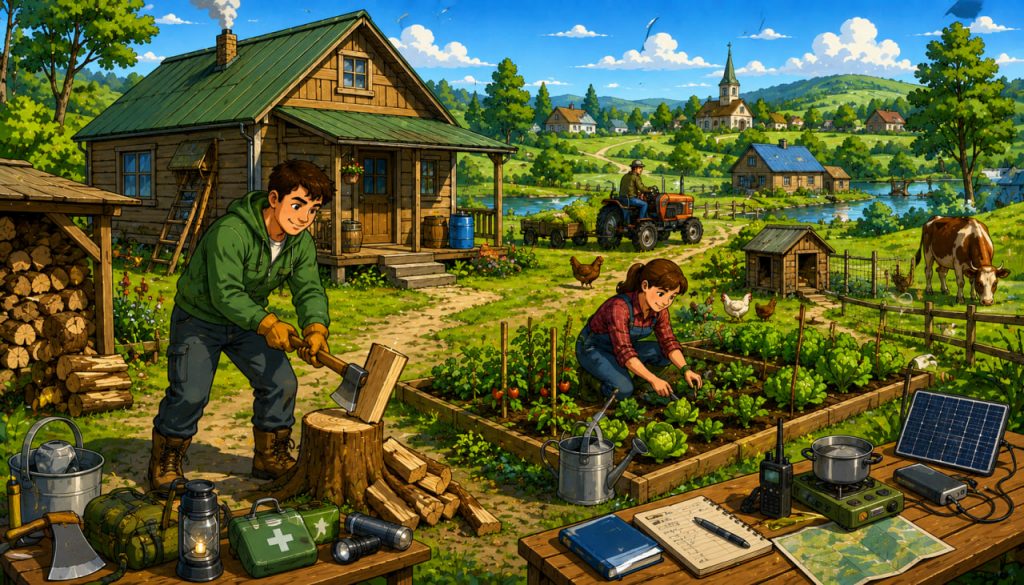
Moving from a city to a rural village can feel like stepping into a completely different world. Modern urban life provides convenience, fast services, and constant connectivity, while village life often requires self-reliance, physical work, and adaptation to nature. For many people, rural living may initially seem difficult, but with preparation and the right mindset, it can become healthier, calmer, and more sustainable. Understanding how to adapt helps people transform culture shock into a rewarding life experience.
Why City Life and Village Life Are So Different
Cities and villages operate according to very different rhythms.
In cities:
- Services are nearby
- Infrastructure is highly developed
- Daily life is fast-paced
In villages:
- Nature strongly affects routines
- Distances may be greater
- People often rely more on practical skills
The biggest challenge is usually psychological adaptation, not physical survival.
Learn Basic Self-Sufficiency Skills
Village life often requires practical abilities that many urban residents never needed before.
Useful skills include:
- Chopping wood
- Gardening
- Basic repairs
- Water management
- Food storage
Even simple knowledge can make daily life much easier.
Understand Rural Infrastructure
City residents are often surprised by how different rural infrastructure can be.
Possible differences include:
- Limited internet access
- Fewer shops and pharmacies
- Irregular transportation
- Independent heating systems
Preparation is essential before moving.
Food and Cooking
In villages, access to restaurants and delivery services may be limited.
Learning to:
- Cook regularly
- Store food properly
- Grow small amounts of produce
can significantly improve comfort and independence.
Rural living often encourages healthier eating habits.
Adapt to Physical Work
Village life may involve more physical activity than city life.
Examples include:
- Carrying water or supplies
- Maintaining land
- Snow removal
- Gardening
For people used to office work, this adjustment can initially feel exhausting.
Expert Insight
Survival expert and outdoorsman Ray Mears has said:
“The key to thriving in unfamiliar environments is not strength, but knowledge and adaptability.”
This principle applies strongly to adapting from city life to rural living.
Learn About Nature and Weather
Nature plays a much larger role in rural environments.
Important knowledge includes:
- Seasonal weather patterns
- Animal behavior
- Safe water sources
- Fire safety
Understanding local conditions increases safety and comfort.
Build Relationships With Locals
Village communities are often more interconnected than urban neighborhoods.
Good relationships with locals can help:
- Solve practical problems
- Learn useful skills
- Integrate socially
Community support is extremely valuable in rural life.
Internet and Remote Work
Modern technology makes village life more practical than in the past.
Many people now:
- Work remotely
- Study online
- Access telemedicine
However, internet quality should be checked before relocation.
Mental Adaptation
One of the hardest changes can be psychological.
Village life may feel:
- Quiet
- Slow
- Isolated
For some people, this becomes relaxing. For others, it may initially cause discomfort.
Learning to enjoy:
- Silence
- Nature
- Slower routines
is part of adaptation.
Emergency Preparedness
Rural areas may have slower emergency response times.
Important preparations include:
- Basic medical supplies
- Backup power sources
- Emergency food and water
Self-reliance becomes more important.
Financial Differences
Village living can reduce some expenses:
- Housing costs
- Transportation congestion
- Entertainment spending
But there may also be new costs:
- Home maintenance
- Heating
- Equipment
Planning ahead is essential.
Benefits of Village Life
Despite challenges, rural living offers many advantages.
Possible benefits include:
- Cleaner air
- Lower stress
- Closer connection to nature
- More physical activity
Many people report improved mental well-being after adapting to rural environments.
Why Adaptability Matters
The ability to adapt is one of the most important survival skills.
Moving from city to village teaches:
- Flexibility
- Practical thinking
- Independence
It also reminds people how closely humans remain connected to nature.
Interesting Facts
- Many rural communities rely heavily on local cooperation.
- Gardening can significantly reduce food costs.
- Rural areas often have lower air pollution.
- Village life usually follows seasonal cycles more closely.
- Remote work is increasing interest in countryside living.
Glossary
- Self-Sufficiency — Ability to provide for one’s own needs.
- Infrastructure — Basic systems like roads, power, and communication.
- Telemedicine — Remote healthcare using digital technology.
- Adaptability — Ability to adjust to new conditions.
- Rural Area — Region outside major cities and urban centers.