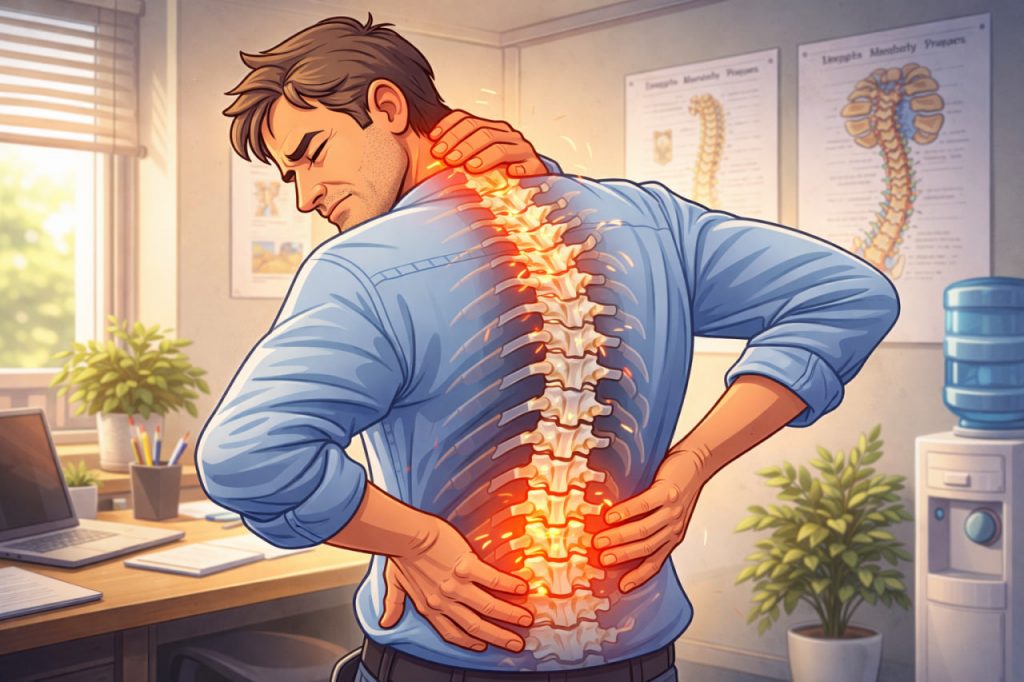
Osteochondrosis is a condition associated with degenerative changes in the spine, particularly affecting the intervertebral discs and surrounding structures. It is commonly linked to aging, but modern lifestyles—especially prolonged sitting and low physical activity—have made it increasingly widespread. Understanding how osteochondrosis develops and how to manage it is essential for maintaining long-term spinal health.
What Is Osteochondrosis
Osteochondrosis refers to a gradual breakdown of the intervertebral discs, which act as cushions between the vertebrae. Over time, these discs can lose elasticity, hydration, and height, leading to increased pressure on the spine.
As experts explain:
“Degenerative changes in the spine often begin silently and progress gradually, influenced by both mechanical stress and lifestyle factors.”
This process can affect mobility and overall comfort, especially if left unaddressed.
Why It Develops
Several factors contribute to the development of osteochondrosis. These include aging, lack of movement, poor posture, and repetitive strain on the spine. Sitting for long periods, especially with improper posture, places continuous pressure on the discs.
Additionally, reduced physical activity weakens the muscles that support the spine, making it more vulnerable to stress and imbalance.
How It Affects the Body
As the discs change, the distance between vertebrae may decrease, which can affect nearby nerves and structures. This may lead to discomfort, stiffness, and reduced flexibility. In some cases, the body attempts to compensate by forming bone growths, which can further influence movement.
Common Symptoms
Symptoms vary depending on the affected area of the spine but often include back discomfort, muscle tension, and limited range of motion. These sensations may become more noticeable after prolonged sitting or physical strain.
The condition often develops gradually, which is why early attention to posture and movement is important.
The Role of Movement and Lifestyle
One of the most effective ways to support spinal health is through regular physical activity and proper posture. Movement helps maintain circulation and flexibility in the spine, while strong muscles provide better support.
Simple habits, such as adjusting sitting position and taking breaks from prolonged inactivity, can make a significant difference over time.
Approaches to Management
Management focuses on reducing strain and improving function. This includes exercise, stretching, ergonomic adjustments, and maintaining an active lifestyle. Consistency is key, as long-term habits influence spinal health more than short-term efforts.
Prevention Strategies
Preventing osteochondrosis involves maintaining a balance between activity and rest. Key strategies include strengthening core muscles, avoiding prolonged static positions, and practicing good posture.
A Long-Term Perspective
Osteochondrosis is a condition that develops over time, and managing it requires a long-term approach. By understanding how the spine functions and supporting it through daily habits, it is possible to maintain comfort and mobility.
Interesting Facts
- Intervertebral discs act as shock absorbers in the spine.
- Prolonged sitting increases pressure on spinal structures.
- Movement helps maintain disc nutrition and flexibility.
- Muscle strength supports spinal stability.
- Posture plays a key role in long-term spine health.
Glossary
- Osteochondrosis — degeneration of spinal discs and structures.
- Intervertebral Disc — cushioning structure between vertebrae.
- Vertebrae — bones that form the spine.
- Posture — the way the body is positioned.
- Flexibility — the ability to move joints through a range of motion.