In today’s fast-paced world, stress and anxiety can appear suddenly—before an important meeting, during conflict, or even without a clear reason. The ability to calm down quickly is not just useful, but essential for maintaining mental clarity, emotional balance, and overall well-being. Fortunately, there are simple and effective techniques that can help you regain control in just a few minutes.
Why We Lose Calmness
When we feel stressed, the body activates the fight-or-flight response, releasing stress hormones and increasing heart rate. This reaction is natural, but in modern life, it is often triggered by psychological rather than physical threats.
As experts explain:
“Calming the mind starts with calming the body—physiology and emotions are deeply connected.”
Understanding this connection is key to managing stress effectively.
Breathing Techniques for Instant Relief
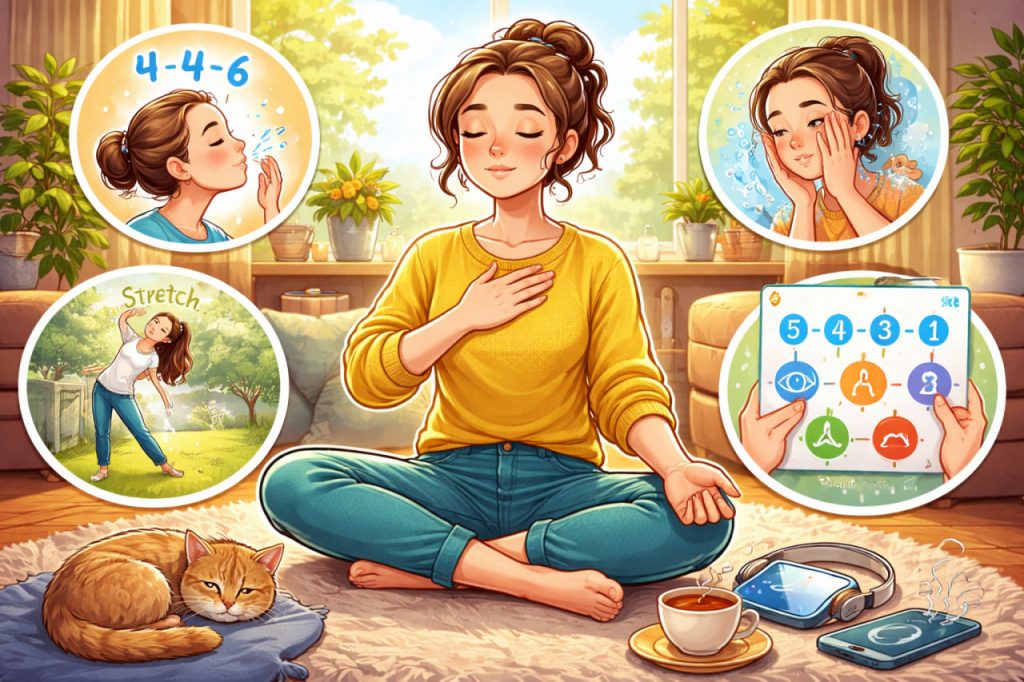
One of the fastest ways to calm down is through controlled breathing. Slow, deep breathing signals the nervous system to relax.
A simple method:
- Inhale slowly through the nose for 4 seconds
- Hold for 4 seconds
- Exhale slowly for 6–8 seconds
This technique helps reduce heart rate and promotes a sense of calm within minutes.
Grounding Yourself in the Present Moment
Anxiety often comes from worrying about the future or overthinking the past. Grounding techniques help bring your attention back to the present.
Try the 5-4-3-2-1 method:
- 5 things you can see
- 4 things you can feel
- 3 things you can hear
- 2 things you can smell
- 1 thing you can taste
This simple exercise helps interrupt anxious thoughts and restore focus.
Physical Movement and Reset
Even small movements can help release tension. Walking, stretching, or changing posture can reduce stress signals in the body.
Physical activity helps shift your attention and supports the release of natural calming chemicals.
Cold Stimulus Technique
A quick way to reset your nervous system is exposure to mild cold. Splashing cold water on your face or holding something cold can activate calming reflexes.
This method works because it influences the body’s automatic response systems.
Mental Reframing
Sometimes stress comes from how we interpret situations. By changing perspective, you can reduce emotional intensity.
Instead of thinking:
- “This is terrible”
Try:
- “This is uncomfortable, but manageable”
This shift can significantly reduce anxiety.
Create a Personal Calm Routine
The most effective approach is to combine techniques and build your own routine. This could include breathing, movement, and mental focus.
Consistency makes these methods more effective over time.
Long-Term Benefits of Staying Calm
Learning to calm yourself quickly improves decision-making, communication, and resilience. It helps you respond thoughtfully instead of reacting impulsively.
A Skill You Can Train
Calmness is not something you either have or don’t—it is a skill that can be developed. With practice, these techniques become automatic tools you can use anytime.
P.S. Personally, I recommend spending 9 minutes in the morning and 9 minutes at night to practice Schultz’s autogenic training, which can greatly enhance your life.
Interesting Facts
- Slow breathing can lower heart rate within minutes.
- Stress activates the fight-or-flight response.
- Grounding techniques help reduce overthinking.
- Cold exposure can trigger calming reflexes.
- Calmness improves focus and decision-making.
Glossary
- Fight-or-Flight Response — body’s reaction to stress.
- Grounding — focusing on the present moment.
- Stress Hormones — chemicals released during stress.
- Nervous System — system controlling body responses.
- Reframing — changing how you interpret situations.