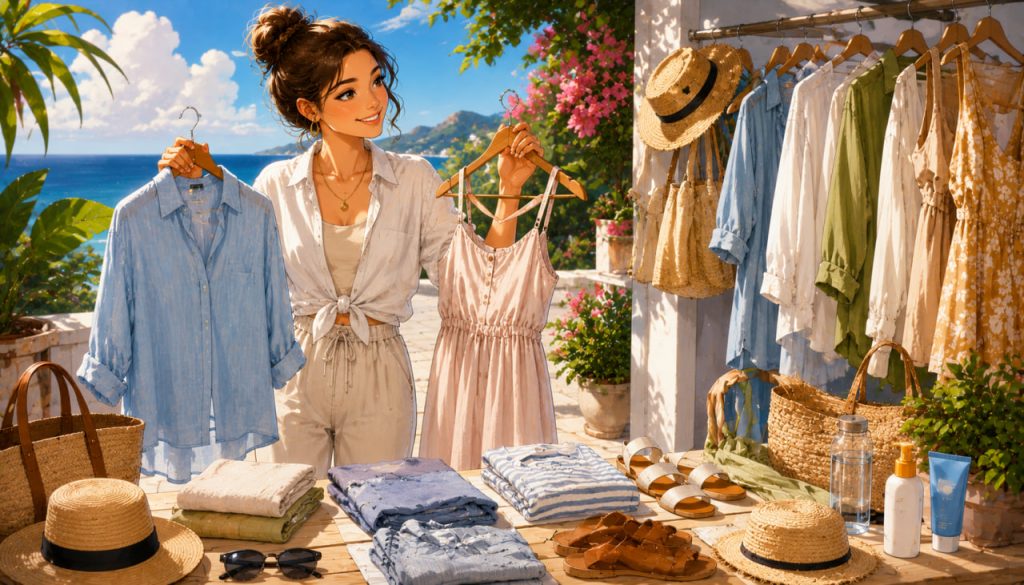
Summer clothing is not only about fashion. In hot weather, the wrong outfit can make you feel overheated, sweaty, uncomfortable, and even increase the risk of heat-related problems. The right clothes help your body stay cooler, protect your skin from the sun, reduce irritation, and make daily life much more comfortable.
When temperatures rise, your body works harder to regulate heat through sweating and blood circulation. Clothing can either support this process or make it harder. Heavy fabrics, tight silhouettes, dark colors, and poor ventilation may trap heat, while breathable fabrics and loose shapes help air move around the skin.
This guide explains how to choose summer clothing wisely, which fabrics work best, how to dress for sun protection, and what common summer wardrobe mistakes to avoid.
Choose Breathable Fabrics First
The most important summer clothing rule is simple: choose fabrics that allow air to circulate.
Good summer fabrics include:
- Cotton
- Linen
- Bamboo viscose
- Tencel or lyocell
- Lightweight silk
- Moisture-wicking athletic fabrics
Cotton is soft, affordable, and widely available. Linen is especially useful in hot climates because it dries quickly and feels airy on the skin.
Synthetic fabrics can be comfortable if they are designed for sports and moisture management. However, cheap polyester clothing may trap heat and odor.
Breathable fabric is the foundation of comfortable summer dressing.
Loose Clothing Helps the Body Cool Down
Tight clothing can restrict airflow and trap sweat against the skin.
In summer, loose or relaxed silhouettes usually feel better.
Good options include:
- Wide-leg trousers
- Loose shirts
- Flowy dresses
- Oversized linen tops
- Relaxed shorts
- Lightweight skirts
Loose clothing creates space between the fabric and the body, allowing sweat to evaporate more effectively.
Evaporation is one of the body’s main cooling mechanisms.
In hot weather, comfort often depends more on fit than on the thickness of the fabric.
Light Colors Reflect More Sunlight
Color matters in summer.
Light-colored clothing reflects more sunlight, while darker colors absorb more heat.
Useful summer colors include:
- White
- Beige
- Cream
- Light blue
- Pale yellow
- Soft pink
- Light gray
- Pastel green
This does not mean you must avoid dark clothing completely. But during direct sun exposure, lighter shades usually feel cooler.
For long walks, outdoor work, beach trips, or sightseeing, light colors are often more practical.
Sun Protection Should Be Part of Your Outfit
Clothing can be one of the most effective forms of sun protection.
A good summer outfit should protect vulnerable areas such as:
- Shoulders
- Neck
- Chest
- Arms
- Face
- Scalp
Helpful items include:
- Wide-brimmed hats
- Lightweight long-sleeve shirts
- Sunglasses with UV protection
- Long linen trousers
- UPF-rated clothing
- Light scarves for neck protection
Many people assume short clothing is always better in summer. In reality, loose long sleeves made from breathable fabric can sometimes keep you cooler while protecting your skin.
The best summer outfit balances cooling, comfort, and sun protection.
What Is UPF Clothing?
UPF stands for Ultraviolet Protection Factor.
It measures how well fabric blocks ultraviolet radiation from the sun.
For example, UPF 50 fabric blocks most UV rays from reaching the skin.
UPF clothing is especially useful for:
- Beach days
- Hiking
- Boating
- Gardening
- Outdoor sports
- Travel in sunny regions
Regular clothing can also provide protection, but its effectiveness depends on fabric type, weave density, color, and stretch.
A thin white T-shirt may provide less sun protection than many people expect, especially when wet.
Footwear: Comfort and Safety Matter
Summer shoes should allow ventilation while still supporting your feet.
Good choices include:
- Breathable sneakers
- Comfortable sandals
- Espadrilles
- Lightweight loafers
- Walking sandals
- Mesh athletic shoes
Flip-flops are useful for the pool or beach, but they are usually not ideal for long walking because they offer little arch support and minimal protection.
For city walks or travel, choose shoes that combine breathability with stability.
Hot weather footwear should prevent overheating without sacrificing foot support.
Avoid Heavy and Non-Breathable Materials
Some fabrics are uncomfortable in summer because they trap heat and moisture.
Try to avoid wearing these in hot weather:
- Thick denim
- Heavy polyester
- Leather clothing
- Tight synthetic dresses
- Dense knitwear
- Rubberized fabrics
- Thick layered outfits
These materials may cause sweating, friction, and skin discomfort.
If you love denim, choose lightweight denim or loose denim shorts instead of heavy jeans.
Summer Clothing for Work
Office clothing in summer can be challenging because you need to balance professionalism and comfort.
Good workwear options include:
- Linen-blend shirts
- Lightweight blouses
- Breathable trousers
- Midi skirts
- Loose cotton dresses
- Unlined blazers
- Short-sleeve button-down shirts
Natural fabrics mixed with a small amount of synthetic fiber can reduce wrinkling while maintaining breathability.
If your office has strong air conditioning, carry a lightweight cardigan or thin jacket.
Clothing for Exercise in Summer
Workout clothing should manage sweat efficiently.
For exercise, choose:
- Moisture-wicking shirts
- Breathable shorts
- Lightweight leggings
- Sports bras with ventilation
- Running caps
- UV-protective athletic tops
Cotton is comfortable for casual wear, but during intense exercise it can hold sweat and become heavy.
Technical sports fabrics often perform better for running, cycling, hiking, and gym workouts.
For summer workouts, moisture management is just as important as softness.
Common Summer Clothing Mistakes
Many people dress for summer in ways that seem logical but are not always practical.
Common mistakes include:
- Wearing very tight clothes
- Choosing black outfits for long sun exposure
- Forgetting hats and sunglasses
- Wearing flip-flops for long walking
- Choosing synthetic fabrics that trap sweat
- Ignoring sun protection
- Wearing too many layers
- Choosing fashion over comfort during heatwaves
The goal is not to abandon style. The goal is to choose clothing that looks good and helps your body stay comfortable.
Expert Perspective
Dermatologists consistently emphasize that clothing is an important part of sun protection. Organizations such as the American Academy of Dermatology recommend using protective clothing, wide-brimmed hats, sunglasses, shade, and sunscreen together to reduce UV exposure.
This expert advice matters because summer dressing should not focus only on staying cool. It should also protect the skin from sunburn and long-term UV damage.
A smart summer wardrobe protects both comfort and health.
Building a Practical Summer Wardrobe
A good summer wardrobe does not need to be large.
Useful basics include:
- Two or three breathable shirts
- Lightweight trousers or shorts
- One loose summer dress or jumpsuit
- Comfortable walking sandals
- A wide-brimmed hat
- UV-protective sunglasses
- A thin overshirt or linen layer
- Breathable underwear and socks
Choose pieces that combine easily and match your daily lifestyle.
The best summer wardrobe is simple, comfortable, washable, and practical.
In summer, the most stylish outfit is often the one that lets you move, breathe, and enjoy the day comfortably.
Interesting Facts
- Linen is one of the oldest textile fibers used by humans and remains one of the best fabrics for hot climates.
- Loose long-sleeve clothing can sometimes feel cooler than tight short clothing because it protects skin from direct sunlight.
- Wet fabric may provide less UV protection than dry fabric, depending on the material.
- Dark clothing absorbs more solar radiation, but fabric thickness and weave also influence heat and UV protection.
- UPF clothing is tested specifically for sun protection, unlike ordinary fashion clothing.
- Wide-brimmed hats protect not only the face but also the ears and neck, which are often forgotten during sun exposure.
Glossary
- Breathable Fabric – Material that allows air and moisture to pass through, helping the body stay cooler.
- UPF – Ultraviolet Protection Factor, a rating that shows how well fabric blocks UV radiation.
- Moisture-Wicking Fabric – Fabric designed to pull sweat away from the skin so it can evaporate faster.
- UV Radiation – Ultraviolet radiation from the sun, which can cause sunburn and contribute to skin aging and skin cancer risk.
- Linen – A natural fabric made from flax fibers, known for breathability and quick drying.
- Tencel / Lyocell – A soft, breathable fiber made from wood pulp using modern textile processing.
- Heatwave – A prolonged period of unusually hot weather that may increase health risks.
- Layering – Wearing multiple clothing layers to adjust comfort and protection depending on temperature and environment.