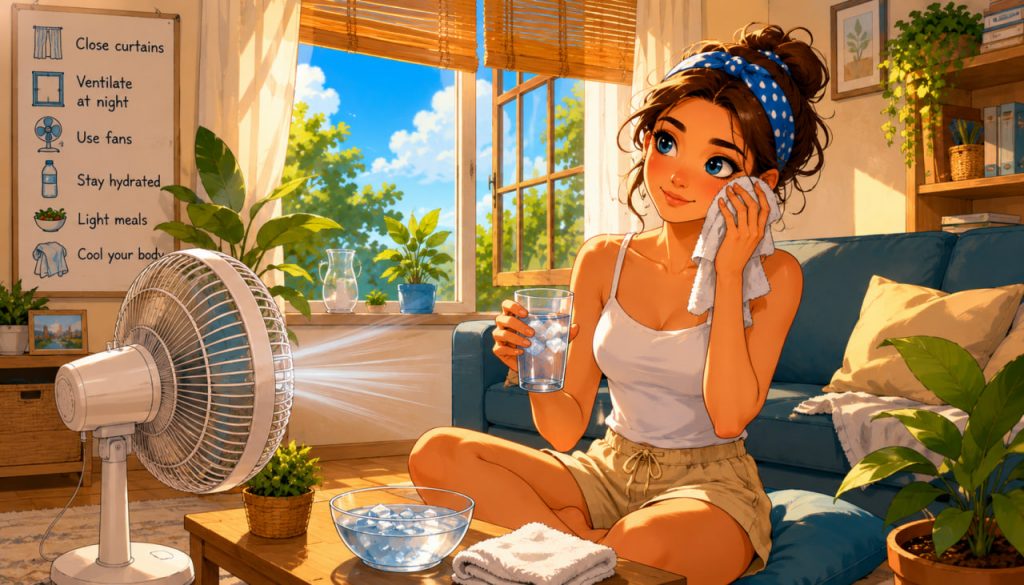
Extreme heat can be uncomfortable, exhausting, and dangerous, especially if you do not have air conditioning at home. When indoor temperatures rise, the body has to work harder to cool itself through sweating and blood circulation. If heat stress continues for too long, it can lead to dehydration, heat exhaustion, or even heatstroke.
The good news is that there are practical ways to reduce heat exposure even without an air conditioner. You can cool your body directly, manage airflow, block sunlight, reduce indoor heat sources, and plan your daily routine around the coolest parts of the day.
This guide explains what to do when it is hot and you have no air conditioning, how to cool your home naturally, which mistakes to avoid, and when heat becomes a medical emergency.
Keep Sunlight Out During the Day
The easiest way to keep your home cooler is to prevent heat from entering in the first place.
During the hottest hours, close:
- Curtains
- Blinds
- Shutters
- Windows facing direct sun
Rooms exposed to direct sunlight heat up quickly. The UK Health Security Agency recommends keeping windows and curtains closed in rooms facing the sun during the day, then opening windows when the air outside becomes cooler than inside.
If you do not have blackout curtains, you can use temporary solutions:
- Thick fabric
- Reflective window film
- Light-colored sheets
- Cardboard covered with foil
- External shade if available
Blocking sunlight early is much easier than trying to cool an overheated room later.
Ventilate at the Right Time
Opening windows all day may feel logical, but it can make your home hotter if the outside air is warmer than the indoor air.
A better strategy is:
- Keep windows closed during peak heat.
- Open windows early in the morning.
- Open windows late evening or night when outdoor air cools.
- Create cross-ventilation if windows are on opposite sides.
- Use fans to move cooler night air through the home.
Cross-ventilation works best when air can enter from one side and exit from another.
If it is safe, keep interior doors open to improve airflow.
Ventilation works best when you use cooler outdoor air, not when you invite peak heat inside.
Use Fans Correctly
Fans do not actually lower room temperature. They cool people by helping sweat evaporate from the skin.
The CDC warns that people should not rely only on fans during very hot conditions, because fans may provide comfort but may not prevent heat-related illness when temperatures are extremely high.
The CDC also advises using fans only when indoor temperatures are below 90°F, because above that level they may not be enough to protect health.
Useful fan methods include:
- Place a bowl of ice or cold water in front of a fan.
- Put a fan near a window at night to pull in cooler air.
- Use one fan to bring cool air in and another to push hot air out.
- Aim airflow toward your body, not just the room.
Fans help most when combined with hydration, shade, cool showers, and reduced indoor heat.
Cool Your Body Directly
When there is no air conditioning, cooling your body is often more effective than trying to cool the entire room.
Helpful methods include:
- Taking cool showers or baths
- Applying cool wet cloths to the neck
- Wetting wrists and forearms
- Placing a damp towel on the chest
- Soaking feet in cool water
- Wearing damp lightweight clothing indoors
The CDC recommends cool showers or baths as one way to prevent heat-related illness during hot weather.
The NHS also advises using cool water on skin or clothes and drinking regular cold drinks in hot weather.
Cooling the neck, wrists, and skin can reduce heat stress faster than waiting for the room to cool down.
Drink More Water Than Usual
During heat, your body loses more fluid through sweat.
The CDC recommends drinking more water than usual and not waiting until you feel thirsty.
Good choices include:
- Water
- Cold herbal tea
- Diluted fruit drinks
- Oral rehydration solution when needed
- Electrolyte drinks after heavy sweating
Try to limit:
- Alcohol
- Excess caffeine
- Very sugary drinks
WHO advises drinking enough water throughout the day, carrying a refillable bottle, and avoiding excessive caffeine and alcohol during heat.
Thirst is not always an early warning sign, so drink regularly before dehydration begins.
Eat Light and Avoid Heating the Kitchen
Cooking can significantly raise indoor temperature.
The CDC specifically recommends using the stove and oven less to keep the home cooler.
Better hot-weather meals include:
- Salads
- Cold soups
- Yogurt with fruit
- Smoothies
- Sandwiches
- Fresh vegetables
- Water-rich fruits
- Pre-cooked grains
- Light protein dishes
If you need to cook, use lower-heat appliances:
- Microwave
- Electric kettle
- Slow cooker
- Air fryer
- Outdoor grill if safe and appropriate
In a heatwave, every unnecessary heat source inside the home makes cooling harder.
Create One “Cool Room” or Cool Corner
If cooling the entire home is impossible, focus on one space.
Choose the coolest room, usually:
- A shaded room
- A lower-floor room
- A room with fewer windows
- A room away from direct afternoon sun
Make it more comfortable with:
- Fans
- Closed curtains
- Cold water nearby
- Damp towels
- Light bedding
- Minimal electronics
- A mattress closer to the floor if safe
Heat rises, so lower areas of the home are often cooler.
If your bedroom becomes too hot at night, sleeping in a cooler room may be safer.
Reduce Indoor Heat Sources
Many everyday devices release heat.
During peak hours, reduce use of:
- Oven
- Stove
- Dryer
- Incandescent bulbs
- Gaming computers
- Large televisions
- Unnecessary chargers
- Dishwashers with heated drying
Switching off unused electronics can slightly reduce indoor heat.
LED bulbs are also better than older incandescent bulbs because they produce far less heat.
Small heat sources add up when your home has no air conditioning.
Plan Activities Around Cooler Hours
Avoid heavy work during the hottest part of the day.
WHO recommends avoiding strenuous activity during the hottest time and staying in the shade.
A safer daily rhythm includes:
- Physical tasks early morning
- Rest during peak afternoon heat
- Outdoor errands in the evening
- Exercise only during cooler hours
- Frequent breaks if work cannot be postponed
Heat stress increases quickly when physical activity, dehydration, and high humidity combine.
In hot weather, timing your activities can be as important as what you wear or drink.
Know When to Leave Home
Sometimes home cooling methods are not enough.
If your indoor temperature remains dangerously high, spend time in cooler public places such as:
- Libraries
- Shopping centers
- Community cooling centers
- Public buildings
- Friends’ or relatives’ homes with air conditioning
WHO Europe recommends spending 2–3 hours of the day in a cool place if possible during hot weather.
This is especially important for:
- Older adults
- Babies and young children
- Pregnant people
- People with heart or lung disease
- People taking certain medications
- People living alone
Leaving an overheated home for a few hours can protect your health.
Expert Perspective
Public health agencies such as the CDC, WHO, and NHS consistently emphasize that heat safety depends on three priorities: staying hydrated, keeping the body cool, and reducing exposure to peak heat. The CDC specifically warns that fans alone may not prevent heat-related illness during very hot conditions, while WHO recommends avoiding strenuous activity during the hottest hours and spending time in cooler places when possible.
This guidance reflects a key public health principle: during extreme heat, comfort is important, but preventing heat illness is the real priority.
Warning Signs of Heat Illness
Heat exhaustion may include:
- Heavy sweating
- Weakness
- Dizziness
- Headache
- Nausea
- Muscle cramps
- Fast pulse
- Cool or clammy skin
Heatstroke is a medical emergency.
Warning signs may include:
- Confusion
- Fainting
- Very high body temperature
- Hot skin
- Seizures
- Loss of consciousness
If heatstroke is suspected, seek emergency medical help immediately and begin cooling the person while waiting.
Confusion, fainting, or loss of consciousness during heat should never be treated as normal tiredness.
Interesting Facts
- Fans cool people by increasing sweat evaporation, not by lowering the room temperature.
- Closing curtains during the day can reduce indoor heat gain from direct sunlight.
- Heat rises, so lower floors are often cooler than upper floors.
- Cooking with an oven can noticeably increase indoor temperature during hot weather.
- Humidity makes heat more dangerous because sweat evaporates less efficiently.
- Older adults and young children are more vulnerable because their bodies regulate temperature less effectively.
- Spending even a few hours in a cooler place can reduce heat stress during dangerous heat events.
Glossary
- Heat Exhaustion – A heat-related illness caused by the body overheating, often with sweating, weakness, dizziness, and nausea.
- Heatstroke – A life-threatening emergency in which the body can no longer control its temperature.
- Dehydration – A condition that occurs when the body loses more fluid than it takes in.
- Cross-Ventilation – Air movement through a space from one opening to another.
- Evaporation – The process by which liquid becomes vapor, helping cool the body when sweat evaporates.
- Heat Index – A measure of how hot it feels when humidity is combined with air temperature.
- Cooling Center – A public location where people can go to escape dangerous heat.
- Electrolytes – Minerals such as sodium and potassium that help regulate fluid balance, nerves, and muscles.