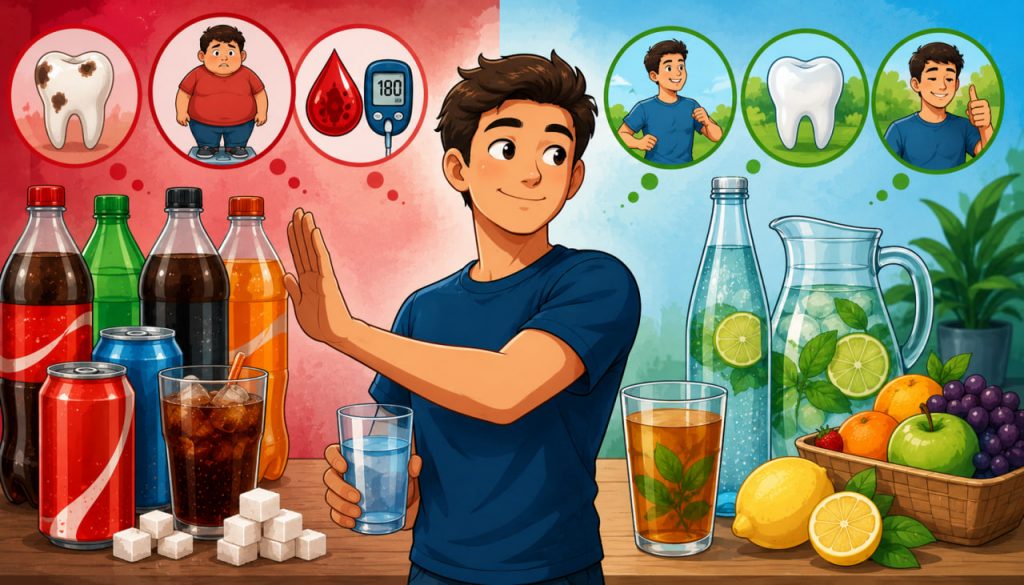
Carbonated soft drinks became one of the most popular beverages in modern society. Found in:
- Restaurants
- Supermarkets
- Fast-food chains
- Schools
- Offices
- Vending machines
these drinks are consumed daily by millions of people worldwide.
Their popularity comes from:
- Sweet taste
- Strong branding
- Caffeine stimulation
- Refreshing carbonation
- Convenience
However, growing scientific research increasingly connects excessive soft drink consumption with multiple health concerns involving:
- Obesity
- Diabetes
- Tooth decay
- Cardiovascular risks
- Metabolic disorders
Many nutrition experts now recommend significantly reducing or even eliminating sugary carbonated beverages from regular diets.
Understanding how these drinks affect the human body helps people make more informed decisions about nutrition and long-term health.
What Are Carbonated Soft Drinks?
Carbonated beverages are drinks containing dissolved carbon dioxide gas, creating bubbles and fizz.
Most commercial soft drinks also contain:
- Sugar or artificial sweeteners
- Flavorings
- Acids
- Color additives
- Caffeine in some cases
Popular examples include:
- Cola drinks
- Energy sodas
- Sweet sparkling beverages
- Flavored carbonated drinks
Modern soft drinks are heavily processed industrial products designed for:
- Taste stimulation
- Long shelf life
- Mass distribution
Why Humans Like Sugary Drinks
Humans naturally enjoy sweet flavors because sweetness historically signaled:
- Energy-rich foods
Sugar activates reward systems in the brain involving:
- Dopamine release
- Pleasure responses
Soft drinks combine:
- Sweetness
- Cold temperature
- Carbonation
- Flavor intensity
This combination strongly stimulates sensory and reward pathways.
Food researcher Robert Lustig explained:
“Sugar is not just calories — it affects hormonal and metabolic systems.”
This is one reason sugary beverages may strongly influence eating behavior.
High Sugar Content
One of the biggest concerns involves:
- Extremely high sugar levels
Many soft drinks contain large amounts of:
- Added sugar
- Corn syrup
Liquid sugar enters the bloodstream rapidly because it requires minimal digestion.
Excessive sugar intake may contribute to:
- Weight gain
- Insulin resistance
- Type 2 diabetes
- Fat accumulation
Unlike solid food, sugary drinks often provide:
- High calories
- Low satiety
meaning people may consume large amounts without feeling full.
Obesity and Metabolic Problems
Research increasingly links frequent soft drink consumption with:
- Obesity
- Metabolic syndrome
Liquid calories are often easier to overconsume than solid foods.
Frequent sugar spikes may affect:
- Blood glucose regulation
- Insulin response
- Appetite control
Modern diets already contain high levels of processed sugar, and soft drinks often become one of the largest sources.
Artificial Sweeteners and Diet Drinks
Some people switch to:
- Sugar-free beverages
- Diet sodas
These drinks use artificial sweeteners instead of sugar.
Scientists continue debating the long-term effects of some artificial sweeteners.
Possible concerns include:
- Appetite changes
- Gut microbiome effects
- Altered taste preferences
Although diet drinks may reduce sugar intake, many nutrition experts still recommend prioritizing:
- Water
- Natural beverages
- Unsweetened drinks
Tooth Damage and Acidity
Carbonated beverages are highly acidic.
Acids combined with sugar may damage:
- Tooth enamel
- Dental health
Frequent consumption may increase risks of:
- Cavities
- Enamel erosion
- Tooth sensitivity
Even sugar-free sodas may still contain acidic compounds harmful to teeth.
Dentists often warn against continuous sipping throughout the day because prolonged acid exposure increases enamel damage.
Caffeine and Nervous System Effects
Many soft drinks contain:
- Caffeine
Caffeine may temporarily increase:
- Alertness
- Energy
- Concentration
However, excessive caffeine intake may also contribute to:
- Sleep problems
- Anxiety
- Nervousness
- Heart palpitations in sensitive individuals
Children and adolescents may be especially sensitive to high caffeine consumption.
Soft Drinks and Hydration
Although soft drinks contain water, they are not always ideal hydration sources.
High sugar intake may sometimes contribute to:
- Increased thirst
- Energy fluctuations
Water remains the healthiest primary hydration source for most people.
Natural alternatives may include:
- Mineral water
- Herbal tea
- Fresh fruit-infused water
Marketing and Consumer Psychology
Soft drink companies became masters of global marketing.
Advertising often connects beverages with:
- Happiness
- Friendship
- Energy
- Sports
- Entertainment
Colorful branding and emotional advertising strongly influence consumer behavior.
Many experts argue modern food industries increasingly optimize products for:
- Craving stimulation
- Habit formation
- Repeat consumption
Healthier Alternatives
Nutrition specialists often recommend replacing soft drinks gradually rather than suddenly.
Healthier options may include:
- Water
- Sparkling water without sugar
- Herbal teas
- Natural fruit water
- Unsweetened beverages
Reducing sugary drink intake may improve:
- Energy stability
- Weight management
- Dental health
- Metabolic health
Even small dietary improvements may produce long-term benefits.
Children and Soft Drink Consumption
Children are especially vulnerable to aggressive beverage marketing.
Frequent sugary drink consumption during childhood may influence:
- Taste preferences
- Weight development
- Dental health
- Long-term eating habits
Many schools and health organizations now encourage reducing sugary beverage access among children.
Environmental Concerns
Soft drink industries also generate environmental challenges involving:
- Plastic waste
- Packaging pollution
- High water usage
- Transportation emissions
Billions of plastic bottles are produced globally each year.
Sustainability therefore became another important discussion surrounding modern beverage industries.
Why Reducing Soft Drinks Matters
Soft drinks are not necessarily dangerous when consumed occasionally and moderately.
However, regular excessive consumption may significantly affect:
- Metabolic health
- Weight
- Dental condition
- Nutritional balance
Modern nutrition science increasingly emphasizes reducing highly processed sugary beverages as part of healthier lifestyles.
Replacing soft drinks with healthier alternatives may become one of the simplest and most effective long-term dietary improvements for many people.
Interesting Facts
- Some soft drinks contain extremely high amounts of added sugar.
- Carbonation itself is created using dissolved carbon dioxide gas.
- Acidic beverages may damage tooth enamel over time.
- Liquid calories are often less filling than solid food calories.
- Water remains the healthiest primary hydration source for humans.
Glossary
- Carbonation — Dissolved carbon dioxide gas creating bubbles in drinks.
- Metabolism — The body’s system for processing energy and nutrients.
- Insulin Resistance — Reduced effectiveness of insulin regulation in the body.
- Tooth Enamel — The protective outer layer of teeth.
- Artificial Sweetener — A low-calorie substance used to replace sugar in foods and drinks.