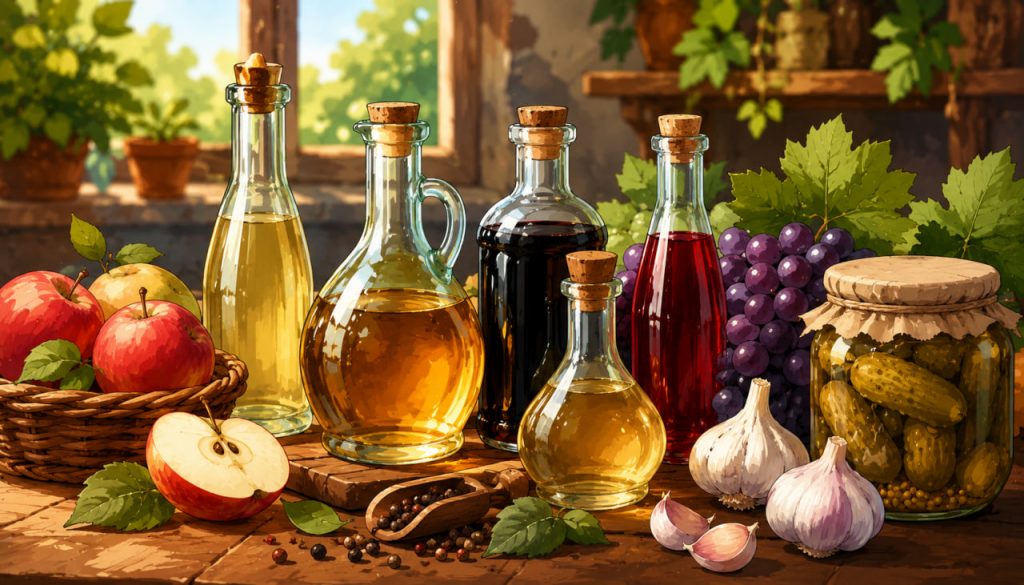
Vinegar is one of the oldest and most widely used substances in human history. Found in kitchens around the world, vinegar has been used for:
- Cooking
- Food preservation
- Cleaning
- Fermentation
- Traditional medicine
for thousands of years.
Despite its simplicity, vinegar is chemically fascinating. It is created through natural biological processes involving:
- Sugar
- Yeast
- Bacteria
- Fermentation
Today vinegar exists in many forms, including:
- Apple cider vinegar
- White vinegar
- Rice vinegar
- Balsamic vinegar
- Wine vinegar
Different cultures developed unique vinegar traditions that became deeply connected to local cuisine and food preservation methods.
Modern science continues studying vinegar because it may influence:
- Digestion
- Blood sugar regulation
- Food safety
- Bacterial growth
At the same time, many exaggerated health myths surrounding vinegar also exist online, making it important to separate:
- Scientific evidence
from - Popular misconceptions
Understanding vinegar reveals a fascinating combination of chemistry, microbiology, history, and nutrition.
What Is Vinegar?
Vinegar is a sour liquid primarily composed of:
- Water
- Acetic acid
Acetic acid gives vinegar its:
- Sharp taste
- Strong smell
- Preservative properties
Most vinegar contains:
- 4% to 8% acetic acid
depending on the type and production method.
Vinegar forms through a two-stage fermentation process involving microorganisms.
How Vinegar Is Made
Vinegar production begins with:
- Sugars or carbohydrates
These may come from:
- Apples
- Grapes
- Rice
- Malt
- Honey
First, yeast converts sugars into:
- Alcohol
Then special bacteria called:
- Acetic acid bacteria
convert alcohol into acetic acid through exposure to oxygen.
This process is known as:
- Acetic fermentation
Without bacteria and oxygen, vinegar would not form naturally.
The Ancient History of Vinegar
Humans used vinegar for thousands of years.
Ancient civilizations including:
- Egyptians
- Greeks
- Romans
- Chinese cultures
all produced vinegar.
Historically, vinegar was valuable because it helped:
- Preserve food
- Improve flavor
- Reduce spoilage risks
Before refrigeration existed, acidic preservation methods became critically important for survival.
Some historical records suggest vinegar was even used in:
- Ancient medicine
- Wound cleaning
- Water purification attempts
Why Vinegar Prevents Spoilage
The acidity of vinegar creates environments difficult for many harmful microorganisms to survive in.
This makes vinegar useful for:
- Pickling
- Food preservation
- Fermentation control
Acidic conditions may slow the growth of:
- Bacteria
- Mold
- Some pathogens
This preservation ability made vinegar especially valuable before modern food storage systems existed.
Vinegar in Cooking
Vinegar plays an important role in global cuisine.
It adds:
- Acidity
- Brightness
- Balance
- Flavor complexity
Chefs often use vinegar in:
- Sauces
- Marinades
- Salad dressings
- Pickled foods
- Fermented dishes
Different vinegar varieties create unique taste profiles.
For example:
- Balsamic vinegar tastes sweeter and richer.
- Rice vinegar is milder and lighter.
- White vinegar has stronger acidity.
Apple Cider Vinegar and Health Claims
One of the most popular modern varieties is:
- Apple cider vinegar
It became especially famous through social media health trends.
Some studies suggest vinegar may slightly influence:
- Blood sugar response
- Digestion
- Satiety
However, many internet claims remain scientifically exaggerated.
Nutrition scientist Carol Johnston explained:
“There is some evidence vinegar may modestly help blood glucose control, but it is not a miracle treatment.”
Moderation and scientific caution remain important.
Vinegar and Blood Sugar
Some research suggests vinegar may slightly slow:
- Carbohydrate digestion
- Glucose absorption
This may help reduce rapid blood sugar spikes after meals in certain situations.
Scientists continue studying these effects carefully.
However, vinegar should never replace:
- Medical treatment
- Proper nutrition
- Professional healthcare advice
Cleaning and Household Use
Vinegar is also widely used as a:
- Household cleaner
Its acidity may help dissolve:
- Mineral deposits
- Grease
- Some surface buildup
Many people use vinegar for:
- Kitchen cleaning
- Removing odors
- Glass cleaning
However, vinegar is not effective against every type of bacteria or contamination.
Certain cleaning combinations may also become dangerous.
For example:
- Mixing vinegar with bleach may release harmful gases.
Fermentation and Microbiology
Vinegar production demonstrates the importance of:
- Beneficial microorganisms
Fermentation became one of humanity’s oldest biotechnology processes.
Microbial fermentation also produces:
- Yogurt
- Cheese
- Bread
- Beer
- Soy sauce
Vinegar therefore represents both:
- Culinary tradition
- Applied microbiology
Different Types of Vinegar
Various cultures created specialized vinegar types.
Examples include:
- Balsamic vinegar from Italy
- Rice vinegar from East Asia
- Malt vinegar from Britain
- Coconut vinegar in tropical regions
Flavor depends heavily on:
- Raw ingredients
- Fermentation methods
- Aging processes
Some premium vinegars age for many years similarly to fine wines.
Why Vinegar Smells So Strong
The sharp smell of vinegar comes mainly from:
- Volatile acetic acid molecules
These molecules evaporate easily into the air, allowing humans to detect vinegar quickly.
The human nose is highly sensitive to acidic odors because smell historically helped detect:
- Spoiled food
- Fermentation
- Chemical danger
Vinegar and Human Culture
Vinegar became deeply integrated into:
- Food traditions
- Agriculture
- Preservation methods
- Traditional remedies
Many cuisines rely heavily on acidic balance for flavor complexity.
Without vinegar, numerous famous dishes and preservation methods would not exist in their current form.
Myths and Misconceptions
Modern internet culture sometimes promotes unrealistic vinegar claims involving:
- Extreme detoxification
- Rapid weight loss
- Miracle healing effects
Scientific evidence does not support many exaggerated health promises.
Excessive vinegar consumption may even irritate:
- Teeth
- Stomach lining
- Throat tissues
Balanced evidence-based understanding is important.
Why Vinegar Matters
Vinegar demonstrates how simple natural chemistry transformed human civilization.
This acidic liquid helped humanity:
- Preserve food
- Develop cuisines
- Explore fermentation
- Improve food safety
Across thousands of years, vinegar remained one of the most useful and versatile substances in kitchens worldwide.
Its story combines:
- Biology
- Chemistry
- Nutrition
- Cultural history
in one of humanity’s oldest scientific traditions.
Interesting Facts
- Vinegar production depends on bacteria converting alcohol into acid.
- Ancient civilizations used vinegar thousands of years ago.
- Acetic acid gives vinegar its sharp smell and sour taste.
- Vinegar helped preserve food before refrigeration existed.
- Some balsamic vinegars are aged for many years.
Glossary
- Acetic Acid — The main acidic compound found in vinegar.
- Fermentation — Biological conversion of substances by microorganisms.
- Acidity — A chemical property associated with low pH.
- Microorganism — Tiny living organisms such as bacteria or yeast.
- Pickling — Food preservation using acidic solutions such as vinegar.