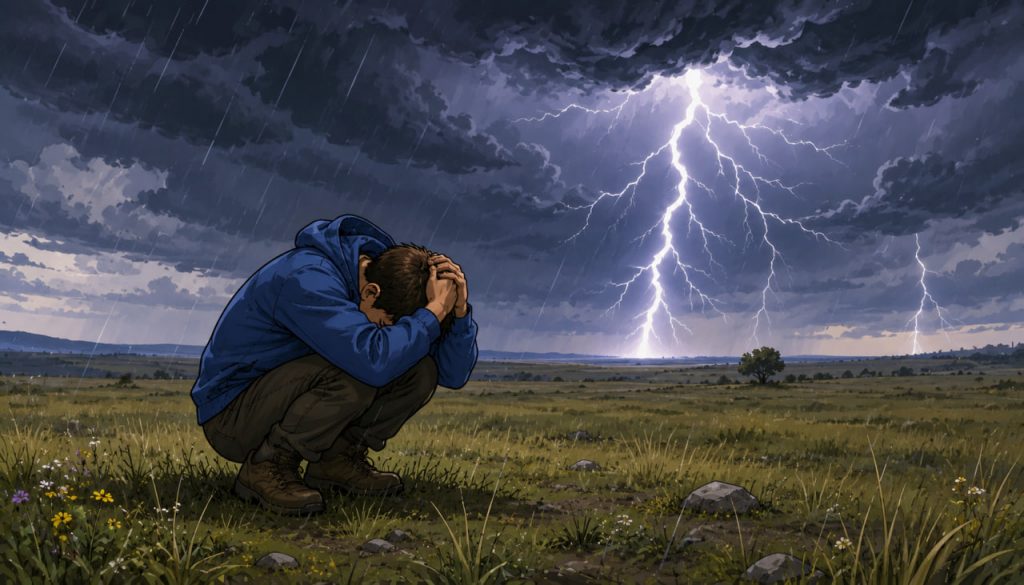
Thunderstorms are among the most dangerous natural weather events people commonly encounter outdoors. Lightning strikes, strong winds, hail, and sudden weather changes can turn an ordinary day into a life-threatening situation within minutes.
Every year, thousands of people worldwide are injured or killed by lightning. Open fields are especially dangerous because they provide little protection from electrical discharge. Many accidents occur during:
- Hiking
- Farming
- Camping
- Sports
- Fishing
- Outdoor work
Understanding how thunderstorms work and knowing the correct safety actions can dramatically improve survival chances.
Modern meteorology and emergency safety research provide clear recommendations for minimizing risk during thunderstorms. The most important rule is simple:
If you hear thunder, you are already close enough to be struck by lightning.
Learning how to react properly in open terrain may save lives.
Why Lightning Is Dangerous
Lightning is a massive electrical discharge occurring between:
- Clouds
- The ground
- Different parts of the atmosphere
A lightning bolt may contain:
- Extremely high voltage
- Intense heat
- Powerful shock waves
Temperatures inside lightning can become hotter than the surface of the Sun for a very brief moment.
Lightning injuries may cause:
- Cardiac arrest
- Nervous system damage
- Burns
- Hearing damage
- Fatal injuries
Even indirect strikes nearby can be dangerous.
Why Open Fields Are Risky
Open terrain increases lightning danger because tall isolated objects often become preferred strike points.
In open fields, a human may become:
- The tallest object nearby
- Part of the electrical pathway
Lightning tends to strike:
- Trees
- Towers
- Poles
- Isolated high objects
However, electrical current may also spread across the ground after impact.
This means people do not need a direct strike to suffer severe injury.
Recognizing Thunderstorm Danger
Thunderstorms may develop rapidly.
Warning signs include:
- Dark towering clouds
- Sudden wind changes
- Distant thunder
- Rapid temperature drops
- Static sensations
If thunder becomes audible, lightning danger already exists.
Meteorologists often recommend the:
- “30-30 rule”
If thunder follows lightning within 30 seconds, the storm is close enough to pose serious risk.
The Safest Place During a Thunderstorm
The safest locations during thunderstorms are:
- Substantial buildings
- Fully enclosed metal vehicles
Buildings with electrical grounding systems provide strong protection.
Cars also act as protective metal shells, directing electricity around occupants.
Small shelters such as:
- Tents
- Picnic structures
- Open pavilions
usually do not provide reliable lightning protection.
What To Do in an Open Field
If no safe shelter is available, reducing exposure becomes critically important.
Experts recommend:
- Move away from isolated tall objects
- Avoid hilltops and ridges
- Stay away from metal fences and poles
- Avoid water and wet ground when possible
If trapped in completely open terrain:
- Crouch low
- Keep feet close together
- Minimize contact with the ground
Do not lie flat on the ground because ground current may spread outward after nearby strikes.
The goal is to reduce:
- Height exposure
- Ground contact area
Why Trees Can Be Dangerous
Many people instinctively run toward trees during storms.
However, isolated trees are among the most dangerous places during lightning activity.
Lightning frequently strikes tall trees because they extend upward into electrically charged air.
Danger near trees includes:
- Direct strikes
- Side flashes
- Falling branches
- Ground current
If inside a forest, safer positions are generally among shorter trees rather than near isolated tall ones.
Water and Lightning Risk
Water conducts electricity effectively.
During thunderstorms, people should avoid:
- Lakes
- Rivers
- Swimming pools
- Boats
- Wet open shorelines
Fishing during storms is especially dangerous because rods may increase strike risk.
Leaving water immediately during thunderstorms is extremely important.
Metal Objects and Common Myths
Metal itself does not “attract” lightning in the way many people imagine.
However, metal conducts electricity very efficiently.
Tall metal structures may increase danger because they become part of conductive pathways.
During storms, avoid:
- Bicycles
- Golf clubs
- Metal poles
- Wire fences
Carrying small metal objects alone is less important than overall exposure location.
Lightning and the Human Body
Lightning injuries affect the body in several ways:
- Electrical current
- Heat
- Shock waves
- Secondary trauma from falls
Surprisingly, some lightning strike victims survive.
Rapid emergency response becomes extremely important after strikes.
Emergency physician Mary Ann Cooper, a leading lightning injury researcher, explained:
“Lightning injury is survivable, especially with immediate medical care.”
This is why emergency assistance should be called immediately after any strike incident.
What To Do If Someone Is Struck
Lightning victims do not carry electrical charge after the strike.
It is safe to touch and help them.
Emergency actions include:
- Calling emergency services
- Checking breathing and pulse
- Starting CPR if necessary
- Moving the victim to safer shelter if possible
Fast medical response may save lives.
Thunderstorms and Modern Technology
Weather forecasting significantly improved thunderstorm safety.
Modern systems include:
- Lightning detection networks
- Radar systems
- Mobile weather alerts
- Satellite monitoring
Many outdoor events now use real-time lightning monitoring for safety decisions.
Technology increasingly helps reduce thunderstorm-related injuries.
Psychological Mistakes During Storms
Many lightning accidents happen because people underestimate danger.
Common mistakes include:
- Waiting too long to seek shelter
- Continuing outdoor activities
- Assuming storms are still “far away”
- Standing under isolated trees
Risk perception plays a major role in thunderstorm safety.
Why Thunderstorm Safety Matters
Thunderstorms are powerful natural phenomena combining:
- Atmospheric electricity
- Physics
- Weather dynamics
- Environmental conditions
Although lightning strikes are relatively rare for individuals, proper knowledge dramatically reduces risk.
Understanding basic storm safety may prevent severe injuries and fatalities, especially in open environments where natural protection is limited.
Nature remains unpredictable, but informed decisions greatly improve survival during dangerous weather conditions.
Interesting Facts
- Lightning can heat air to temperatures hotter than the Sun’s surface.
- A lightning strike may travel through the ground after impact.
- Fully enclosed metal vehicles often provide good lightning protection.
- Thunder is caused by rapidly expanding heated air.
- Lightning detection systems monitor storms worldwide in real time.
Glossary
- Lightning — A powerful atmospheric electrical discharge.
- Ground Current — Electrical energy spreading across the ground after a lightning strike.
- Thunderstorm — A storm containing lightning and thunder activity.
- Electrical Conductor — A material allowing electricity to flow easily.
- Radar — Technology used to detect weather patterns and storms.