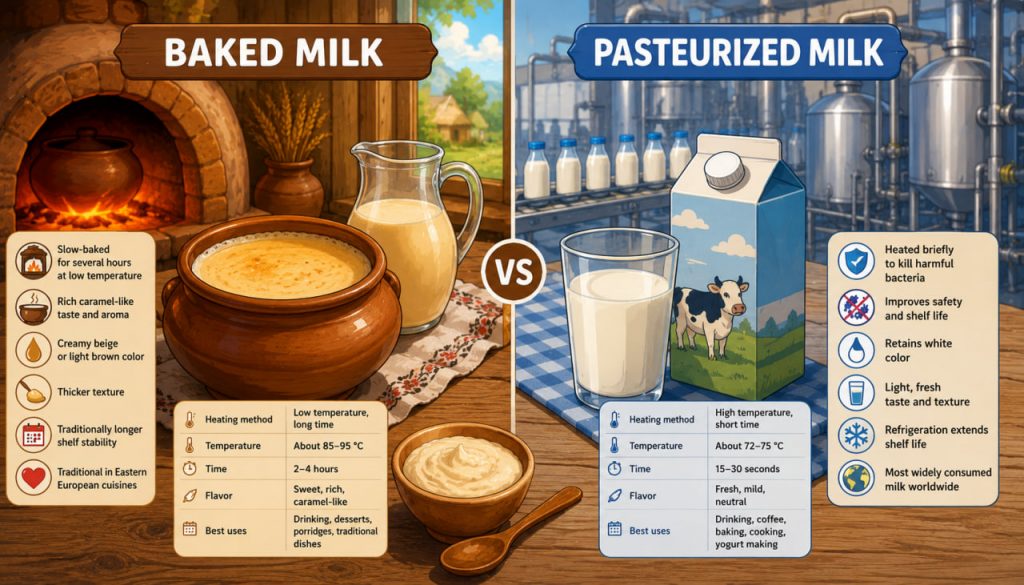
Milk has been part of human nutrition for thousands of years, but modern dairy processing created many different types of milk products with unique taste, texture, and nutritional characteristics. Among the most interesting comparisons is the difference between baked milk and pasteurized milk.
Although both originate from ordinary cow’s milk, they undergo very different heat treatments, resulting in noticeable differences in:
- Flavor
- Color
- Aroma
- Shelf life
- Nutritional composition
- Culinary use
In many Eastern European and Slavic countries, baked milk is especially popular because of its rich caramel-like taste and creamy texture. Pasteurized milk, meanwhile, became the global standard for safe everyday dairy consumption.
Understanding the difference between these two products helps explain how heat treatment changes the chemistry and properties of milk itself.
What Is Pasteurized Milk?
Pasteurized milk is milk heated to a controlled temperature for a short time to destroy harmful microorganisms.
The process was developed by French scientist Louis Pasteur in the 19th century.
Pasteurization helps reduce the risk of dangerous bacteria such as:
- Salmonella
- Listeria
- E. coli
After heating, the milk is rapidly cooled.
This process improves:
- Food safety
- Shelf life
- Microbial stability
Pasteurized milk remains one of the most widely consumed dairy products in the world.
What Is Baked Milk?
Baked milk, sometimes called “slow-heated milk,” is produced differently.
Instead of short high-temperature treatment, the milk is heated slowly for a long period, traditionally:
- Several hours
- At relatively low temperatures
Historically, baked milk was often prepared in clay ovens.
This prolonged heating changes the milk significantly:
- The color becomes creamy beige or light brown
- The taste becomes sweeter and richer
- The aroma develops caramel-like notes
Baked milk is especially traditional in Russian, Ukrainian, and some Eastern European cuisines.
Why the Taste Is Different
The main difference in taste comes from chemical reactions occurring during prolonged heating.
When milk heats for many hours:
- Milk sugars react with proteins
- Natural caramelization processes occur
- Flavor compounds develop gradually
This creates the distinctive sweet, nutty flavor associated with baked milk.
Pasteurized milk, by contrast, retains a fresher and more neutral dairy taste because heating exposure is much shorter.
Differences in Color and Texture
Pasteurized milk usually remains:
- White or slightly creamy
- Light in texture
Baked milk develops:
- Beige or golden tones
- A thicker, creamier consistency
These changes happen because prolonged heating alters milk proteins and sugars.
The surface of baked milk may also develop a soft creamy layer during preparation.
Nutritional Differences
Both products contain important nutrients such as:
- Calcium
- Protein
- Vitamin B12
- Phosphorus
However, prolonged heating may slightly reduce some heat-sensitive vitamins in baked milk.
At the same time, baked milk often contains:
- More concentrated flavor
- Slightly altered protein structure
- Increased sweetness without added sugar
Nutrition scientist Marion Nestle explained:
“Food processing changes both flavor and nutritional properties, sometimes in subtle ways.”
This applies clearly to milk products.
Digestibility and Lactose
Some people report that baked milk feels easier to digest.
Possible reasons include:
- Altered protein structure
- Slower heating process
- Changes in lactose behavior
However, baked milk still contains lactose and is not suitable for people with severe lactose intolerance unless specially processed.
Digestive responses vary between individuals.
Shelf Life and Food Safety
Pasteurized milk is designed primarily for:
- Safety
- Consistency
- Modern distribution systems
Baked milk was historically developed before refrigeration became common and could sometimes remain stable longer due to prolonged heating.
Modern industrial baked milk is also pasteurized or sterilized according to food safety standards.
Safe storage remains essential for all dairy products.
Culinary Uses
Pasteurized milk is highly versatile and used for:
- Drinking
- Coffee
- Baking
- Sauces
- Yogurt production
Baked milk is often enjoyed:
- As a beverage
- In desserts
- In porridges
- In fermented dairy products
Its naturally sweet flavor works especially well in traditional comfort foods.
Traditional and Cultural Importance
Baked milk has strong cultural associations in Eastern Europe.
For centuries, families prepared milk slowly in warm ovens overnight.
This traditional preparation created:
- Rich flavor
- Long-lasting warmth
- Distinctive aroma
Many people associate baked milk with:
- Childhood memories
- Rural traditions
- Homemade cooking
Pasteurized milk, meanwhile, became symbolic of industrial food safety and modern dairy production.
Modern Dairy Technology
Today dairy science continues improving milk processing techniques.
Modern methods aim to balance:
- Safety
- Nutrition
- Flavor
- Shelf life
Some newer milk products include:
- Ultra-pasteurized milk
- Lactose-free milk
- High-protein milk
- Fortified dairy beverages
Food technology increasingly allows customization of milk characteristics for different consumer preferences.
Which Milk Is Better?
Neither type is universally “better.”
Pasteurized milk offers:
- Fresh taste
- Wide availability
- Reliable safety standards
Baked milk offers:
- Rich flavor
- Traditional character
- Creamy texture
The best choice depends on:
- Personal preference
- Culinary use
- Dietary needs
Both products remain popular for different reasons.
Why Milk Processing Matters
The comparison between baked and pasteurized milk demonstrates how food processing can dramatically influence:
- Flavor
- Texture
- Nutrition
- Cultural traditions
Even small changes in preparation methods may create entirely different food experiences.
Milk science also illustrates the broader relationship between:
- Chemistry
- Microbiology
- Nutrition
- Culinary culture
that shapes many everyday foods people consume worldwide.
Interesting Facts
- Baked milk is especially popular in Eastern European cuisine.
- Pasteurization was named after scientist Louis Pasteur.
- Slow heating naturally creates caramel-like flavors in milk.
- Baked milk often develops a beige or golden color.
- Modern pasteurization dramatically reduced many milk-borne diseases.
Glossary
- Pasteurization — Controlled heating used to destroy harmful microorganisms in food.
- Baked Milk — Milk slowly heated for long periods to develop richer flavor and color.
- Lactose — Natural milk sugar found in dairy products.
- Caramelization — Heat-driven chemical reactions producing sweet brown flavors.
- Protein Structure — The physical arrangement of proteins influencing texture and digestion.