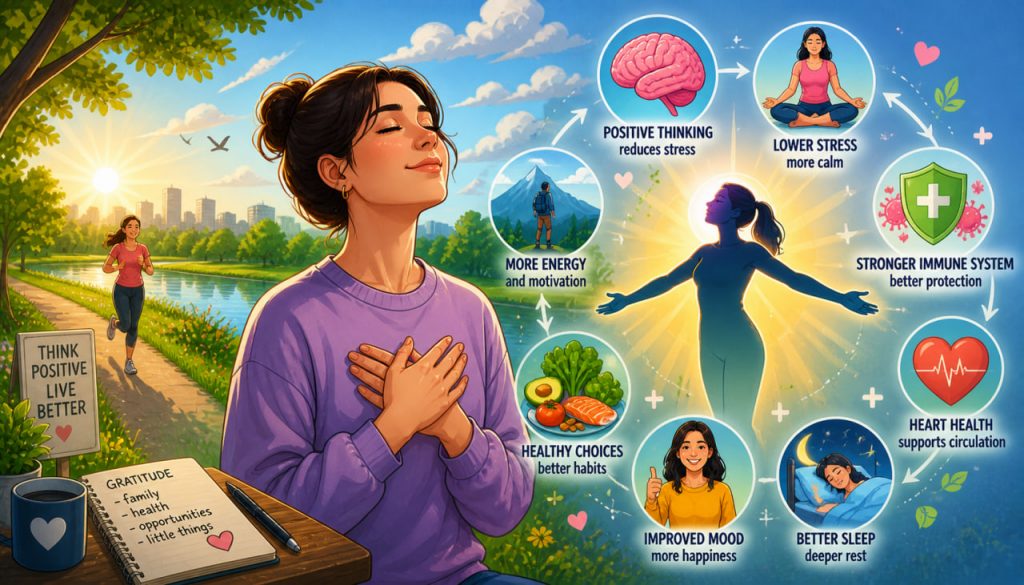
Positive thinking is more than just an optimistic attitude—it is a mental approach that can significantly influence physical and emotional well-being. In recent years, scientific research has shown that the way we think affects how our body functions, including immune response, stress levels, and overall health outcomes.
Understanding the connection between mindset and health can help you build habits that support a longer, healthier, and more balanced life.
What Is Positive Thinking?
Positive thinking is the practice of focusing on constructive thoughts, solutions, and possibilities rather than problems or negative outcomes.
It does not mean ignoring reality. Instead, it involves:
- Viewing challenges as manageable
- Maintaining hope and resilience
- Focusing on what can be controlled
It is a realistic but optimistic way of interpreting life.
The Mind-Body Connection
The brain and body are closely connected through the nervous system, hormones, and immune responses.
When you think positively:
- Stress hormones like cortisol decrease
- The body relaxes
- Heart rate and blood pressure stabilize
When thinking negatively:
- Stress responses increase
- The body remains in a heightened state
- Long-term health may suffer
Mental patterns directly influence physical processes.
Impact on Stress and Anxiety
Positive thinking plays a key role in managing stress.
Benefits include:
- Lower levels of anxiety
- Better emotional regulation
- Faster recovery from stressful events
By changing how situations are interpreted, the brain reduces the intensity of stress responses.
Effects on Physical Health
Research suggests that positive thinking is linked to better physical health outcomes.
It may:
- Strengthen the immune system
- Improve cardiovascular health
- Reduce risk of chronic disease
People with optimistic outlooks often engage in healthier behaviors, such as exercise and balanced diets.
Expert Insight
Psychologist Martin Seligman, a pioneer of positive psychology, explains:
“Optimism is not just a mindset—it is a predictor of better health, performance, and resilience.”
His research shows that mental attitudes can influence long-term well-being.
Positive Thinking and the Brain
The brain responds differently to positive and negative thoughts.
Positive thinking:
- Activates reward pathways
- Increases dopamine levels
- Enhances motivation
Negative thinking:
- Activates fear and stress centers
- Reinforces anxiety patterns
The brain strengthens the patterns it uses most often.
The Role of Neuroplasticity
Neuroplasticity allows the brain to change based on experience.
With repeated positive thinking:
- New neural pathways are formed
- Negative patterns weaken
- Emotional responses improve
This means positive thinking can be developed as a skill over time.
Practical Ways to Develop Positive Thinking
Building a positive mindset requires consistent effort.
Helpful strategies include:
- Practicing gratitude
- Reframing negative thoughts
- Setting realistic goals
- Limiting exposure to negative influences
Small daily habits can create lasting change.
Common Misconceptions
Positive thinking is often misunderstood.
It does not mean:
- Ignoring problems
- Avoiding difficult emotions
- Expecting everything to be perfect
Healthy positivity includes acknowledging challenges while maintaining a constructive outlook.
Long-Term Benefits
Over time, positive thinking can lead to:
- Improved mental health
- Greater resilience
- Better relationships
- Higher life satisfaction
It supports both emotional and physical well-being.
Why It Matters
Positive thinking is not just a psychological concept—it has real biological effects. It influences how the body responds to stress, heals, and functions.
Your mindset shapes your experience of health and life itself.
Interesting Facts
- Positive emotions can reduce stress hormone levels.
- Optimistic people tend to live longer on average.
- The brain can be trained to think more positively.
- Gratitude practices improve mental well-being.
- Stress reduction supports immune function.
Glossary
- Positive Thinking — A mindset focused on constructive outcomes.
- Neuroplasticity — The brain’s ability to adapt and change.
- Cortisol — A hormone related to stress.
- Resilience — The ability to recover from difficulties.
- Dopamine — A chemical linked to motivation and reward.