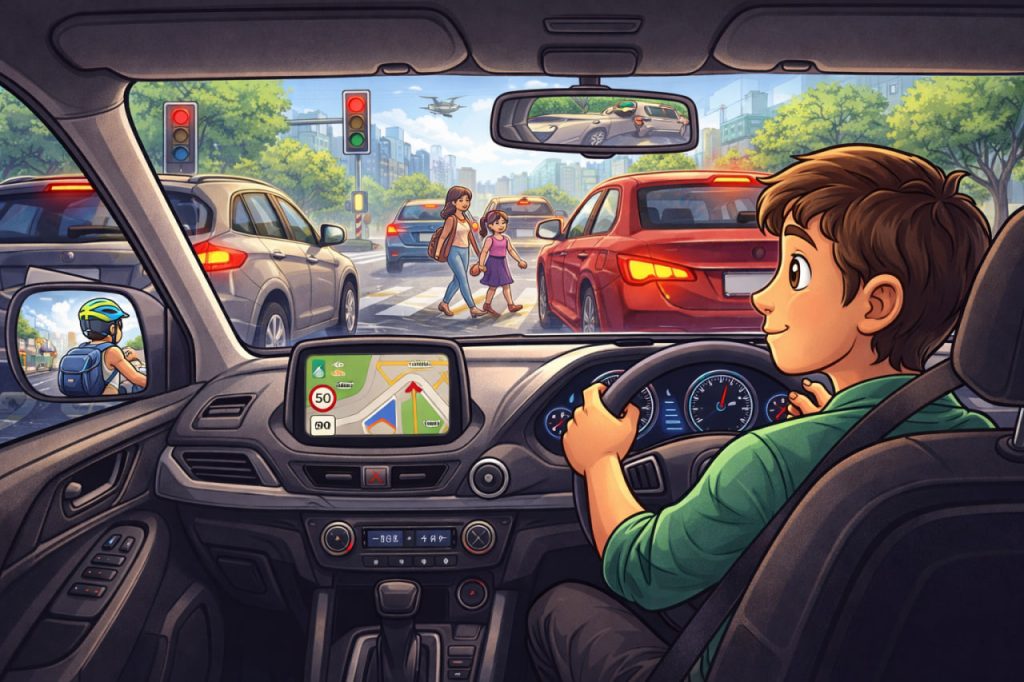
Driving is not just a daily activity—it is a responsibility that requires constant attention, knowledge, and discipline. Every driver shares the road with others, including pedestrians, cyclists, and other vehicles, which makes awareness and cooperation essential. Modern traffic conditions are more complex than ever, with increasing speed, density, and distractions. Understanding the basic principles of safe driving can significantly reduce risks and improve confidence behind the wheel. Many accidents happen not because of lack of skill, but due to poor decisions or momentary inattention. Developing good habits early helps prevent dangerous situations and creates a safer environment for everyone. Knowing what truly matters on the road is the first step toward becoming a responsible driver.
Full Awareness and Attention
One of the most important skills for any driver is maintaining full attention on the road at all times. Distractions such as smartphones, conversations, or even fatigue can reduce reaction time and lead to accidents. A driver must constantly monitor surroundings, including mirrors, road signs, and the behavior of other vehicles. Road safety expert Dr. Michael Turner explains:
“Driving safely is less about quick reactions
and more about continuous awareness and anticipation.”
This means that a good driver is always thinking ahead and preparing for possible risks. Even a few seconds of distraction can change the outcome of a situation. Staying focused is the foundation of all safe driving practices.
Understanding and Following Traffic Rules
Traffic rules are not just formal requirements—they are designed to protect all road users. Speed limits, signals, and road markings exist to create order and predictability. Ignoring these rules increases the risk of accidents not only for the driver but for everyone nearby. Consistency in following rules allows drivers to anticipate each other’s actions more easily. This reduces confusion and improves overall traffic flow. Knowing the rules is important, but applying them consistently is what truly matters. Responsible driving always begins with respect for these guidelines.
Defensive Driving Skills
Defensive driving is the ability to anticipate and respond to potential dangers before they become serious problems. This includes maintaining a safe distance, avoiding aggressive behavior, and being prepared for unexpected actions from others. Not all drivers follow the rules, which means you must be ready to adapt. Defensive drivers assume that mistakes can happen and stay prepared to react safely. This approach significantly reduces the chances of collisions. It also helps maintain calm and control in stressful situations. Developing this mindset is one of the most valuable skills a driver can have.
Vehicle Control and Maintenance
A driver must understand how their vehicle behaves and ensure it is in good condition. Regular maintenance, including brakes, tires, and lights, is essential for safe driving. Poor vehicle condition can lead to dangerous situations even if the driver is careful. Understanding how to handle the car in different conditions—such as rain, snow, or sharp turns—is equally important. Control is not just about steering but about managing speed, distance, and stability. A well-maintained vehicle responds better and gives the driver more confidence. Responsibility for safety includes both driving skills and vehicle condition.
Emotional Control and Decision-Making
Emotions play a significant role in driving behavior. Anger, stress, or impatience can lead to risky decisions and aggressive driving. Staying calm allows drivers to think clearly and react appropriately. Good decision-making involves patience and the ability to avoid unnecessary risks. Even in frustrating situations, maintaining control helps prevent accidents. A responsible driver prioritizes safety over speed or convenience. Emotional stability is just as important as technical driving skills.
Respect for All Road Users
Road safety depends on mutual respect between drivers, pedestrians, and cyclists. Each group has its own vulnerabilities and needs. Drivers must be especially careful around pedestrians and cyclists, who are less protected. Yielding, signaling, and maintaining distance are essential behaviors. Respect creates a more predictable and safer environment for everyone. Cooperation on the road reduces conflicts and misunderstandings. Safe driving is not only about personal safety but about protecting others as well.
Interesting Facts
- Most accidents are caused by human error rather than technical failure
- Distraction can increase accident risk within seconds
- Defensive driving significantly reduces collision probability
- Vehicle maintenance plays a key role in safety
- Calm drivers make better decisions under pressure
Glossary
- Defensive Driving — anticipating and avoiding potential dangers
- Awareness — constant attention to surroundings
- Traffic Rules — laws regulating road behavior
- Reaction Time — time needed to respond to a situation
- Vehicle Maintenance — regular care of a car to ensure safety