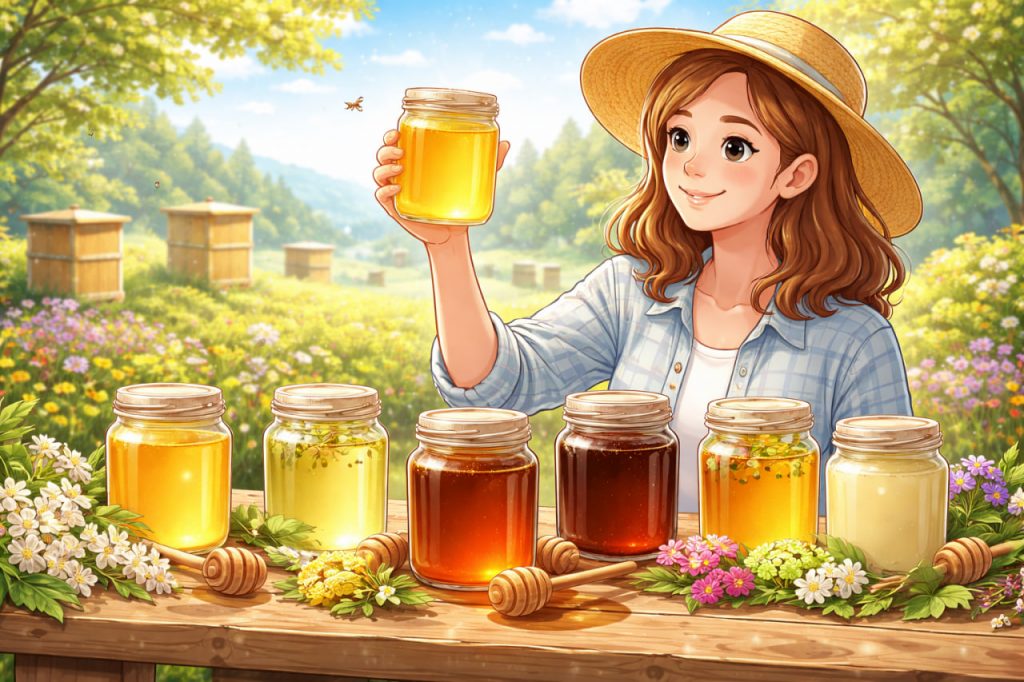
Honey is far more diverse than it may seem at first glance. Its taste, color, texture, and nutritional properties depend on the flowers from which bees collect nectar, as well as the season and region of production. From light and delicate acacia honey to dark and rich buckwheat honey, each type reflects a unique combination of environmental factors. Understanding these differences helps not only to choose honey for taste but also for specific uses and benefits. In addition, honey production follows natural cycles, making its availability closely tied to seasonal flowering. Exploring how honey varies and when it is harvested reveals the deep connection between bees, plants, and ecosystems.
What Determines Honey Variety?
The main factor that defines honey type is the source of nectar. Bees collect nectar from different plants, and each plant imparts its own characteristics to the honey. For example, acacia honey is light and mild, while buckwheat honey is dark with a strong flavor. Beekeeper and food expert Dr. Helen Moore explains:
“Each jar of honey is a reflection of a specific landscape,
capturing the essence of the flowers and season it comes from.”
Other factors such as soil, climate, and processing methods also influence the final product.
Popular Types of Honey
There are many varieties of honey, each with distinct properties:
- Acacia Honey — very light, clear, and mild in taste
- Linden (Basswood) Honey — aromatic with a slight minty note
- Buckwheat Honey — dark, thick, and rich in flavor
- Wildflower Honey — made from mixed floral sources, flavor varies by season
- Clover Honey — one of the most common types, mild and sweet
Each type differs not only in flavor but also in antioxidant content and mineral composition.
Seasonality of Honey Production
Honey is typically harvested from late spring to early autumn, depending on climate and plant cycles. The first honey of the year often comes from early flowering plants such as acacia and fruit trees. Summer brings a wide variety of floral sources, resulting in more complex honey. In late summer and early autumn, darker and richer types like buckwheat honey are produced. The exact timing varies by region, but the season always follows the rhythm of flowering plants.
How Taste and Color Vary
The color of honey can range from almost transparent to deep brown. Generally, lighter honeys have milder flavors, while darker ones tend to be stronger and more robust. This is due to differences in mineral content and plant compounds. Texture can also vary—from smooth and liquid to thick and crystallized. Crystallization is a natural process and does not indicate spoilage.
Choosing the Right Honey
Selecting honey depends on personal preference and intended use. Light honey is often preferred for tea and desserts, while darker honey is used for baking or as a nutritional supplement. Raw and unprocessed honey retains more natural compounds, making it a popular choice for health-conscious consumers. Understanding honey varieties allows for more informed and enjoyable choices.
Interesting Facts
- Honey can remain edible for thousands of years
- Its color depends on the type of flowers
- Bees visit millions of flowers to produce one kilogram of honey
- Crystallization is a natural process
- Dark honey usually contains more antioxidants
Glossary
- Nectar — a sugary liquid produced by flowers
- Monofloral Honey — honey mainly from one plant species
- Crystallization — natural solidification process of honey
- Antioxidants — compounds that protect cells from damage
- Raw Honey — minimally processed honey with natural properties