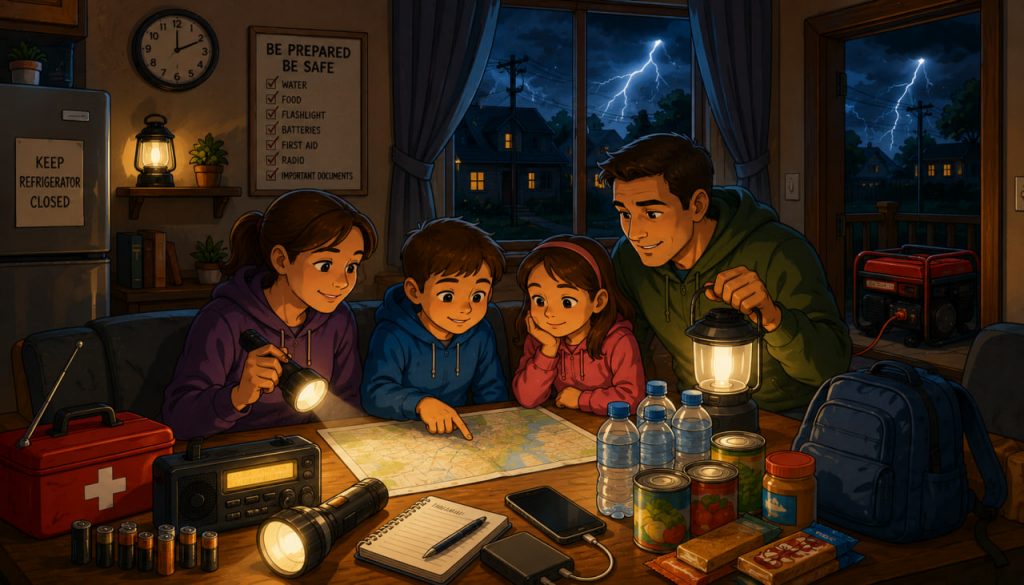
Power outages are among the most common emergencies affecting homes and businesses worldwide. They can last only a few minutes or continue for several days, depending on the cause. Severe storms, wildfires, earthquakes, equipment failures, cyberattacks, overloaded electrical grids, and maintenance work can all interrupt electricity supplies.
Although losing power is often an inconvenience, extended blackouts can create serious risks, including food spoilage, communication failures, heating or cooling problems, and increased safety hazards. Fortunately, careful preparation and informed decision-making can greatly reduce the impact of an outage.
Understanding what to do before, during, and after a blackout helps protect your family, your property, and your essential equipment.
Why Do Power Outages Happen?
Electricity reaches homes through complex networks of power plants, substations, transformers, and transmission lines.
Interruptions may occur because of:
- Severe thunderstorms
- Hurricanes
- Ice storms
- High winds
- Wildfires
- Flooding
- Earthquakes
- Falling trees
- Vehicle collisions with utility poles
- Equipment failures
- Planned maintenance
- Excessive electricity demand
Modern power grids are highly reliable, but no electrical system is completely immune to unexpected failures.
Climate-related extreme weather has increased the frequency of weather-related outages in many regions.
Prepare Before an Outage Happens
Preparation is the best defense against prolonged power failures.
Every household should consider keeping an emergency kit containing:
- Flashlights
- Spare batteries
- Portable battery-powered radio
- Fully stocked first-aid kit
- Drinking water
- Non-perishable food
- Manual can opener
- Power banks for mobile phones
- Essential medications
- Warm blankets
Recharge portable batteries whenever severe weather is forecast.
If someone in your household depends on electrically powered medical equipment, discuss backup options with healthcare providers and utility companies.
Stay Calm When the Power Goes Out
When electricity suddenly fails:
- Confirm whether the outage affects only your home or the surrounding neighborhood.
- Check your home’s electrical panel for a tripped circuit breaker.
- Report the outage to your electricity provider if necessary.
- Monitor official updates using a battery-powered radio or charged mobile device.
Avoid assuming that the problem will be resolved immediately.
During widespread outages, restoration may require significant repair work.
Use Safe Lighting
Lighting becomes one of the first challenges during a blackout.
The safest options include:
- LED flashlights
- Battery-powered lanterns
- Rechargeable emergency lights
Avoid walking through dark rooms without illumination to reduce the risk of injury.
Flashlights are much safer than candles, which increase the risk of accidental house fires.
If candles must be used as a last resort:
- Never leave them unattended.
- Keep them away from curtains and paper.
- Place them on stable, non-flammable surfaces.
- Keep them out of reach of children and pets.
Protect Your Food
Refrigerators and freezers can keep food safe for limited periods.
General guidance includes:
- Keep refrigerator doors closed.
- Keep freezer doors closed.
- Avoid opening appliances unnecessarily.
A refrigerator typically maintains safe temperatures for about 4 hours if unopened.
A full freezer may keep food frozen for approximately 48 hours, while a half-full freezer may remain cold for about 24 hours, provided the door stays closed.
If food has been exposed to unsafe temperatures for extended periods, discard perishable items when in doubt.
Generator Safety
Portable generators can provide valuable backup power, but improper use can be deadly.
Never operate generators:
- Inside homes
- Garages
- Basements
- Enclosed patios
- Near open windows or doors
Generators produce carbon monoxide, a colorless and odorless gas that can quickly become fatal in enclosed spaces.
Position generators outdoors in well-ventilated areas according to the manufacturer’s recommendations.
Use only properly rated extension cords designed for outdoor use.
Stay Connected
Communication becomes especially important during extended outages.
Helpful preparations include:
- Fully charged power banks
- Car chargers for mobile phones
- Battery-powered radio
- Printed emergency contact numbers
Many utility companies provide outage maps and restoration updates through mobile applications or websites.
If mobile networks become congested, text messages often succeed when voice calls do not.
Protect Electrical Equipment
Power restoration sometimes causes voltage fluctuations.
To reduce the risk of equipment damage:
- Unplug sensitive electronics.
- Leave one light switched on to indicate when power returns.
- Use surge protectors whenever possible.
Large appliances such as air conditioners may require several minutes before restarting safely.
Helping Vulnerable People
Power outages can be particularly dangerous for:
- Older adults
- Infants
- People with disabilities
- Individuals using electrically powered medical devices
Check on neighbors or relatives who may require assistance.
Community support often plays an important role during prolonged emergencies.
Simple actions such as sharing information or helping recharge communication devices can make a significant difference.
Expert Perspective
According to Dr. David Eisenman, professor of medicine and public health at the University of California, Los Angeles (UCLA) and an expert in disaster preparedness, community resilience is one of the strongest predictors of successful recovery after emergencies.
He emphasizes that preparation before disasters—including power outages—helps reduce injuries, anxiety, and disruption.
“Prepared households are better able to respond effectively when emergencies occur.”
His work highlights that emergency planning should begin well before the lights go out.
Preparing for the Future
Power systems worldwide are becoming more resilient through investments in:
- Smart electrical grids
- Underground power lines
- Renewable energy integration
- Battery energy storage
- Improved weather forecasting
- Automated fault detection
At the household level, some families are also adopting:
- Solar panels
- Home battery systems
- Uninterruptible power supplies (UPS)
- Energy-efficient appliances
While no system can completely eliminate the possibility of power outages, preparation, safe decision-making, and reliable emergency supplies greatly reduce the risks associated with blackouts and help households recover more quickly.
Interesting Facts
- Lightning strikes are a common cause of localized power outages.
- A fully charged power bank can recharge many smartphones several times.
- Carbon monoxide is impossible to detect by sight or smell without a detector.
- Smart electrical grids can automatically isolate damaged sections of the network.
- Refrigerators lose cold air surprisingly quickly when opened during an outage.
- Many hospitals use multiple backup power systems to ensure uninterrupted operation.
- Underground power lines are generally less vulnerable to storms than overhead lines.
Glossary
- Power Outage — A temporary interruption of electrical service.
- Blackout — A widespread or complete loss of electricity in an area.
- Generator — A machine that produces electricity using fuel or another energy source.
- Carbon Monoxide (CO) — A poisonous, colorless, and odorless gas produced by fuel-burning equipment.
- Power Grid — The interconnected network that delivers electricity from producers to consumers.
- Surge Protector — A device that protects electronics from sudden increases in electrical voltage.
- Circuit Breaker — A safety device that automatically interrupts electrical flow during faults.
- Power Bank — A portable rechargeable battery used to charge electronic devices.
- UPS (Uninterruptible Power Supply) — A backup battery system that temporarily powers equipment during outages.
- Emergency Kit — A collection of essential supplies prepared for use during emergencies.