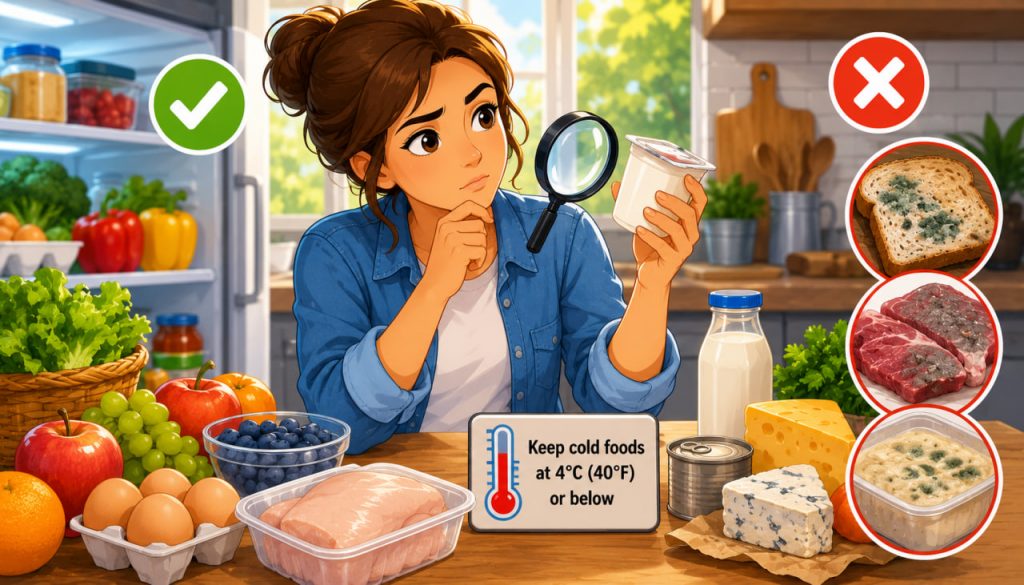
Hot summer temperatures create ideal conditions for the rapid growth of bacteria, molds, and other microorganisms that cause food spoilage. While refrigeration slows this process, food left outdoors, transported without cooling, or stored improperly can become unsafe within a surprisingly short period. Every year, millions of people worldwide suffer from foodborne illnesses, many of which are linked to improper food handling during warm weather.
Recognizing the signs of spoiled food is an essential life skill. However, appearance alone is not always a reliable indicator. Some dangerous bacteria do not change the smell, taste, or appearance of food, making proper storage and handling just as important as visual inspection.
This guide explains how heat affects food, how to recognize spoilage, and how to reduce the risk of food poisoning during hot weather.
Why Does Food Spoil Faster in Hot Weather?
Food naturally contains microorganisms from the environment.
Most are harmless, but some bacteria can multiply rapidly under favorable conditions.
Warm temperatures provide ideal conditions for many foodborne pathogens.
The so-called “Danger Zone” for food safety is generally between 4°C and 60°C (40°F–140°F).
Within this temperature range:
- Bacteria multiply rapidly.
- Some species can double in number every 20 minutes.
- Toxins may begin to accumulate.
The longer perishable food remains in the temperature danger zone, the greater the risk of foodborne illness.
Foods That Spoil Most Quickly
Some foods are especially vulnerable during summer.
These include:
- Raw meat
- Poultry
- Fish
- Seafood
- Milk
- Cheese
- Yogurt
- Eggs
- Cooked rice
- Pasta
- Fresh salads
- Prepared meals
High-protein and high-moisture foods generally provide ideal conditions for bacterial growth.
Foods containing mayonnaise, cream, or seafood require particular care during outdoor events and picnics.
Signs That Food Has Spoiled
While not all dangerous contamination is visible, many spoiled foods develop noticeable changes.
Unpleasant Odor
A sour, rotten, or unusual smell often indicates microbial activity.
Examples include:
- Sour milk
- Rotten meat
- Fishy or ammonia-like odors
Color Changes
Spoiled food may become:
- Gray
- Green
- Brown
- Black
- Irregularly discolored
Some natural color changes occur during storage, so color alone should not determine safety.
Texture Changes
Watch for:
- Slimy surfaces
- Sticky coatings
- Excessive softness
- Separation of liquids
- Unusual clumping
These changes often indicate bacterial or fungal growth.
Mold Growth
Visible mold usually appears as:
- Green spots
- White fuzz
- Blue patches
- Black colonies
Soft foods with visible mold should generally be discarded entirely because microscopic growth may extend beyond what is visible.
Why Smell Is Not Always Enough
Many people rely on smell to judge food safety.
Unfortunately, this approach has limitations.
Some dangerous bacteria—including Salmonella, Listeria, and certain strains of Escherichia coli (E. coli)—may not produce noticeable odors.
Likewise, some bacterial toxins remain dangerous even after cooking.
Food that looks and smells normal can still contain harmful microorganisms.
This is why proper refrigeration and safe handling are essential.
The Two-Hour Rule
Food safety experts commonly recommend the Two-Hour Rule.
Perishable food should not remain at room temperature for more than:
- Two hours under normal conditions.
- One hour when temperatures exceed 32°C (90°F).
Examples include:
- Picnic meals
- Buffet tables
- Outdoor barbecues
- Packed lunches left in hot vehicles
After these limits are exceeded, food should generally be discarded.
Safe Refrigeration Practices
Refrigeration slows bacterial growth but does not stop it completely.
Recommended refrigerator temperature:
- 4°C (40°F) or lower
Recommended freezer temperature:
- −18°C (0°F) or lower
Other good practices include:
- Cooling leftovers promptly.
- Storing raw meat separately.
- Keeping refrigerators clean.
- Avoiding overloading shelves to allow air circulation.
Labeling leftovers with preparation dates also helps prevent accidental consumption of old food.
Food Safety During Power Outages
Hot weather often coincides with severe storms and electrical outages.
Without refrigeration:
- Keep refrigerator doors closed.
- Avoid opening the freezer unnecessarily.
- Use coolers with ice if available.
A refrigerator generally keeps food safely cold for approximately 4 hours if unopened.
A full freezer may maintain safe temperatures for about 48 hours, while a half-full freezer may remain cold for about 24 hours.
When in doubt, throw it out.
Preventing Cross-Contamination
Even fresh food can become contaminated through improper handling.
Prevent cross-contamination by:
- Washing hands before food preparation.
- Using separate cutting boards for raw meat and vegetables.
- Cleaning knives after handling raw meat.
- Washing fruits and vegetables thoroughly.
- Avoiding contact between cooked and raw foods.
Simple kitchen hygiene significantly reduces foodborne illness risk.
Symptoms of Food Poisoning
Foodborne illnesses vary depending on the organism involved.
Common symptoms include:
- Nausea
- Vomiting
- Diarrhea
- Stomach cramps
- Fever
- Weakness
Symptoms may develop within hours or several days after eating contaminated food.
Severe dehydration, persistent vomiting, bloody diarrhea, high fever, or symptoms in infants, older adults, or immunocompromised individuals require prompt medical attention.
Expert Perspective
According to Dr. Donald Schaffner, Distinguished Professor of Food Microbiology at Rutgers University, safe food handling is based on prevention rather than attempting to identify contaminated food afterward.
He has emphasized that time and temperature control remain the most effective ways to reduce foodborne illness.
“Keeping foods out of the temperature danger zone is one of the simplest and most effective food safety practices.”
His research has contributed to modern food safety recommendations used by public health organizations worldwide.
Smart Habits for Summer Food Safety
Preventing food spoilage is often easier than recognizing it.
Good habits include:
- Refrigerating groceries promptly.
- Using insulated coolers during travel.
- Avoiding leaving food in parked vehicles.
- Checking expiration dates.
- Following safe cooking temperatures.
- Discarding questionable food instead of taking unnecessary risks.
Food poisoning is largely preventable through proper storage, refrigeration, hygiene, and careful attention to temperature. If you are uncertain whether a food is safe to eat—especially after prolonged exposure to summer heat—the safest decision is to discard it.
Interesting Facts
- Millions of foodborne illness cases occur globally every year.
- Bacteria can double in number in as little as 20 minutes under ideal conditions.
- Refrigeration slows bacterial growth but does not eliminate bacteria.
- Some bacterial toxins remain dangerous even after food is reheated.
- Mold roots may spread deep inside soft foods even when only small patches are visible.
- Leaving groceries in a hot car can rapidly increase food temperatures into the danger zone.
- Good hand hygiene remains one of the simplest ways to prevent food contamination.
Glossary
- Food Spoilage — The deterioration of food caused by microorganisms, enzymes, or chemical changes.
- Foodborne Illness — An illness caused by consuming contaminated food.
- Danger Zone — The temperature range between approximately 4°C and 60°C (40°F–140°F), where bacteria multiply rapidly.
- Cross-Contamination — The transfer of harmful microorganisms from one food or surface to another.
- Salmonella — A group of bacteria that commonly cause food poisoning.
- Listeria — A bacterium capable of growing even at refrigerator temperatures.
- Escherichia coli (E. coli) — A group of bacteria, some strains of which can cause serious foodborne illness.
- Pathogen — A microorganism capable of causing disease.
- Perishable Food — Food that spoils quickly without refrigeration.
- Food Poisoning — A common term for illness resulting from consuming contaminated food.