Almost every person experiences periods of:
- Fatigue
- Weakness
- Mental exhaustion
- Lack of motivation
Sometimes this condition is temporary and connected to:
- Stress
- Poor sleep
- Overwork
In other cases, persistent loss of energy may signal:
- Physical illness
- Nutritional deficiencies
- Mental health problems
- Hormonal imbalance
Modern life places enormous pressure on the human body and brain. Constant:
- Information overload
- Lack of rest
- Sleep disruption
- Sedentary lifestyles
- Anxiety
can gradually drain both physical and emotional energy reserves.
Scientists now understand energy levels are influenced by:
- Brain chemistry
- Sleep quality
- Hormones
- Nutrition
- Physical activity
- Stress regulation
- Social well-being
Understanding why people lose energy helps explain how the body attempts to maintain:
- Balance
- Recovery
- Survival
Most importantly, chronic exhaustion should never be ignored because it may reflect deeper biological or psychological problems requiring attention.
What Does “Loss of Energy” Mean?
Loss of energy is not a single disease.
It is a broad condition involving:
- Fatigue
- Weakness
- Reduced motivation
- Physical tiredness
- Mental exhaustion
People may describe it as:
- “No strength”
- “Burnout”
- “Constant tiredness”
- “Brain fog”
The causes vary enormously between individuals.
The Brain and Energy Regulation
The brain plays a central role in:
- Energy balance
It regulates:
- Sleep cycles
- Hormones
- Motivation
- Stress responses
through complex systems involving:
- Neurotransmitters
- Circadian rhythms
- Metabolism
When these systems become disrupted:
- Fatigue often appears.
The human brain itself consumes enormous energy daily despite representing only a small percentage of body weight.
Sleep Is the Most Important Recovery System
One of the most common causes of exhaustion is:
- Poor sleep
During sleep, the body performs critical recovery processes involving:
- Brain restoration
- Hormonal regulation
- Memory consolidation
- Immune system repair
Chronic sleep deprivation may cause:
- Mood problems
- Weak concentration
- Low motivation
- Increased stress hormones
Neuroscientist Matthew Walker explained:
“Sleep is the single most effective thing we can do to reset our brain and body health each day.”
Modern research strongly supports this conclusion.
Stress and Emotional Exhaustion
Long-term stress heavily affects energy levels.
When the body experiences chronic stress:
- Cortisol levels may remain elevated
This can disrupt:
- Sleep
- Digestion
- Immune function
- Emotional regulation
Over time, people may develop:
- Emotional burnout
- Chronic fatigue
- Anxiety-related exhaustion
Mental fatigue and physical fatigue are deeply interconnected.
Nutrition and Energy Production
The body requires nutrients to produce:
- Cellular energy
Poor nutrition may reduce:
- Physical endurance
- Brain performance
- Metabolic efficiency
Common nutritional factors connected to fatigue include:
- Iron deficiency
- Vitamin B12 deficiency
- Dehydration
- Low protein intake
- Blood sugar instability
The body’s cells continuously convert food into:
- ATP
which serves as the main biological energy source.
Lack of Physical Activity Can Increase Fatigue
Although it sounds contradictory:
- Sedentary lifestyles often worsen exhaustion.
Regular movement helps improve:
- Blood circulation
- Oxygen delivery
- Mood regulation
- Sleep quality
Exercise stimulates:
- Endorphins
- Dopamine
- Cardiovascular adaptation
Even moderate activity such as:
- Walking
- Stretching
- Swimming
may improve energy over time.
Mental Overload and Modern Technology
Modern humans face constant stimulation from:
- Smartphones
- Social media
- Notifications
- Work pressure
- Information overload
The brain rarely receives true periods of:
- Recovery
- Silence
- Mental rest
Continuous cognitive stimulation may contribute to:
- Attention fatigue
- Emotional exhaustion
- Sleep disruption
Scientists increasingly study how digital environments affect:
- Brain health
- Stress systems
- Energy levels.
Hormones and Chronic Fatigue
Hormonal imbalance may also affect energy.
Conditions involving:
- Thyroid dysfunction
- Low testosterone
- Menopause
- Blood sugar regulation
can contribute to:
- Persistent weakness
- Brain fog
- Low motivation
This is why long-lasting fatigue sometimes requires:
- Medical evaluation.
Depression and Loss of Energy
One important medical cause of exhaustion is:
- Depression
Depression does not always appear as:
- Sadness alone
It may also involve:
- Emotional numbness
- Physical fatigue
- Lack of motivation
- Difficulty concentrating
The brain’s reward and motivation systems become altered during depressive states.
Mental health strongly influences:
- Physical energy perception.
Chronic Fatigue and Burnout
Some people develop long-term exhaustion lasting:
- Months or years
This may involve:
- Burnout
- Chronic stress
- Post-viral fatigue
- Sleep disorders
Burnout especially affects people exposed to:
- Constant pressure
- Emotional overload
- Lack of recovery time
The World Health Organization recognizes burnout as an occupational phenomenon linked to:
- Chronic workplace stress.
Why Recovery Requires Multiple Factors
Energy recovery usually requires addressing several areas simultaneously:
- Sleep
- Nutrition
- Stress management
- Physical activity
- Mental health
- Social support
There is rarely one universal solution.
Human energy systems are:
- Biological
- Psychological
- Emotional
all at the same time.
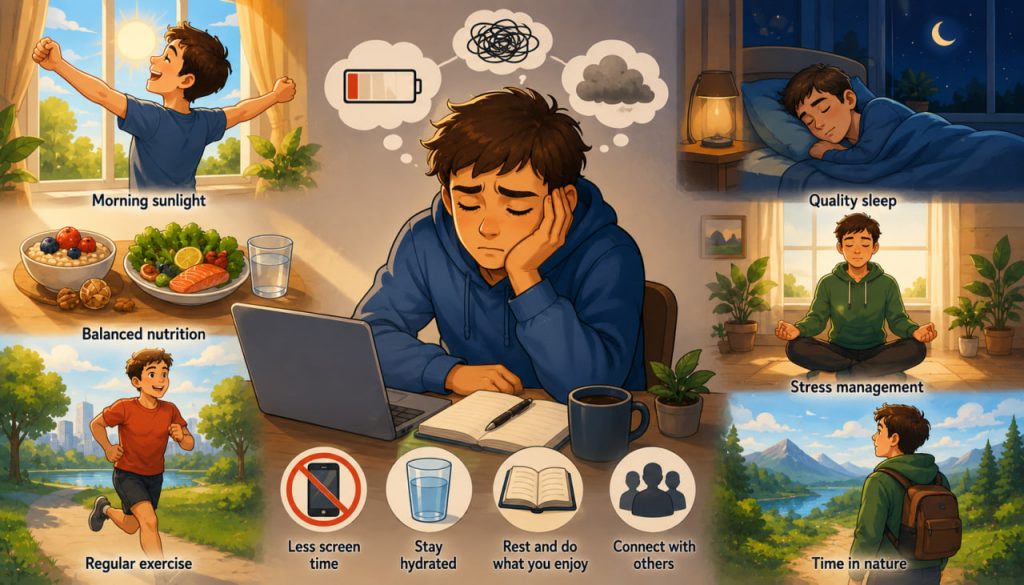
Small Habits That Often Help
Scientists frequently recommend simple evidence-based habits including:
- Consistent sleep schedules
- Hydration
- Balanced meals
- Daily movement
- Reduced screen exposure before sleep
- Sunlight exposure
- Stress reduction techniques
Even small improvements may gradually help restore:
- Mental clarity
- Physical stamina
- Mood stability.
The Role of Sunlight and Circadian Rhythms
Human biology evolved around:
- Natural light cycles
Sunlight helps regulate:
- Circadian rhythms
- Melatonin production
- Sleep quality
Lack of natural light exposure may contribute to:
- Mood problems
- Fatigue
- Sleep disruption
This is one reason outdoor activity often improves:
- Energy and emotional well-being.
Why Humans Need Rest
Modern culture often glorifies:
- Constant productivity
However, the human body was not designed for:
- Continuous stress without recovery.
Rest is biologically essential for:
- Brain function
- Immune health
- Emotional regulation
- Hormonal stability
Ignoring exhaustion may eventually worsen:
- Physical and mental health.
When Fatigue Should Be Taken Seriously
Persistent or severe exhaustion may sometimes indicate:
- Medical conditions
- Nutritional deficiencies
- Sleep disorders
- Mental health problems
People should seek professional evaluation if fatigue becomes:
- Long-lasting
- Severe
- Unexplained
- Disabling
especially when combined with other symptoms.
Why Understanding Energy Matters
Human energy is not simply:
- “Motivation”
It reflects extremely complex interactions involving:
- Brain chemistry
- Metabolism
- Hormones
- Sleep
- Emotions
- Environment
The body constantly tries to balance:
- Survival
- Recovery
- Adaptation
Understanding fatigue scientifically helps people recognize that exhaustion is often not laziness — but a real biological signal that something inside the body or mind requires attention.
Interesting Facts
- The brain consumes about 20% of the body’s energy.
- Sleep strongly affects immune and emotional health.
- Dehydration alone may worsen fatigue and concentration.
- Chronic stress can alter hormone balance.
- Moderate exercise often improves long-term energy levels.
Glossary
- Cortisol — Stress-related hormone affecting energy and metabolism.
- Circadian Rhythm — Internal biological clock regulating sleep and activity cycles.
- ATP — Main energy molecule used by cells.
- Burnout — State of chronic physical and emotional exhaustion.
- Neurotransmitter — Chemical messenger used by brain cells for communication.