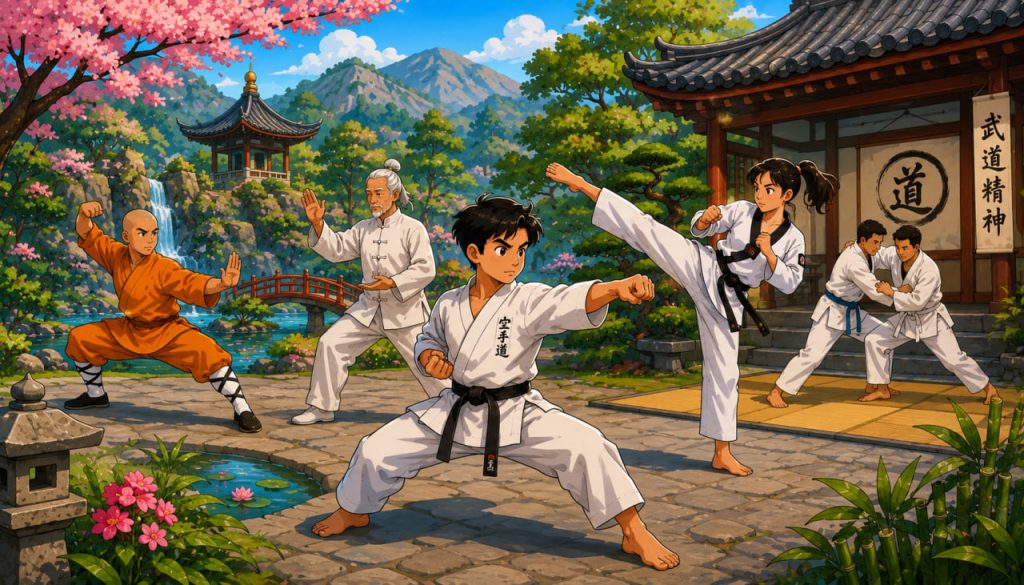
Eastern martial arts are far more than systems of combat. For centuries, disciplines such as karate, kung fu, taekwondo, aikido, tai chi, and judo have combined physical training with mental discipline, philosophy, balance, and self-control. Today, millions of people worldwide practice martial arts not only for self-defense, but also for improving physical and psychological health.
Modern scientific research increasingly studies how martial arts influence:
- Cardiovascular fitness
- Flexibility
- Coordination
- Stress levels
- Mental focus
- Emotional resilience
- Aging processes
Unlike many conventional exercise programs, Eastern martial arts often combine:
- Physical conditioning
- Breathing control
- Meditation
- Balance training
- Discipline
This unique combination may provide broad health benefits affecting both body and mind.
What Are Eastern Martial Arts?
Eastern martial arts originated mainly in:
- China
- Japan
- Korea
- Okinawa
- Southeast Asia
Different systems developed for:
- Self-defense
- Military training
- Spiritual discipline
- Physical conditioning
Well-known martial arts include:
- Karate
- Kung fu
- Taekwondo
- Judo
- Aikido
- Tai chi
Each discipline emphasizes different aspects of movement and philosophy.
Some focus on:
- Strength and striking
while others emphasize: - Balance
- Flow
- Defensive techniques
- Internal energy control
Physical Health Benefits
One of the clearest advantages of martial arts involves overall physical fitness.
Regular training may improve:
- Muscle strength
- Endurance
- Flexibility
- Coordination
- Reaction speed
- Posture
Martial arts often involve full-body movement patterns requiring simultaneous activation of multiple muscle groups.
Unlike repetitive gym exercises, martial arts training constantly challenges:
- Balance
- Timing
- Spatial awareness
This may help maintain functional mobility throughout life.
Cardiovascular and Metabolic Health
Many martial arts provide excellent cardiovascular exercise.
Dynamic training sessions may elevate heart rate through:
- Sparring
- Kicks
- Footwork
- Drills
- Continuous movement
Regular practice may support:
- Heart health
- Blood circulation
- Weight management
- Improved stamina
Some high-intensity martial arts workouts burn large amounts of energy while also improving coordination.
Flexibility and Joint Mobility
Eastern martial arts often include extensive stretching and mobility exercises.
Improved flexibility may help:
- Reduce stiffness
- Improve movement efficiency
- Lower injury risk
- Support healthy aging
Disciplines such as tai chi and kung fu frequently emphasize flowing body mechanics and controlled movement transitions.
Joint mobility becomes increasingly important as people age.
Martial Arts and Mental Health
Modern psychology increasingly recognizes exercise as beneficial for mental well-being, and martial arts may offer additional psychological benefits beyond ordinary fitness training.
Potential mental benefits include:
- Reduced stress
- Better concentration
- Increased confidence
- Emotional control
- Improved discipline
Psychologist Daniel Goleman noted that disciplines involving focused attention and emotional regulation may strengthen self-awareness and resilience.
Many martial arts systems intentionally train:
- Patience
- Self-control
- Calmness under pressure
Stress Reduction and Emotional Balance
Many Eastern martial arts include breathing exercises and meditative elements.
Controlled breathing and rhythmic movement may help regulate stress responses.
Practitioners often report:
- Improved emotional stability
- Better mood
- Reduced anxiety
- Increased mental clarity
Tai chi in particular has been widely studied for stress reduction and relaxation benefits.
Some researchers compare certain aspects of martial arts training to moving meditation.
Martial Arts and Brain Function
Complex coordinated movement challenges the brain as well as the body.
Martial arts training may improve:
- Reaction time
- Motor coordination
- Cognitive focus
- Body awareness
Learning techniques, sequences, and timing patterns requires continuous mental engagement.
Scientists studying aging populations increasingly explore whether movement-based training may help support long-term brain health.
Self-Discipline and Confidence
One important psychological benefit involves self-discipline.
Martial arts often require:
- Consistent practice
- Respect for rules
- Gradual skill development
- Goal-oriented progression
This structured learning process may build:
- Confidence
- Persistence
- Emotional resilience
Many instructors emphasize that martial arts are primarily about mastering oneself rather than defeating others.
Tai Chi and Healthy Aging
Tai chi deserves special attention because of its health-oriented reputation.
This traditional Chinese practice combines:
- Slow controlled movement
- Breathing
- Balance training
- Mental focus
Research suggests tai chi may help older adults improve:
- Balance
- Stability
- Mobility
- Fall prevention
Some hospitals and rehabilitation programs even include tai chi-based exercises for certain patient groups.
Injury Risks and Safe Practice
Despite many benefits, martial arts also involve injury risks.
Potential injuries include:
- Sprains
- Joint stress
- Bruises
- Fractures in contact disciplines
Proper instruction, protective equipment, and gradual progression are essential.
Different martial arts vary significantly in intensity and contact level.
Beginners should train under qualified instructors and choose styles appropriate for their health condition and fitness level.
Philosophy and Lifestyle
Traditional Eastern martial arts often include philosophical teachings emphasizing:
- Respect
- Humility
- Discipline
- Self-improvement
- Harmony
For many practitioners, martial arts become more than physical exercise — they become long-term personal development systems.
This cultural and philosophical dimension distinguishes martial arts from many ordinary fitness activities.
Martial Arts in Modern Society
Today martial arts are practiced worldwide in:
- Gyms
- Schools
- Sports clubs
- Rehabilitation programs
- Wellness centers
Some people train competitively, while others focus mainly on:
- Fitness
- Meditation
- Stress relief
- Healthy aging
The adaptability of martial arts contributes to their continuing global popularity.
Why Eastern Martial Arts Matter
Eastern martial arts combine:
- Physical exercise
- Mental discipline
- Coordination
- Philosophy
- Stress management
Few activities integrate so many aspects of human health simultaneously.
Modern science increasingly confirms what traditional practitioners believed for centuries: disciplined movement, balance, breathing, and focused training may strongly support both physical and psychological well-being.
P.S. I got acquainted with martial arts by reading the book Sensei of Shambala and watching videos about Ip Man.
Interesting Facts
- Tai chi is sometimes called “meditation in motion.”
- Martial arts training often improves balance and coordination.
- Some hospitals use tai chi exercises in rehabilitation programs.
- Eastern martial arts originated centuries ago in Asia.
- Many martial arts systems emphasize self-control more than aggression.
Glossary
- Martial Arts — Systems of combat training combined with physical and mental discipline.
- Tai Chi — A Chinese movement practice focused on balance, breathing, and slow controlled motion.
- Coordination — The ability to control body movements smoothly and efficiently.
- Meditation — Mental practices involving focused attention and awareness.
- Cardiovascular Health — The health of the heart and blood circulation system.