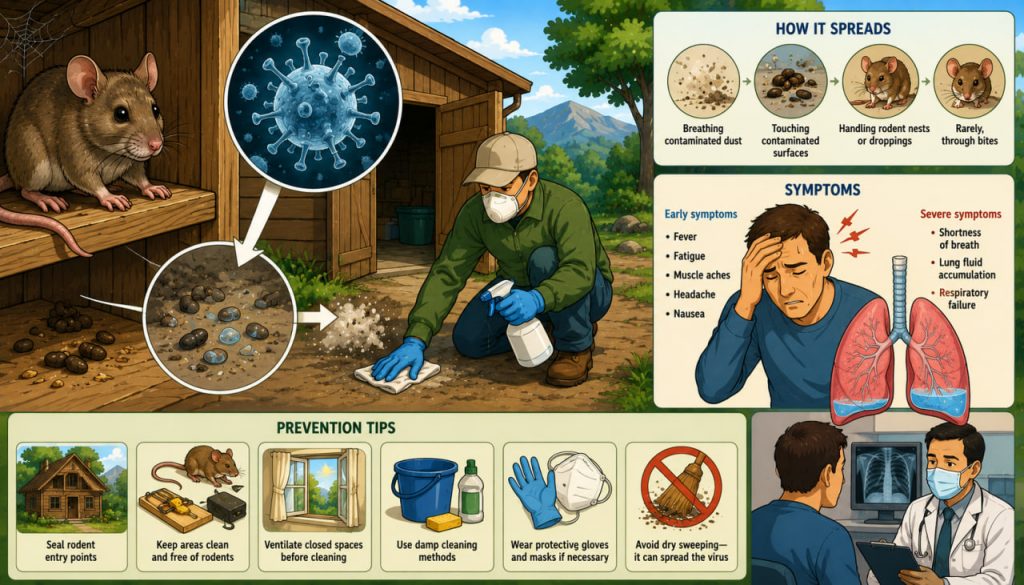
Hantavirus is a rare but potentially life-threatening viral infection transmitted primarily through contact with infected rodents. Although outbreaks are relatively uncommon, the disease attracts major attention from scientists and public health experts because of its high mortality rate in severe cases and its sudden, aggressive symptoms.
The virus exists naturally in certain rodent populations around the world and may infect humans through exposure to contaminated dust, droppings, urine, or saliva. While most people will never encounter hantavirus directly, understanding how it spreads and how to reduce risk is important, especially for individuals living or working in rural environments.
Modern medicine has significantly improved understanding of hantavirus infections, yet researchers continue studying how these viruses interact with the immune system and why some cases become extremely severe.
What Is Hantavirus?
Hantavirus refers to a group of viruses carried mainly by rodents.
Different hantavirus species exist across:
- North America
- South America
- Europe
- Asia
In humans, hantaviruses may cause severe illnesses affecting:
- Lungs
- Blood vessels
- Kidneys
The most well-known forms include:
- Hantavirus Pulmonary Syndrome (HPS)
- Hemorrhagic Fever with Renal Syndrome (HFRS)
Both conditions can become medically serious.
How Hantavirus Was Discovered
The virus gained major international attention during outbreaks in the 1990s in the southwestern United States.
Researchers linked mysterious severe respiratory illness cases to exposure to deer mice carrying hantavirus.
However, forms of hantavirus disease were known earlier in Asia and Europe.
The virus family is named after the Hantan River region in Korea, where related infections were studied during the Korean War.
How the Virus Spreads
Hantavirus usually spreads through contact with infected rodent materials.
Humans may become infected by:
- Breathing contaminated dust
- Touching contaminated surfaces
- Handling rodent nests or droppings
- Rarely through bites
Rodents themselves often show few or no signs of illness while carrying the virus.
Important risk environments include:
- Cabins
- Sheds
- Barns
- Storage buildings
- Poorly ventilated spaces
Public health agencies emphasize careful cleaning methods to reduce airborne exposure.
Why Rodents Carry the Virus
Hantaviruses evolved alongside specific rodent species over long evolutionary periods.
Different viruses are associated with different rodents.
Examples include:
- Deer mice
- Cotton rats
- Field mice
- Bank voles
The virus often exists naturally in rodent populations without killing them.
Scientists study these host-virus relationships to better understand disease ecology.
Symptoms of Hantavirus Infection
Early hantavirus symptoms may resemble common viral illnesses.
Initial symptoms often include:
- Fever
- Fatigue
- Muscle aches
- Headache
- Nausea
In severe cases, symptoms may rapidly worsen.
Hantavirus Pulmonary Syndrome can lead to:
- Shortness of breath
- Lung fluid accumulation
- Respiratory failure
Because symptoms may escalate quickly, early medical attention is extremely important.
Why Hantavirus Can Become Dangerous
One major danger involves the body’s immune response.
The virus may trigger severe inflammation affecting blood vessels and lung tissue.
This can cause fluid leakage into the lungs, making breathing extremely difficult.
Virologist Dr. Charles H. Calisher once noted:
“Hantaviruses are remarkable examples of how small viral particles can produce devastating systemic effects.”
The disease severity often results partly from immune system overreaction.
Is Hantavirus Common?
Hantavirus infections are considered relatively rare compared to many other viral diseases.
However, outbreaks may occur under certain environmental conditions.
Factors increasing rodent populations include:
- Heavy rainfall
- Food abundance
- Climate variation
Larger rodent populations may increase human exposure risk.
Most cases still remain uncommon.
Diagnosis and Treatment
Doctors diagnose hantavirus using:
- Clinical symptoms
- Exposure history
- Laboratory testing
There is currently no universally approved specific antiviral cure for most hantavirus infections.
Treatment mainly focuses on:
- Intensive supportive care
- Oxygen therapy
- Fluid management
- Respiratory support
Early hospitalization significantly improves survival chances.
Prevention Is Extremely Important
Because treatment options are limited, prevention remains the best protection.
Health experts recommend:
- Sealing rodent entry points
- Avoiding rodent infestations
- Ventilating closed spaces before cleaning
- Using protective gloves and masks when necessary
Importantly, dry sweeping rodent droppings may increase airborne viral particles.
Authorities usually recommend damp cleaning methods instead.
Hantavirus and Climate Change
Some scientists study how environmental change may affect hantavirus patterns.
Climate shifts can influence:
- Rodent population cycles
- Habitat distribution
- Human exposure frequency
Ecologists increasingly view infectious diseases as closely connected to ecosystem dynamics.
This makes hantavirus part of a larger discussion about environmental health and zoonotic diseases.
Why Scientists Continue Studying Hantavirus
Hantaviruses provide valuable insights into:
- Viral evolution
- Immune system behavior
- Animal-to-human disease transmission
Researchers hope better understanding may eventually lead to:
- Improved treatments
- Vaccines
- Faster detection systems
Global monitoring remains important because zoonotic diseases can emerge unexpectedly.
Public Awareness and Misconceptions
Because hantavirus is rare, misinformation sometimes spreads online.
It is important to understand:
- Most rodents do not guarantee infection
- Casual outdoor activity is usually safe
- Proper hygiene greatly reduces risk
Public health experts emphasize balanced awareness rather than panic.
Why Hantavirus Matters
Hantavirus reminds humanity how closely human health remains connected to wildlife and ecosystems.
Even in the modern technological era, tiny microscopic organisms carried by common animals can still challenge medicine and public health systems.
Studying diseases like hantavirus helps scientists better prepare for future emerging infections worldwide.
Interesting Facts
- Hantaviruses are primarily carried by rodents.
- The virus family was named after the Hantan River region in Korea.
- Some hantavirus infections affect the lungs, while others affect the kidneys.
- Rodents carrying hantavirus often appear healthy.
- Environmental conditions influencing rodent populations may affect outbreak risk.
Glossary
- Hantavirus — A group of viruses primarily transmitted by rodents.
- Hantavirus Pulmonary Syndrome (HPS) — A severe respiratory disease caused by certain hantaviruses.
- Zoonotic Disease — An infection transmitted from animals to humans.
- Immune Response — The body’s defense reaction against infection.
- Respiratory Failure — A dangerous condition in which the lungs cannot provide enough oxygen to the body.