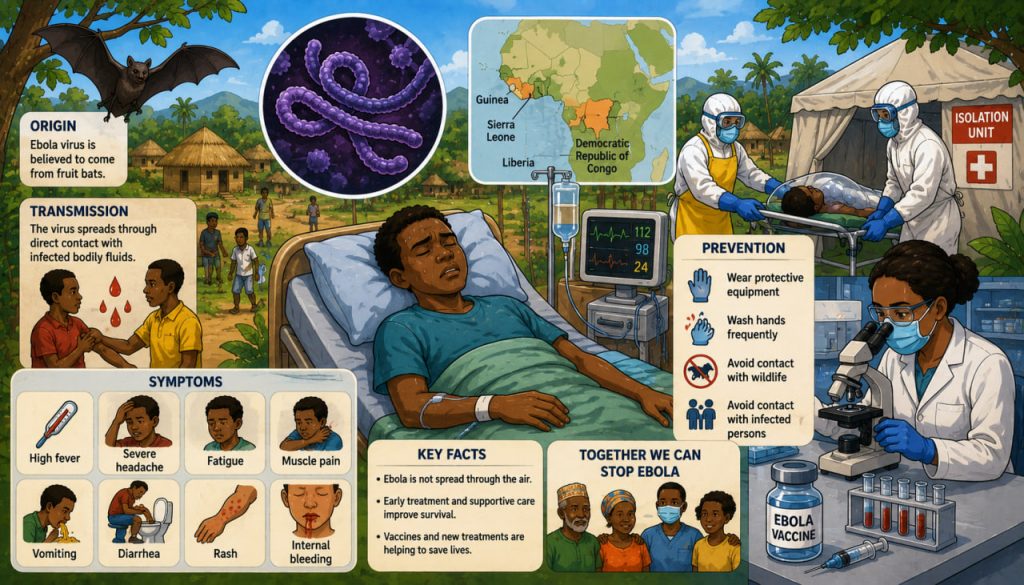
Ebola fever, often called Ebola virus disease (EVD), is one of the world’s most feared infectious diseases. Known for its high mortality rate and severe symptoms, Ebola has caused multiple deadly outbreaks, mainly in parts of Africa. Although relatively rare compared to common viral infections, Ebola became globally recognized because of its rapid spread during outbreaks and the extreme medical challenges it creates.
The Ebola virus attacks multiple systems inside the human body and may cause:
- High fever
- Severe weakness
- Internal bleeding
- Organ failure
- Immune system damage
Scientists continue studying Ebola because it provides important insights into:
- Viral evolution
- Global epidemic response
- Immunology
- Vaccine development
- Public health systems
Although major progress has been made in vaccines and outbreak control, Ebola remains a serious infectious disease requiring careful international monitoring.
What Is Ebola?
Ebola is a viral hemorrhagic fever caused by viruses belonging to the Ebolavirus genus.
The disease was first identified in 1976 near the Ebola River in what is now the Democratic Republic of Congo.
Several Ebola virus species exist, but not all affect humans equally.
The virus primarily spreads through:
- Direct contact with infected bodily fluids
- Contaminated surfaces
- Infected animals
Ebola is not considered an airborne disease under normal conditions.
How Ebola Spreads
Ebola transmission occurs mainly through direct physical contact.
The virus may spread via:
- Blood
- Saliva
- Sweat
- Vomit
- Urine
- Other bodily fluids
Healthcare workers face elevated risks without proper protective equipment.
Outbreaks often spread more rapidly in areas with:
- Limited medical infrastructure
- Poor sanitation
- Delayed diagnosis
- Insufficient protective supplies
Strict infection-control measures are critically important.
Symptoms of Ebola Fever
Symptoms often begin suddenly.
Early signs may resemble common viral illnesses, including:
- Fever
- Fatigue
- Muscle pain
- Headaches
- Sore throat
As the disease progresses, severe complications may develop:
- Vomiting
- Diarrhea
- Dehydration
- Organ dysfunction
- Bleeding problems
Not every patient experiences visible bleeding, despite Ebola often being classified as a hemorrhagic fever.
The severity varies between individuals and outbreaks.
Why Ebola Is So Dangerous
Ebola is dangerous because it affects multiple body systems simultaneously.
The virus can:
- Damage blood vessels
- Disrupt immune responses
- Cause severe inflammation
- Trigger organ failure
Mortality rates vary depending on:
- Virus strain
- Medical care availability
- Speed of treatment
- Patient condition
Some outbreaks recorded mortality rates exceeding 50%.
However, modern supportive medical treatment significantly improves survival chances.
Ebola and the Immune System
Ebola interferes heavily with the immune system.
Instead of allowing the body to organize an effective defense, the virus may trigger:
- Excessive inflammation
- Immune dysregulation
- Tissue damage
This creates severe systemic illness affecting many organs simultaneously.
Researchers study Ebola to better understand how dangerous viruses interact with human immune responses.
Major Ebola Outbreaks
Several Ebola outbreaks occurred since 1976.
The largest outbreak happened between 2014 and 2016 in West Africa, especially affecting:
- Guinea
- Liberia
- Sierra Leone
This epidemic caused:
- Thousands of deaths
- Major healthcare crises
- International emergency responses
The outbreak demonstrated how quickly infectious diseases may spread in a globally connected world.
It also exposed weaknesses in international epidemic preparedness.
Vaccines and Medical Progress
One of the most important scientific achievements involving Ebola has been vaccine development.
Modern vaccines now provide significant protection against some Ebola virus species.
Scientists also developed:
- Antiviral treatments
- Improved diagnostics
- Better outbreak monitoring systems
Dr. Anthony Fauci once stated:
“The development of Ebola vaccines represents a major achievement in infectious disease research.”
Medical advances dramatically improved outbreak response capabilities.
Why Ebola Mostly Occurs in Africa
Most Ebola outbreaks occur in Central and West Africa because the virus likely exists naturally in wildlife reservoirs within these ecosystems.
Scientists believe certain bat species may carry the virus without becoming seriously ill.
Human outbreaks may begin after contact with infected wildlife.
Environmental changes such as:
- Deforestation
- Habitat disruption
- Wildlife trade
may increase interactions between humans and virus-carrying animals.
Public Health and Quarantine Measures
Controlling Ebola outbreaks requires rapid public health action.
Key measures include:
- Isolation of infected patients
- Contact tracing
- Protective medical equipment
- Safe burial procedures
- Community education
Because Ebola spreads through direct contact, outbreak control can be highly effective when medical systems respond quickly.
International cooperation is often essential.
Ebola and Global Pandemic Fears
Ebola received intense global attention because of fears about worldwide epidemics.
However, Ebola spreads differently from highly airborne viruses such as influenza.
Ebola outbreaks are usually easier to contain with proper medical response because transmission generally requires closer contact.
Still, the disease remains extremely serious due to its severity and mortality rate.
Scientific Lessons from Ebola
Ebola outbreaks taught scientists important lessons about:
- Epidemic preparedness
- Vaccine development
- International health cooperation
- Emergency response systems
The experience gained from Ebola also influenced later responses to other infectious disease outbreaks worldwide.
Modern global health systems now monitor emerging diseases more carefully.
Why Ebola Research Matters
Ebola research helps scientists better understand:
- Viral evolution
- Immune system behavior
- Vaccine science
- Outbreak management
Studying dangerous viruses also improves preparedness for future infectious disease threats.
As global travel and environmental change continue increasing, international disease surveillance remains critically important.
Interesting Facts
- Ebola was first identified in 1976 near the Ebola River.
- Scientists believe certain bats may naturally carry the virus.
- Modern Ebola vaccines significantly improved outbreak control.
- Not all Ebola patients experience visible bleeding.
- The 2014–2016 West African outbreak became the largest in history.
Glossary
- Ebola Virus Disease (EVD) — A severe infectious disease caused by Ebola viruses.
- Hemorrhagic Fever — A disease affecting blood vessels and clotting systems.
- Outbreak — A sudden increase in disease cases within a population.
- Immune System — The body’s defense system against infections.
- Vaccine — A medical preparation helping the immune system recognize pathogens.