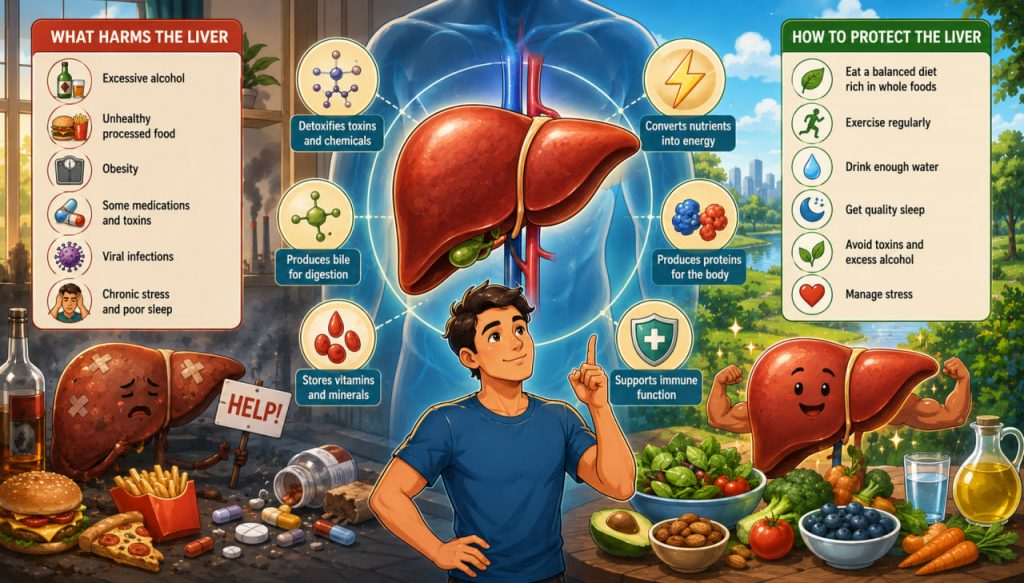
The liver is one of the most important and hardest-working organs in the human body. It performs hundreds of essential functions every single day, helping regulate metabolism, process nutrients, neutralize toxins, support digestion, and maintain overall health. Despite its incredible importance, many people rarely think about liver health until serious problems appear.
Modern lifestyles increasingly place stress on the liver through:
- Processed foods
- Alcohol consumption
- Environmental toxins
- Obesity
- Certain medications
- Chronic stress
At the same time, the liver possesses remarkable regenerative abilities and can often recover if properly protected.
Understanding how the liver works — and how to care for it — is becoming increasingly important for long-term health and disease prevention.
What Is the Liver?
The liver is a large organ located in the upper right side of the abdomen beneath the ribs.
It weighs approximately:
- 1.3 to 1.8 kilograms in adults
The liver is connected closely to:
- The digestive system
- Blood circulation
- Metabolism
It acts as a central chemical processing center for the entire body.
Scientists estimate the liver performs more than 500 different biological functions.
The Liver’s Main Functions
The liver is involved in many critical processes.
Detoxification
The liver helps neutralize and process:
- Alcohol
- Medications
- Environmental toxins
- Waste products
Nutrient Processing
It converts nutrients from food into usable forms for the body.
Energy Storage
The liver stores glycogen, a form of glucose used for energy.
Bile Production
The liver produces bile, which helps digest fats.
Protein Production
It creates important proteins involved in:
- Blood clotting
- Immune function
- Fluid balance
Without the liver, survival would be impossible.
Why the Liver Is Unique
One of the liver’s most extraordinary abilities is regeneration.
Unlike many organs, the liver can partially regrow after injury or surgery.
Even if a significant portion is damaged or removed, healthy liver tissue can regenerate over time under proper conditions.
Hepatologist Dr. Roger Williams once described the liver as:
“The silent laboratory of the human body.”
This reflects how continuously and quietly the liver works behind the scenes.
What Harms the Liver?
Several modern lifestyle factors may damage the liver over time.
Common causes include:
- ANY alcohol consumption
- Obesity
- High sugar intake
- Viral hepatitis
- Drug toxicity
- Chronic inflammation
Fat accumulation inside liver cells has become especially common worldwide.
This condition is called fatty liver disease.
Fatty Liver Disease
Non-alcoholic fatty liver disease (NAFLD) is increasingly widespread.
It often develops due to:
- Obesity
- Poor diet
- Insulin resistance
- Sedentary lifestyle
Many people experience no symptoms during early stages.
However, long-term inflammation may eventually lead to:
- Liver scarring
- Cirrhosis
- Liver failure
Doctors increasingly view fatty liver disease as a major modern health problem.
The Liver and Alcohol
The liver processes alcohol through complex chemical reactions.
ANY alcohol consumption may:
- Damage liver cells
- Trigger inflammation
- Cause scarring over time
Alcohol consumption will lead to cirrhosis, a dangerous condition involving irreversible liver damage.
When a person realizes that every time they drink alcohol, it shortens their life a lot, they stop doing stupid things.
Diet and Liver Protection
Nutrition plays a major role in maintaining liver function.
Experts generally recommend:
- Vegetables
- Fruits
- Whole grains
- Healthy fats
- Lean protein
while limiting:
- Excess sugar
- Highly processed foods
- Excess saturated fat
Sugary drinks and excessive fructose consumption may particularly contribute to fatty liver development.
Exercise and Metabolic Health
Regular physical activity strongly supports liver health.
Exercise helps:
- Reduce fat accumulation
- Improve insulin sensitivity
- Support healthy metabolism
- Lower inflammation
Even moderate activity such as walking may positively affect liver function.
Sleep and Liver Function
The liver follows daily biological rhythms connected to sleep cycles.
Poor sleep may affect:
- Metabolism
- Hormone balance
- Inflammation regulation
Chronic sleep deprivation may indirectly increase liver stress over time.
Healthy sleep habits therefore support overall metabolic health.
Medications and Liver Safety
Many medications are processed by the liver.
Incorrect medication use or overdose may damage liver tissue.
This includes:
- Some painkillers
- Certain antibiotics
- Excessive supplement use
People should always follow proper medical guidance regarding medication dosage.
“Natural” supplements are not automatically safe for the liver.
Can the Liver Recover?
In many cases, yes.
The liver often improves significantly when harmful stressors are reduced.
Positive lifestyle changes may help:
- Decrease liver fat
- Reduce inflammation
- Improve metabolic function
However, advanced cirrhosis may become irreversible.
Early prevention remains extremely important.
Warning Signs of Liver Problems
Early liver disease may produce few symptoms.
Possible warning signs include:
- Fatigue
- Abdominal discomfort
- Yellowing skin or eyes
- Swelling
- Dark urine
Regular medical checkups and blood tests help detect problems earlier.
The Future of Liver Medicine
Scientists continue developing advanced liver treatments involving:
- Regenerative medicine
- Artificial liver support systems
- Gene therapy
- Improved transplantation techniques
Researchers also study how gut bacteria influence liver health through the gut-liver connection.
Why Liver Health Matters
The liver affects nearly every major system in the body.
Healthy liver function supports:
- Digestion
- Energy balance
- Detoxification
- Hormone regulation
- Immune defense
Protecting the liver through healthy lifestyle habits may significantly improve long-term health and quality of life.
Interesting Facts
- The liver can partially regenerate after injury.
- It performs hundreds of important biological functions daily.
- Fatty liver disease often develops silently without symptoms.
- The liver receives a large portion of blood flowing from the digestive system.
- Ancient civilizations considered the liver a center of vitality and emotion.
Glossary
- Liver — A major organ responsible for metabolism, detoxification, and digestion support.
- Cirrhosis — Severe liver scarring caused by long-term damage.
- Fatty Liver Disease — Excess fat accumulation inside liver cells.
- Bile — A digestive fluid produced by the liver that helps break down fats.
- Metabolism — The chemical processes that maintain life inside the body.

My brother ecommended I miht luke his blog. He wass totqlly right.
Thiis post actually made myy day. Youu cann’t imagine jist hhow mucch time I hhad spen foor tis information! Thanks!