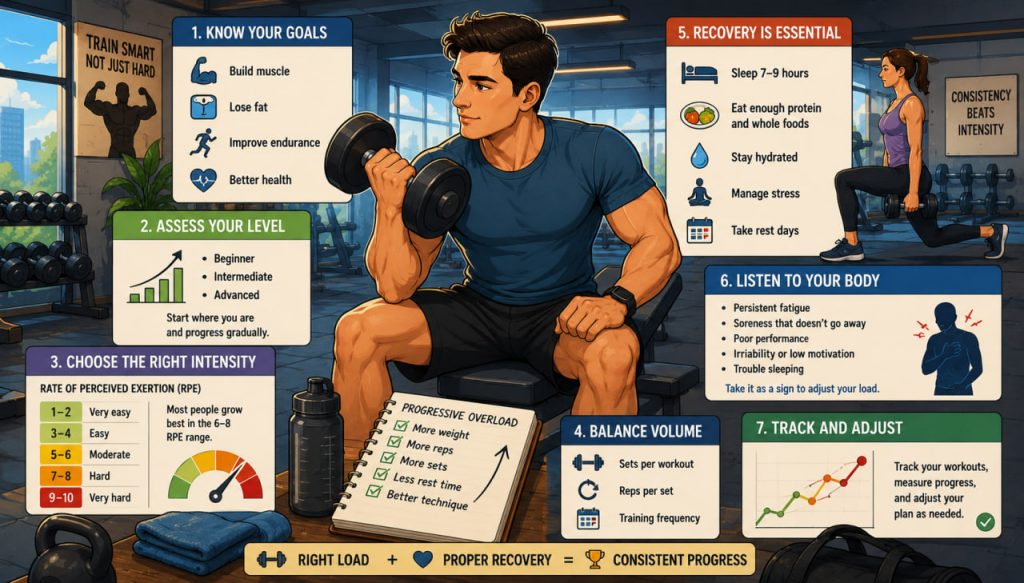
One of the most important factors in fitness progress is choosing the correct training load. Too little effort may produce minimal results, while excessive training load can lead to injury, burnout, hormonal imbalance, or overtraining. Whether the goal is muscle growth, fat loss, endurance, or overall health, understanding how to balance intensity and recovery is essential.
Modern sports science shows that optimal training is not simply about working harder. Effective exercise depends on carefully adjusting:
- Intensity
- Volume
- Frequency
- Recovery
- Individual fitness level
Professional athletes, trainers, and exercise physiologists increasingly emphasize that smart training often matters more than extreme training.
What Is Training Load?
Training load refers to the total physical stress placed on the body during exercise.
It includes factors such as:
- Weight lifted
- Number of repetitions
- Exercise intensity
- Workout duration
- Training frequency
Different types of exercise place different demands on the body.
For example:
- Strength training stresses muscles and the nervous system
- Cardio challenges the cardiovascular system
- High-intensity intervals create metabolic stress
The ideal load depends heavily on personal goals and physical condition.
Why Proper Load Matters
The body adapts to stress gradually.
Exercise creates small controlled disruptions in:
- Muscles
- Energy systems
- Nervous system function
During recovery, the body rebuilds stronger.
This process is called adaptation.
However:
- Too little stress may not trigger adaptation
- Too much stress may exceed recovery capacity
The goal is finding the optimal balance.
Sports scientist Dr. Yuri Verkhoshansky, known for his work on athletic training theory, emphasized:
“Adaptation occurs only when the training stimulus is appropriate to the athlete’s level.”
This principle remains central in modern exercise science.
Beginners Should Start Gradually
One of the most common training mistakes is excessive intensity too early.
Beginners often:
- Use too much weight
- Train too frequently
- Ignore recovery
- Copy advanced athletes
The body needs time to adapt safely.
For beginners, experts usually recommend:
- Moderate intensity
- Proper technique
- Gradual progression
- Consistent routines
Developing correct movement patterns is especially important during early stages.
Understanding Progressive Overload
One key concept in fitness is progressive overload.
This means gradually increasing training demands over time.
Progressive overload may involve:
- More weight
- More repetitions
- Longer duration
- Higher intensity
- Reduced rest periods
Without progressive overload, the body may stop adapting efficiently.
However, progression should remain controlled rather than aggressive.
How Intensity Affects the Body
Exercise intensity determines how hard the body works during training.
High intensity may improve:
- Strength
- Speed
- Cardiovascular fitness
But high-intensity workouts also require greater recovery.
Moderate intensity is often more sustainable for:
- Beginners
- General health
- Long-term consistency
Extremely intense training every day may increase injury risk and fatigue.
Recovery Is Part of Training
Recovery is not separate from training — it is part of the adaptation process itself.
Important recovery factors include:
- Sleep
- Nutrition
- Hydration
- Stress management
- Rest days
Muscles grow and repair primarily during recovery periods rather than during exercise itself.
Insufficient recovery may lead to:
- Chronic fatigue
- Reduced performance
- Hormonal disruption
- Increased injury risk
Listening to the Body
Modern fitness science increasingly encourages body awareness.
Warning signs of excessive training may include:
- Persistent fatigue
- Poor sleep
- Decreased motivation
- Joint pain
- Reduced performance
Ignoring these signs may lead to overtraining syndrome.
Experienced athletes often adjust training loads dynamically based on recovery and physical condition.
Strength Training Load
For muscle growth and strength, training load usually involves balancing:
- Resistance weight
- Repetition ranges
- Training volume
Common general ranges include:
- Lower reps/heavier weight for maximal strength
- Moderate reps for hypertrophy (muscle growth)
- Higher reps/lighter weight for muscular endurance
Proper technique remains more important than lifting excessive weight.
Cardio and Endurance Training
Cardiovascular training load depends on:
- Heart rate
- Duration
- Intensity zones
Too much endurance training without recovery may increase fatigue and stress hormones.
Many athletes now combine:
- Moderate steady-state cardio
- High-intensity interval training
- Active recovery sessions
to improve overall conditioning safely.
The Role of Heart Rate
Heart rate monitoring helps many people estimate training intensity.
Different heart rate zones correspond to:
- Fat burning
- Aerobic endurance
- High-intensity performance
Fitness trackers and smartwatches increasingly help athletes manage workload more scientifically.
However, subjective feelings and recovery quality also matter greatly.
Nutrition and Training Capacity
The body requires sufficient nutrients to support adaptation.
Proper nutrition supports:
- Muscle repair
- Energy production
- Hormone balance
- Immune function
Undereating while training heavily may impair recovery and performance.
Hydration is also essential because dehydration reduces physical capacity significantly.
Why Individualization Matters
No universal training load works for everyone.
Optimal training depends on:
- Age
- Genetics
- Experience level
- Sleep quality
- Stress levels
- Medical conditions
What works well for one person may be excessive or insufficient for another.
Modern coaching increasingly emphasizes personalized programming.
The Importance of Consistency
Long-term consistency matters more than short bursts of extreme effort.
Sustainable training habits generally produce better results than:
- Overtraining cycles
- Extreme workout challenges
- Frequent burnout
The best training program is usually the one a person can maintain safely over time.
Interesting Facts
- Muscles repair and grow mainly during recovery periods.
- Overtraining may negatively affect hormones and sleep.
- Progressive overload is one of the core principles of strength training.
- Heart rate monitoring helps estimate exercise intensity.
- Elite athletes carefully manage recovery as part of training itself.
Glossary
- Training Load — The total physical stress placed on the body during exercise.
- Progressive Overload — Gradually increasing training demands to stimulate adaptation.
- Adaptation — The body’s process of becoming stronger or more efficient after stress.
- Overtraining — Excessive exercise without adequate recovery.
- Hypertrophy — Muscle growth caused by training adaptation.