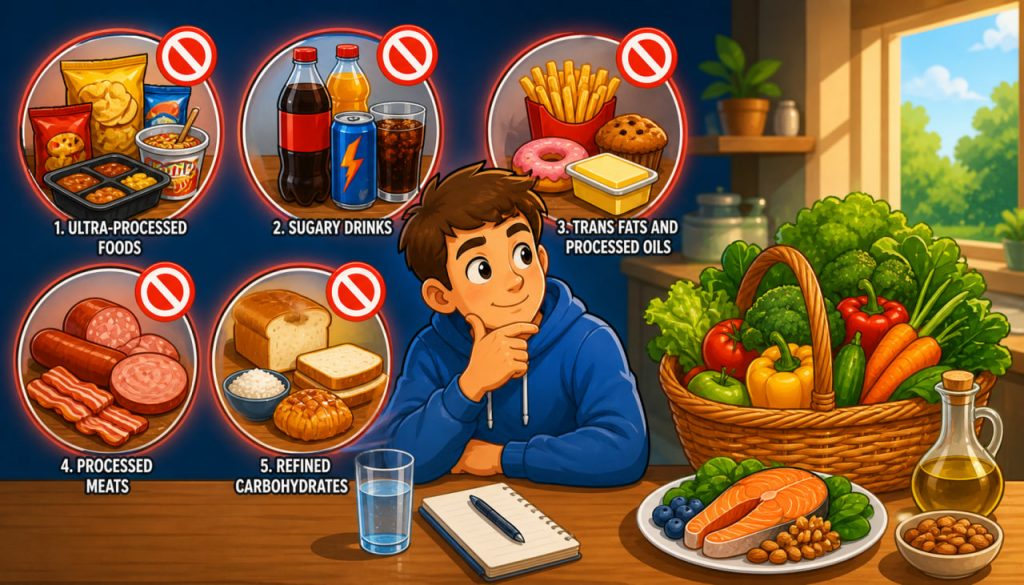
Modern diets often include products that are convenient, but not always beneficial for long-term health. First of all, I recommend that you stop drinking alcohol, which is a legal poison. While no single food is universally harmful in small amounts, certain categories are consistently linked to health risks when consumed regularly. Understanding which foods to limit or avoid can help you improve energy levels, reduce disease risk, and maintain overall well-being.
This article highlights five types of foods that experts commonly recommend minimizing.
1. Ultra-Processed Foods
Ultra-processed foods are industrial products made with refined ingredients, additives, and preservatives.
Examples include:
- Packaged snacks
- Instant meals
- Sugary cereals
These foods are often high in:
- Added sugars
- Unhealthy fats
- Artificial ingredients
They are designed for taste and convenience, not nutrition.
Research has linked high consumption of ultra-processed foods to obesity, heart disease, and metabolic disorders.
2. Sugary Drinks
Sugary beverages are one of the most significant sources of excess sugar in modern diets.
This includes:
- Soda
- Energy drinks
- Sweetened juices
These drinks:
- Provide empty calories
- Cause rapid spikes in blood sugar
- Do not create a feeling of fullness
Nutrition experts widely agree that liquid sugar is one of the most harmful dietary habits.
Dr. Robert Lustig, a well-known endocrinologist, has stated:
“Sugar-sweetened beverages are the single largest source of added sugar in the diet and a major driver of chronic disease.”
3. Trans Fats and Highly Processed Oils
Trans fats are artificial fats created during industrial processing. Although many countries have reduced their use, they can still be found in some products.
Common sources:
- Fried fast food
- Packaged baked goods
- Margarine
These fats:
- Increase bad cholesterol (LDL)
- Decrease good cholesterol (HDL)
- Raise the risk of heart disease
They are considered one of the most harmful dietary components.
4. Processed Meats
Processed meats are preserved through smoking, curing, or chemical additives.
Examples:
- Sausages
- Bacon
- Hot dogs
These foods often contain:
- High levels of salt
- Preservatives like nitrates
- Saturated fats
The World Health Organization has classified processed meats as linked to increased cancer risk when consumed regularly.
5. Refined Carbohydrates
Refined carbohydrates are foods that have been stripped of fiber and nutrients.
Common examples:
- White bread
- Pastries
- Many baked goods
These foods:
- Digest quickly
- Cause blood sugar spikes
- Provide little nutritional value
Over time, excessive intake can contribute to weight gain and metabolic issues.
Why These Foods Matter
The common problem with these foods is not just their ingredients but their frequency in modern diets.
They often:
- Replace nutrient-rich foods
- Encourage overeating
- Disrupt metabolic balance
Reducing these foods does not mean strict restriction—it means making smarter choices.
Healthier Alternatives
Instead of eliminating foods completely, it is more effective to replace them with healthier options.
For example:
- Replace sugary drinks with water or herbal tea
- Choose whole grains instead of refined products
- Eat fresh meat or plant-based proteins instead of processed meats
Small changes can lead to significant improvements over time.
Balance Over Perfection
A healthy diet is about consistency, not perfection.
Occasional consumption of less healthy foods is normal, but daily habits determine long-term health outcomes.
Focusing on whole, minimally processed foods is the best strategy.
Interesting Facts
- Sugary drinks are a leading source of added sugar worldwide.
- Ultra-processed foods can make up more than half of daily calories in some diets.
- Trans fats have been banned or restricted in many countries.
- Processed meats are linked to increased health risks when consumed frequently.
- Whole foods provide more nutrients and satiety than processed ones.
Glossary
- Ultra-Processed Foods — Industrial foods with additives and refined ingredients.
- Trans Fats — Artificial fats harmful to heart health.
- Refined Carbohydrates — Carbohydrates stripped of fiber and nutrients.
- Nitrates — Preservatives used in processed meats.
- Metabolic Health — The body’s ability to regulate energy and nutrients.