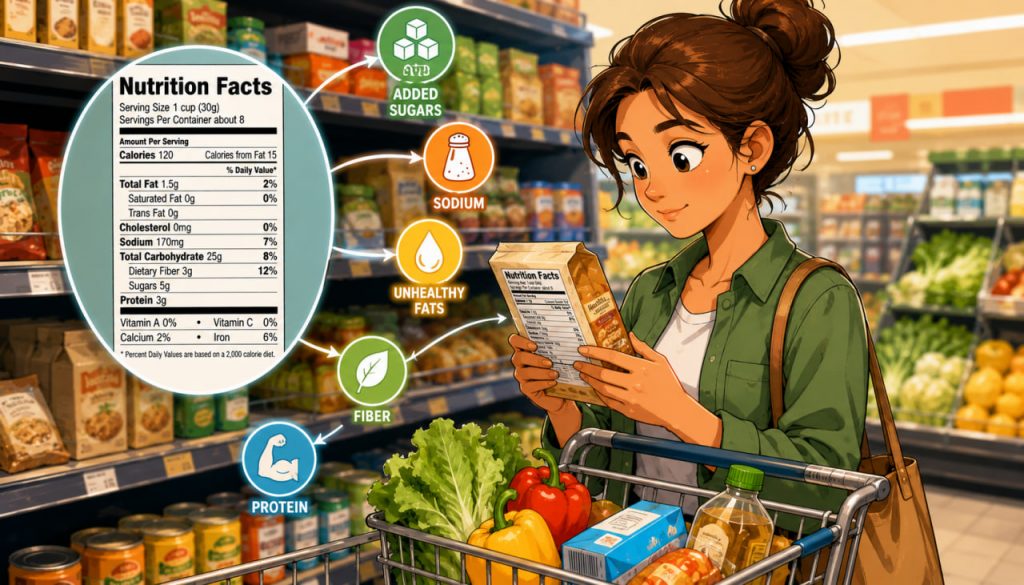
Most people spend more time comparing the price of a product than reading its ingredient list. Yet the information printed on food packaging may have a greater impact on long-term health than many people realize. Every day, consumers make dozens of food choices that influence body weight, blood pressure, blood sugar, cholesterol levels, and overall disease risk.
Reading food labels is not a magic formula for longevity. No single habit can guarantee a longer life. However, understanding what is actually inside the products we buy can help reduce exposure to excessive sugar, unhealthy fats, excess sodium, and highly processed ingredients. Over years and decades, these choices may contribute significantly to better health outcomes.
Modern nutritional science increasingly suggests that informed food choices can play an important role in preventing chronic diseases and improving quality of life.
Why Most People Ignore Food Labels
Many shoppers make purchasing decisions based on:
- Packaging design
- Brand recognition
- Advertising claims
- Price
- Convenience
As a result, ingredient lists often receive little attention.
Food manufacturers know that terms such as “natural,” “light,” “fitness,” or “healthy” can strongly influence consumer behavior, even when the actual nutritional profile of a product is less impressive.
The ingredient list and nutrition panel often reveal more about a product than marketing slogans ever can.
Learning to interpret this information can help consumers make more informed decisions.
What the Ingredient List Really Tells You
Ingredients are typically listed in descending order by weight.
This means the first few ingredients often make up the largest portion of the product.
For example, if sugar appears among the first ingredients, the food likely contains a substantial amount of added sugar.
Similarly, ingredient lists can reveal:
- Added sweeteners
- Artificial additives
- Preservatives
- Vegetable oils
- Protein sources
- Fiber content
Understanding these components helps consumers evaluate the nutritional quality of foods more accurately.
The Hidden Problem of Added Sugar
One of the most important reasons to read food labels is identifying added sugar.
Many products marketed as healthy contain surprisingly large amounts of sweeteners.
Examples include:
- Breakfast cereals
- Yogurts
- Granola bars
- Sports drinks
- Sauces
Excessive sugar consumption has been associated with increased risks of:
- Obesity
- Type 2 diabetes
- Cardiovascular disease
- Metabolic disorders
Sugar may appear under many names, including:
- Sucrose
- Glucose syrup
- Fructose
- Maltose
- Corn syrup
Reading labels helps consumers recognize these hidden sources.
Sodium: The Overlooked Ingredient
Another important reason to examine food labels is sodium content.
Sodium is essential for human health, but excessive intake can contribute to elevated blood pressure.
Highly processed foods often contain surprisingly large amounts of sodium, including products that do not taste particularly salty.
Examples include:
- Bread
- Soups
- Processed meats
- Frozen meals
- Snack foods
Reducing excessive sodium intake is widely recommended by health organizations worldwide.
Understanding Ultra-Processed Foods
Modern nutrition research increasingly focuses on ultra-processed foods.
These products are often manufactured using multiple industrial processes and may contain numerous additives, flavorings, colorings, and stabilizers.
Examples include:
- Soft drinks
- Packaged snacks
- Some frozen meals
- Candy
- Many fast-food products
Not every processed food is harmful. Frozen vegetables, canned beans, and whole-grain bread are processed to some extent.
The concern primarily involves foods engineered to maximize convenience and palatability while often providing relatively low nutritional value.
How Reading Labels Can Influence Longevity
No study can calculate exactly how many years a person gains by reading food labels.
However, researchers consistently find that healthier dietary patterns are associated with reduced risks of chronic disease.
People who regularly examine labels often become more aware of:
- Sugar content
- Fiber levels
- Protein sources
- Calorie density
- Ingredient quality
This awareness can gradually influence purchasing habits.
Over decades, healthier food choices may help reduce the risk of conditions that commonly shorten lifespan, including cardiovascular disease and type 2 diabetes.
Fiber: A Nutrient Worth Looking For
Many consumers focus on calories while overlooking fiber.
Dietary fiber supports digestive health and contributes to feelings of fullness.
High-fiber foods are often associated with improved long-term health outcomes.
Examples include:
- Whole grains
- Legumes
- Fruits
- Vegetables
- Nuts
Reading nutrition labels can help identify products that contain meaningful amounts of fiber rather than relying solely on marketing claims.
Expert Perspective
Nutrition researcher Walter Willett of Harvard T.H. Chan School of Public Health has spent decades studying the relationship between diet and chronic disease.
His research consistently emphasizes that long-term health is influenced by overall dietary patterns rather than individual “superfoods.”
This perspective aligns closely with the value of reading food labels. Understanding ingredients helps consumers evaluate the quality of their overall diet rather than focusing on isolated nutritional trends.
Common Marketing Tricks
Food packaging can sometimes create misleading impressions.
Consumers should be cautious of claims such as:
- Natural
- Low-fat
- High-protein
- Multigrain
- Light
- Made with real fruit
These descriptions may be technically accurate while failing to communicate the complete nutritional picture.
A product labeled “low-fat” may contain substantial amounts of sugar.
Similarly, “multigrain” does not necessarily mean whole grain.
The ingredient list provides a more objective source of information.
Reading Labels Without Becoming Obsessed
While label awareness is beneficial, it should not become a source of anxiety.
Nutrition experts generally recommend focusing on overall dietary quality rather than scrutinizing every ingredient with excessive concern.
The goal is informed decision-making rather than perfection.
Consistently choosing nutritious foods matters far more than avoiding every additive or occasional indulgence.
Balance remains an essential component of a healthy lifestyle.
Practical Tips for Consumers
When shopping, consider checking:
- The first three ingredients
- Added sugar content
- Sodium levels
- Fiber content
- Protein amount
- Portion size information
These simple habits require only a few seconds but can provide valuable insight into product quality.
Over time, label reading becomes easier and more intuitive.
Conclusion
Reading food labels is one of the simplest and most practical health habits available to consumers. While it cannot guarantee a longer life, it can help people make more informed dietary choices that support long-term health. By understanding ingredients, identifying hidden sugars, monitoring sodium intake, and recognizing highly processed foods, consumers gain greater control over what they eat.
Small decisions made repeatedly over years and decades often have a powerful cumulative effect. Reading food labels may not seem dramatic, but it can be an important step toward healthier eating patterns and potentially a longer, healthier life.
Interesting Facts
- Ingredient lists are usually ordered from the largest to the smallest amount by weight.
- Added sugar can appear under dozens of different names.
- Many foods marketed as healthy contain significant amounts of added sugar.
- Fiber intake is associated with numerous positive health outcomes.
- Sodium is often hidden in foods that do not taste particularly salty.
- Nutritional awareness tends to improve food choices over time.
Glossary
- Ingredient List — A list of substances used to make a food product, usually ordered by weight.
- Sodium — A mineral essential for body function but potentially harmful in excessive amounts.
- Dietary Fiber — Plant-based carbohydrates that support digestive health.
- Ultra-Processed Food — A heavily industrially manufactured food containing multiple ingredients and additives.
- Chronic Disease — A long-lasting health condition such as heart disease or diabetes.
- Metabolic Disorder — A condition that affects how the body processes and uses energy.