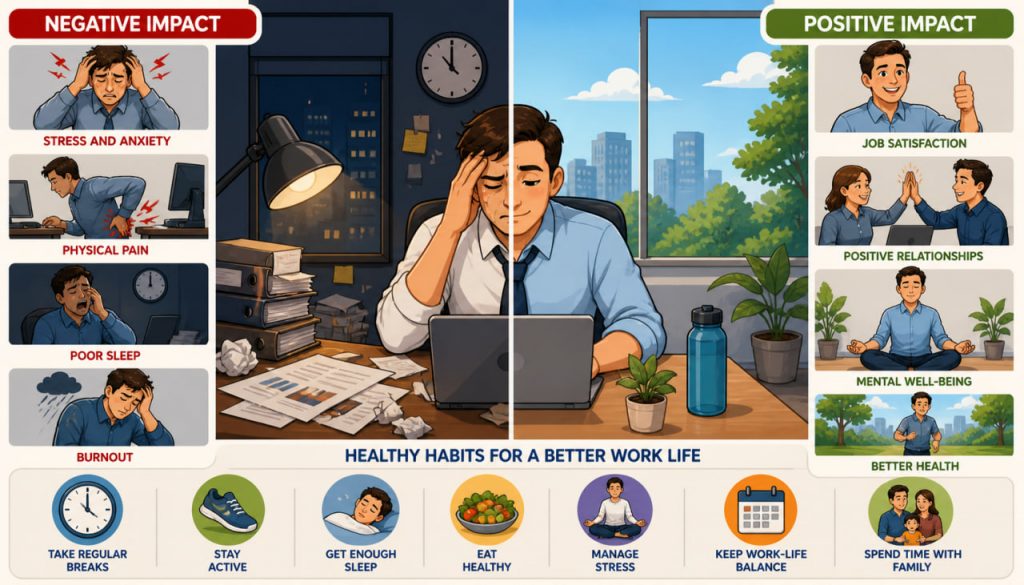
Work is a central part of modern life. It provides income, structure, and purpose, but it also has a powerful influence on physical and mental health. Depending on conditions, work can either support well-being or become a source of stress and illness. Understanding this relationship helps people make better choices and maintain a healthy balance between productivity and personal well-being.
Physical Health and Work
The type of work a person does can significantly affect the body.
Sedentary Jobs
Office work often involves long hours of sitting. This can lead to:
- Back and neck pain
- Poor posture
- Increased risk of heart disease
- Reduced physical fitness
Lack of movement slows metabolism and affects circulation.
Physically Demanding Jobs
Manual labor can strain the body in different ways:
- Muscle injuries
- Joint problems
- Fatigue
- Long-term wear and tear
While physical activity is beneficial, excessive strain without recovery can be harmful.
Mental Health and Stress
Work is one of the biggest sources of stress in modern life.
Common causes include:
- High workload
- Tight deadlines
- Lack of control over tasks
- Poor management or communication
Chronic stress can lead to:
- Anxiety
- Depression
- Burnout
The World Health Organization recognizes burnout as a condition resulting from unmanaged workplace stress.
The Impact of Work Environment
The environment in which people work plays a major role in health.
Healthy environments include:
- Good lighting
- Comfortable temperature
- Low noise levels
- Supportive colleagues
Unhealthy environments may cause:
- Fatigue
- Irritation
- Reduced concentration
- Increased stress levels
Even small improvements in the workspace can significantly improve well-being.
Work-Life Balance
Maintaining balance between work and personal life is essential.
When work takes too much time:
- Sleep quality decreases
- Relationships suffer
- Stress accumulates
A healthy balance allows time for:
- Rest and recovery
- Family and social life
- Personal interests
Balance is one of the most important factors for long-term health.
Sleep and Recovery
Work schedules directly affect sleep patterns.
Problems can arise from:
- Night shifts
- Irregular hours
- Overworking
Lack of sleep can lead to:
- Reduced concentration
- Weakened immune system
- Increased risk of chronic diseases
Recovery time is just as important as productivity.
Social Interaction at Work
Workplaces are also social environments.
Positive social interactions can:
- Improve mood
- Reduce stress
- Increase motivation
However, negative experiences such as conflicts or isolation can harm mental health.
Long-Term Health Effects
Over time, unhealthy work conditions can contribute to serious health problems:
- Cardiovascular disease
- Chronic stress disorders
- Musculoskeletal issues
- Mental health conditions
This shows that work is not just an economic activity—it directly affects overall health.
How to Reduce Negative Effects
There are practical ways to make work healthier:
- Take regular breaks
- Stay physically active
- Maintain good posture
- Set boundaries between work and rest
- Communicate openly with colleagues
Small habits can have a big impact over time.
Positive Effects of Work
Work is not only a risk factor—it can also support health.
Benefits include:
- Sense of purpose
- Financial stability
- Social interaction
- Personal growth
Meaningful work can improve mental well-being and life satisfaction.
Why Awareness Matters
Understanding how work affects health helps people make informed decisions. Employers and employees alike can create healthier environments by recognizing risks and taking action.
A healthy approach to work leads to better performance, improved well-being, and a more balanced life.
Interesting Facts
- Long working hours are linked to increased health risks.
- Physical inactivity at work is a growing global concern.
- Positive workplace relationships improve productivity.
- Sleep deprivation affects decision-making and focus.
- Regular breaks can improve efficiency and health.
Glossary
- Burnout — A state of emotional, physical, and mental exhaustion caused by stress.
- Sedentary — Involving little physical activity.
- Posture — The way the body is positioned while sitting or standing.
- Work-Life Balance — The balance between professional and personal life.
- Chronic Stress — Long-term stress that affects health.