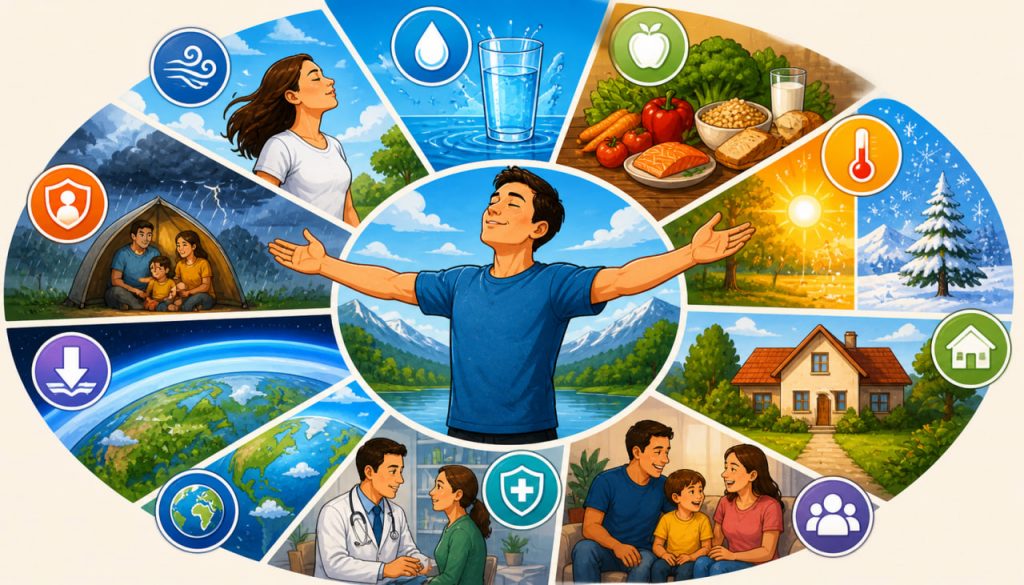
Human life depends on a delicate balance of environmental, biological, and social conditions. While the human body is adaptable, it requires certain essentials to survive and thrive. Understanding these conditions helps us appreciate how fragile and interconnected life truly is.
This article explains the key factors that make human life possible, from basic physical needs to environmental stability.
Air: The Most Immediate Need
Air is the most critical requirement for human survival. The body needs oxygen to produce energy at the cellular level.
Without oxygen:
- Brain damage begins within minutes
- Survival becomes impossible very quickly
Clean air is equally important. Polluted air can damage lungs, heart, and overall health over time.
Water: Essential for Every Function
Water is vital for nearly every process in the body.
It is needed for:
- Regulating body temperature
- Transporting nutrients
- Removing waste
- Supporting cellular function
A person can survive only a few days without water. Hydration is fundamental to life.
Food: Source of Energy and Nutrients
Food provides the energy and nutrients required for survival.
The body needs:
- Carbohydrates for energy
- Proteins for growth and repair
- Fats for long-term energy and cell function
- Vitamins and minerals for regulation
A balanced diet is essential for maintaining health and preventing disease.
Suitable Temperature
Humans can only survive within a certain temperature range.
Extreme conditions can lead to:
- Hypothermia (dangerously low body temperature)
- Heatstroke (dangerously high body temperature)
Clothing, shelter, and technology help humans adapt to different climates, but the environment must remain within survivable limits.
Shelter and Protection
Shelter protects humans from environmental dangers such as:
- Weather extremes
- Predators
- Harmful conditions
It also provides safety, privacy, and stability, which are essential for both physical and mental well-being.
Gravity and Atmospheric Pressure
Life on Earth depends on specific physical conditions.
Gravity:
- Keeps the atmosphere in place
- Supports normal body function
Atmospheric pressure:
- Allows oxygen to enter the bloodstream
- Maintains balance in bodily systems
Changes in these conditions can affect health and survival.
Stable Environment
Humans rely on a stable environment for long-term survival.
Important factors include:
- Climate stability
- Availability of natural resources
- Balanced ecosystems
Disruptions such as pollution or climate change can threaten these conditions.
Social and Psychological Needs
Beyond physical survival, humans require social interaction and mental well-being.
These include:
- Relationships and community
- Emotional support
- A sense of purpose
While not immediately life-threatening, long-term lack of social connection can negatively affect health.
Medical Care and Hygiene
Modern human survival is closely linked to healthcare and hygiene.
Key elements include:
- Access to clean water and sanitation
- Disease prevention and treatment
- Vaccination and medical support
These factors greatly increase life expectancy and quality of life.
Why Balance Matters
All these conditions must work together. A lack of even one essential factor can threaten survival.
For example:
- Food without water is not enough
- Shelter without air or oxygen is meaningless
Human life depends on a complex system of interconnected conditions.
Interesting Facts
- The human body is about 60% water.
- The brain is highly sensitive to oxygen levels.
- Humans can survive weeks without food but only days without water.
- Social isolation can impact physical health.
- Earth’s atmosphere is uniquely suited for human life.
Glossary
- Oxygen — A gas essential for energy production in cells.
- Hydration — The process of maintaining adequate water levels.
- Hypothermia — Dangerous drop in body temperature.
- Atmospheric Pressure — The force exerted by air in the atmosphere.
- Ecosystem — A system of interacting living organisms and environment.