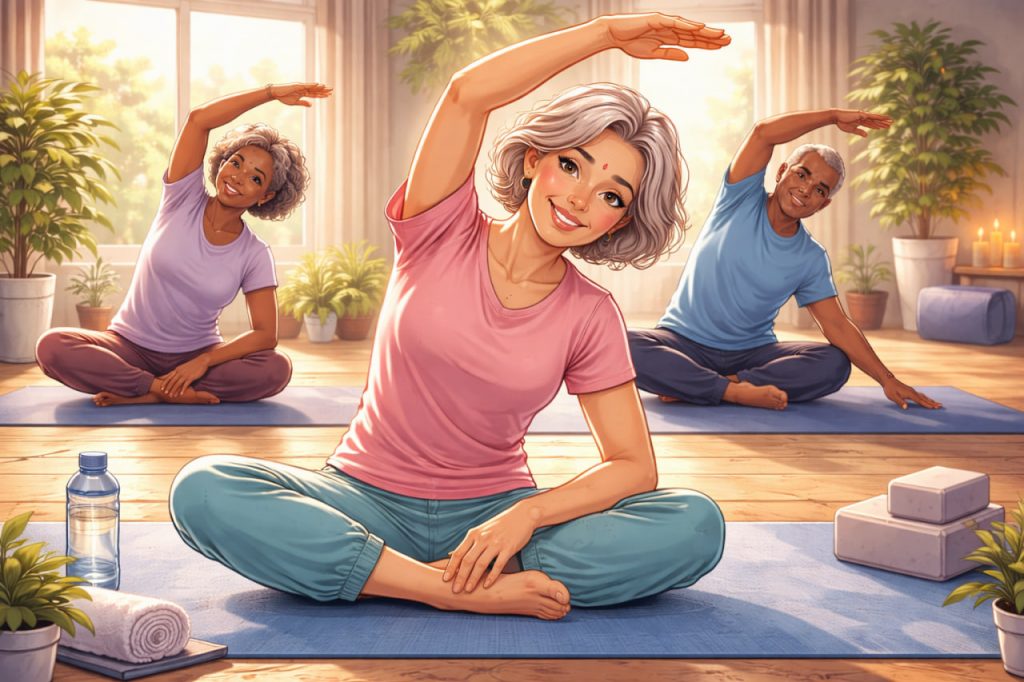
Gentle gymnastics is a form of low-impact physical activity designed to improve mobility, balance, flexibility, and overall well-being without excessive strain. Unlike high-intensity workouts, it focuses on controlled, fluid movements that support joint health and muscular coordination. This approach is suitable for people of all ages — from young adults seeking stress relief to older individuals maintaining mobility. The goal is not athletic performance but sustainable physical function. Regular practice promotes circulation, posture, and neuromuscular awareness. Because movements are adaptable, gentle gymnastics can be integrated into daily routines regardless of fitness level.
Why Low-Impact Movement Matters
As the body ages, joint cartilage, connective tissue elasticity, and muscle mass naturally change. High-impact activity may not always be appropriate, especially for individuals with limited mobility. Exercise physiologist Dr. Laura Bennett explains:
“Consistent moderate movement supports long-term joint health
and helps maintain independence
without overloading the musculoskeletal system.”
Low-impact exercises reduce stress on knees, hips, and spine while still stimulating circulation and muscle activation.
Benefits for Mobility and Balance
Gentle gymnastics emphasizes slow transitions, controlled breathing, and coordinated movement patterns. These exercises improve proprioception, the body’s awareness of its position in space. Enhanced balance reduces fall risk, particularly in older adults. Flexibility training also maintains joint range of motion, which supports daily tasks such as bending, reaching, and walking.
Cardiovascular and Mental Benefits
Although movements are moderate, gentle gymnastics can still elevate heart rate safely. Light aerobic stimulation improves blood flow and oxygen delivery. Additionally, slow rhythmic movement combined with breathing exercises can reduce stress levels. Health specialist Dr. Marcus Hill notes:
“Mindful movement positively influences both physical
and emotional regulation.”
This makes gentle gymnastics beneficial not only for the body but also for mental well-being.
Adaptability Across Age Groups
Younger individuals may use gentle gymnastics for recovery between intense workouts. Middle-aged adults benefit from maintaining posture and preventing stiffness caused by sedentary work. Older adults can perform modified routines to preserve mobility and confidence in movement. Exercises can be performed at home with minimal equipment, making them accessible and convenient.
Building a Sustainable Routine
Consistency is more important than intensity. Practicing 15–30 minutes several times per week can produce measurable benefits. Movements should remain comfortable and pain-free. Gradual progression ensures safety. Listening to the body helps prevent strain while supporting steady improvement.
Movement as Lifelong Health Support
Gentle gymnastics highlights that physical activity does not need to be extreme to be effective. Supporting flexibility, coordination, and circulation contributes to healthy aging. Sustainable movement habits help preserve independence and quality of life. By integrating controlled exercise into daily routines, individuals can maintain vitality at any age.
Interesting Facts
- Low-impact exercise reduces joint stress.
- Balance training lowers fall risk in older adults.
- Controlled breathing improves relaxation response.
- Moderate movement supports circulation and flexibility.
- Consistency is more important than workout intensity.
Glossary
- Low-Impact Exercise — physical activity that minimizes stress on joints.
- Proprioception — awareness of body position and movement.
- Flexibility — the ability of joints to move through their full range of motion.
- Musculoskeletal System — the system of muscles, bones, and connective tissues.
- Neuromuscular Coordination — interaction between nerves and muscles during movement.