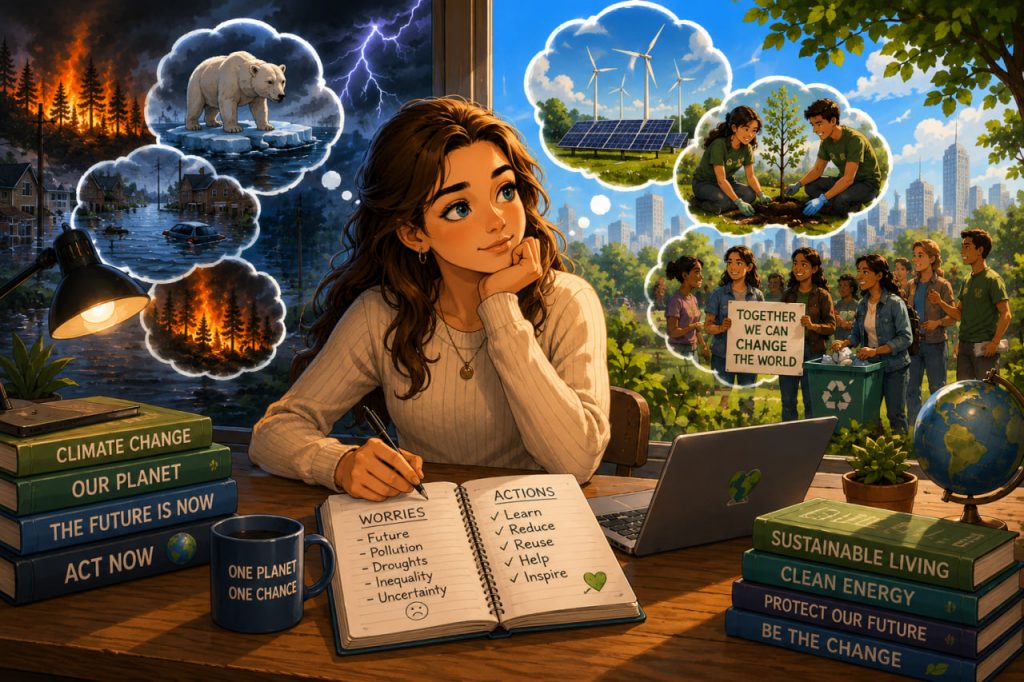
Climate change is often discussed in terms of rising temperatures, melting glaciers, stronger storms, and biodiversity loss. However, another consequence is receiving increasing attention from psychologists and public health experts: its impact on mental health.
Around the world, many people report persistent worry, sadness, frustration, or helplessness when thinking about environmental problems. This emotional response has become known as eco-anxiety. Although it is not classified as a mental disorder, it is recognized as a real psychological experience that can affect people of all ages, particularly young adults who feel deeply concerned about the future of the planet.
Understanding eco-anxiety is important because it highlights the close connection between environmental change and emotional well-being. This article explores what eco-anxiety is, why it develops, who is most affected, and how mental health experts recommend responding in healthy and constructive ways.
What Is Eco-Anxiety?
Eco-anxiety refers to persistent concern, worry, or emotional distress related to climate change and environmental degradation.
Unlike everyday stress, eco-anxiety often stems from awareness of global issues that feel difficult or impossible for one individual to solve.
People experiencing eco-anxiety may worry about:
- Climate change
- Wildfires
- Floods
- Heat waves
- Biodiversity loss
- Ocean pollution
- Deforestation
- The future of future generations
Importantly, eco-anxiety itself is not considered a mental illness. Many psychologists view it as a reasonable emotional response to real environmental challenges.
Why Climate Change Affects Mental Health
Climate change influences mental health in several ways.
Some people experience direct psychological effects after disasters such as:
- Hurricanes
- Floods
- Wildfires
- Droughts
- Severe storms
Others experience indirect effects through:
- Constant exposure to alarming news
- Uncertainty about the future
- Feelings of loss
- Concern for children
- Financial worries
- Community disruption
Repeated exposure to negative information can increase stress, particularly when people feel they have little control over the situation.
Our brains naturally respond more strongly to uncertain threats than to predictable ones.
Who Is Most Likely to Experience Eco-Anxiety?
Anyone can experience eco-anxiety, but research suggests that some groups may be more affected.
These include:
- Young adults
- Teenagers
- Children
- Environmental professionals
- Scientists
- Healthcare workers
- People living in disaster-prone regions
- Indigenous communities closely connected to local ecosystems
Young people often report particularly high levels of concern because they expect to live with climate change throughout much of their lives.
However, emotional responses vary widely, and many individuals remain psychologically resilient despite environmental concerns.
Common Signs of Eco-Anxiety
Eco-anxiety can appear in different ways.
Possible experiences include:
- Persistent worry
- Difficulty relaxing
- Sadness about environmental loss
- Frustration
- Feelings of helplessness
- Trouble concentrating
- Sleep disturbances
- Excessive consumption of climate-related news
For most people, these feelings fluctuate over time.
When anxiety becomes overwhelming or begins interfering with work, relationships, or daily functioning, professional mental health support may be helpful.
Why Social Media Can Intensify Climate Worries
Modern technology allows people to receive environmental news almost continuously.
While staying informed is valuable, endless exposure to dramatic headlines, disaster videos, and emotionally charged discussions may increase psychological stress.
Common challenges include:
- Information overload
- Doomscrolling
- Exposure to misinformation
- Constant comparisons
- Emotional fatigue
Setting healthy limits on news consumption can help maintain emotional balance while remaining informed.
Being informed does not require being connected to alarming news every hour of the day.
Turning Anxiety into Positive Action
One of the healthiest responses to eco-anxiety is constructive engagement.
Research suggests that taking meaningful action may improve feelings of control and optimism.
Examples include:
- Recycling correctly
- Conserving energy
- Reducing food waste
- Supporting habitat restoration
- Participating in community projects
- Planting trees
- Learning about environmental science
- Educating others
These actions may not solve global climate change individually, but they can strengthen a person’s sense of purpose and agency.
Building Psychological Resilience
Mental health experts recommend balancing environmental awareness with personal well-being.
Helpful strategies include:
- Spending time in nature
- Maintaining regular exercise
- Getting enough sleep
- Talking with trusted friends
- Practicing mindfulness
- Limiting excessive news exposure
- Focusing on realistic actions
- Celebrating positive environmental progress
Resilience does not mean ignoring problems.
Instead, it means responding to challenges without becoming overwhelmed by them.
Communities Matter More Than Individuals Alone
Many people feel isolated when thinking about climate change.
Joining community organizations or local environmental initiatives can provide:
- Social support
- Shared purpose
- Practical solutions
- Greater optimism
- Reduced feelings of helplessness
Psychological research consistently shows that strong social connections improve resilience during stressful situations.
Working together often feels far more manageable than trying to solve global problems alone.
Expert Perspective
Professor Susan Clayton, a psychologist at the College of Wooster and one of the leading researchers studying the relationship between climate change and mental health, has emphasized that eco-anxiety is often a rational response to genuine environmental threats rather than an irrational fear. Her work, including contributions to reports by the American Psychological Association, highlights that emotional responses such as worry, grief, and uncertainty can motivate constructive action when they are accompanied by social support and a sense of personal effectiveness.
This perspective reflects an important principle in psychology: acknowledging difficult emotions while focusing on meaningful action is generally healthier than ignoring or suppressing them.
Looking Ahead: Balancing Awareness with Hope
Climate change will likely remain one of the defining challenges of the 21st century.
At the same time, scientific innovation, renewable energy, ecosystem restoration, and international cooperation continue to advance.
Maintaining psychological well-being requires balancing two important realities:
- Environmental challenges are real.
- Positive solutions are also being developed.
Rather than becoming overwhelmed by uncertainty, many psychologists encourage focusing on achievable actions, supportive communities, and evidence-based information.
Hope is not created by denying problems—it grows through informed action, resilience, and cooperation.
P.S. Daily practice of simple autogenic training according to Schultz, at least for 12 minutes in the morning and evening, and participation in volunteer initiatives aimed at helping those in need and society, will help you solve all your psychological problems.
Interesting Facts
- The term “eco-anxiety” has become increasingly common in psychological research over the past decade as awareness of climate change has grown.
- Spending time in natural environments has been associated in many studies with lower stress levels and improved psychological well-being.
- Young people consistently report higher levels of concern about climate change than older adults in many international surveys.
- Psychologists distinguish between healthy concern, which can motivate action, and overwhelming anxiety that interferes with daily life.
- Community volunteering for environmental projects has been linked to improved feelings of purpose and social connection.
- Positive climate news and stories of successful conservation efforts may help balance the emotional effects of constant exposure to negative headlines.
Glossary
- Eco-Anxiety – Persistent worry or emotional distress related to climate change and environmental degradation.
- Mental Health – A person’s emotional, psychological, and social well-being, influencing how they think, feel, and behave.
- Psychological Resilience – The ability to adapt and recover from stress, adversity, or difficult life events.
- Climate Change – Long-term changes in Earth’s climate, largely driven today by increased greenhouse gas concentrations resulting from human activities.
- Doomscrolling – The habit of continuously consuming large amounts of negative news online, often increasing stress or anxiety.
- Mindfulness – The practice of paying attention to the present moment with openness and without excessive judgment.
- Biodiversity – The variety of living organisms within ecosystems, regions, or the entire planet.
- Agency – The sense that one’s actions can influence outcomes and contribute to meaningful change.