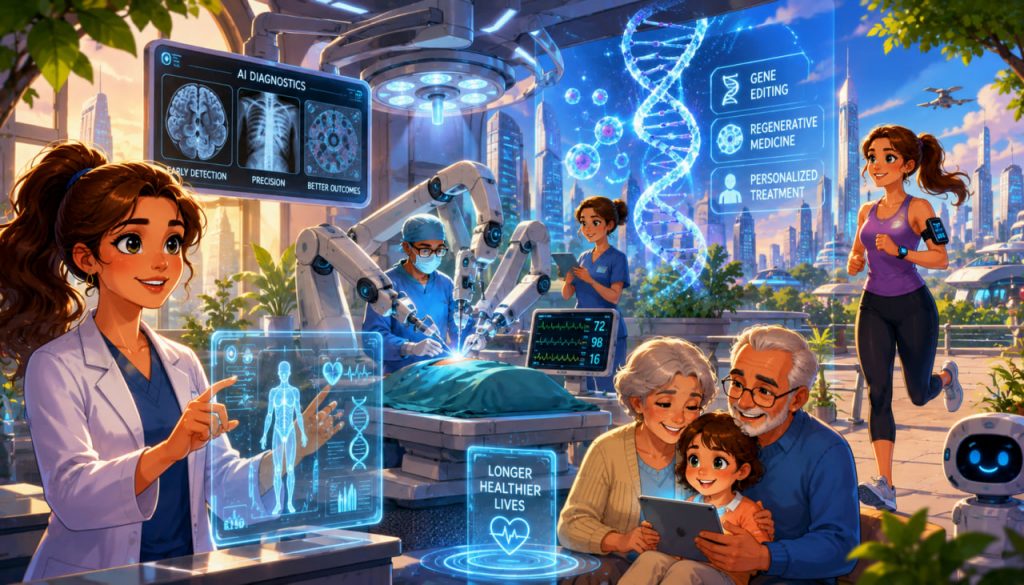
Medicine is advancing faster than ever before. Artificial intelligence is helping doctors diagnose diseases earlier, gene-editing technologies continue to evolve, robotic surgery is becoming increasingly precise, and personalized medicine is transforming how treatments are selected. While no breakthrough can guarantee dramatically longer lifespans overnight, the medical innovations emerging in 2026 are helping people live not only longer but also healthier lives.
Experts increasingly emphasize that longevity is about more than adding years to life. The real goal is increasing healthspan—the number of years a person lives free from serious disease and disability. Many of today’s innovations focus precisely on preventing illness, detecting problems earlier, and improving treatment outcomes.
The Shift from Treating Disease to Preventing It
For decades, healthcare systems primarily focused on treating diseases after symptoms appeared.
Today, medicine is increasingly moving toward prevention.
Advanced screening technologies, wearable health devices, genetic testing, and artificial intelligence allow physicians to identify health risks much earlier than before.
Early intervention often means:
- Better treatment outcomes
- Lower healthcare costs
- Reduced complications
- Improved quality of life
Preventing disease is often more effective than treating advanced illness.
Artificial Intelligence Is Transforming Healthcare
Artificial intelligence (AI) has become one of the most influential technologies in modern medicine.
Rather than replacing doctors, AI supports healthcare professionals by analyzing enormous amounts of medical data rapidly and accurately.
AI applications now assist with:
- Medical imaging
- Cancer detection
- Drug discovery
- Hospital workflow optimization
- Predicting patient deterioration
- Personalized treatment recommendations
AI systems can identify subtle abnormalities in X-rays, CT scans, MRIs, and pathology slides that might otherwise be difficult to detect.
As these technologies continue to improve, earlier diagnosis may save countless lives.
Personalized Medicine Is Becoming Reality
Every individual responds differently to medications.
Personalized medicine aims to tailor treatments according to:
- Genetics
- Lifestyle
- Medical history
- Biomarkers
- Disease characteristics
Instead of applying identical treatments to everyone with the same diagnosis, physicians increasingly use detailed biological information to select the most effective therapies.
This approach can improve treatment success while reducing unnecessary side effects.
Medicine is gradually shifting from standardized care toward individualized healthcare.
Gene Editing Continues to Expand
Gene-editing technologies such as CRISPR have already demonstrated remarkable potential.
Scientists continue researching treatments for inherited diseases including:
- Sickle cell disease
- Certain inherited blindness disorders
- Rare immune deficiencies
- Some blood disorders
Although gene editing remains carefully regulated and is not appropriate for every condition, its therapeutic potential continues to grow.
Researchers are also exploring future applications in cancer treatment and regenerative medicine.
Regenerative Medicine Offers New Hope
One of the most exciting areas of medical research involves helping the body repair itself.
Regenerative medicine includes:
- Stem cell research
- Tissue engineering
- Artificial organs
- 3D bioprinting
- Advanced wound healing
Scientists are developing methods to regenerate damaged tissues rather than simply managing symptoms.
While many technologies remain under investigation, some regenerative therapies are already being used for selected medical conditions.
Cancer Treatment Continues to Improve
Cancer care has advanced significantly over the past decade.
Rather than relying exclusively on surgery, chemotherapy, and radiation, doctors now have access to increasingly targeted therapies.
These include:
- Immunotherapy
- Targeted molecular therapies
- Precision radiation
- CAR-T cell therapy for certain blood cancers
- Personalized treatment planning
Many cancers that were once considered uniformly fatal have become increasingly manageable for some patients thanks to these advances.
Early detection combined with modern therapies continues to improve survival rates.
Digital Health Is Moving Beyond Hospitals
Healthcare is no longer confined to clinics and hospitals.
Smart devices now allow continuous monitoring of:
- Heart rhythm
- Blood glucose
- Physical activity
- Sleep quality
- Blood oxygen levels
- Blood pressure
Remote monitoring enables physicians to identify concerning changes before they become medical emergencies.
Telemedicine also allows patients to receive expert care without traveling long distances.
This improves access to healthcare, particularly for individuals living in rural or underserved areas.
Can Medical Innovations Help Us Live Longer?
Perhaps the most common question is whether modern medicine will dramatically extend human lifespan.
Current scientific evidence suggests that the greatest gains are likely to come from extending healthy years rather than dramatically increasing maximum lifespan.
Many leading researchers believe future longevity improvements will result from combining:
- Better prevention
- Earlier diagnosis
- Healthier lifestyles
- Personalized medicine
- Improved chronic disease management
- Advanced therapies
Rather than searching for a single “anti-aging cure,” medicine increasingly addresses the biological processes that contribute to age-related diseases.
Expert Perspective
Professor Eric Verdin, President and CEO of the Buck Institute for Research on Aging, has emphasized that the future of longevity research focuses on extending healthspan rather than simply increasing lifespan.
According to Verdin, understanding the biological mechanisms of aging may allow scientists to delay or reduce multiple chronic diseases simultaneously. His work suggests that improving the aging process itself could have a broader impact than treating individual diseases one at a time.
This perspective reflects a growing consensus among longevity researchers: healthy aging—not immortality—is the realistic goal of modern medicine.
Challenges That Still Remain
Despite remarkable progress, important challenges continue.
Medical innovation must address issues including:
- Rising healthcare costs
- Equal access to advanced treatments
- Data privacy
- Ethical use of artificial intelligence
- Regulatory approval
- Long-term safety monitoring
Many promising technologies require years of clinical trials before becoming widely available.
Scientific breakthroughs must demonstrate both safety and effectiveness before entering routine medical practice.
Responsible innovation ensures that new treatments benefit patients without creating unnecessary risks.
Interesting Facts
- Artificial intelligence can analyze certain medical images in seconds, helping doctors prioritize urgent cases more quickly.
- Some wearable devices can detect irregular heart rhythms before noticeable symptoms appear.
- Scientists are developing 3D bioprinting techniques capable of producing living tissues for research and future transplantation.
- Precision medicine uses genetic information to help predict how some patients may respond to specific medications.
- Immunotherapy works by helping the immune system recognize and attack cancer cells more effectively.
- Advances in medical technology have contributed to significant improvements in survival for many diseases over recent decades, although healthy lifestyle choices remain one of the strongest predictors of long-term health.
Glossary
- Artificial Intelligence (AI) – Computer systems designed to perform tasks that normally require human intelligence, such as recognizing patterns and analyzing medical data.
- Personalized Medicine – Medical care tailored to an individual’s genetic profile, lifestyle, biomarkers, and health characteristics.
- Gene Editing – Techniques that allow scientists to modify specific DNA sequences to study or treat certain diseases.
- CRISPR – A powerful gene-editing technology that enables precise changes to DNA in living cells.
- Regenerative Medicine – A field of medicine focused on repairing, replacing, or regenerating damaged tissues and organs.
- Stem Cells – Undifferentiated cells capable of developing into specialized cell types and helping repair damaged tissues.
- Immunotherapy – Cancer treatment that enhances or modifies the body’s immune system to fight cancer.
- Healthspan – The period of life spent in good health, free from major chronic disease and significant disability.