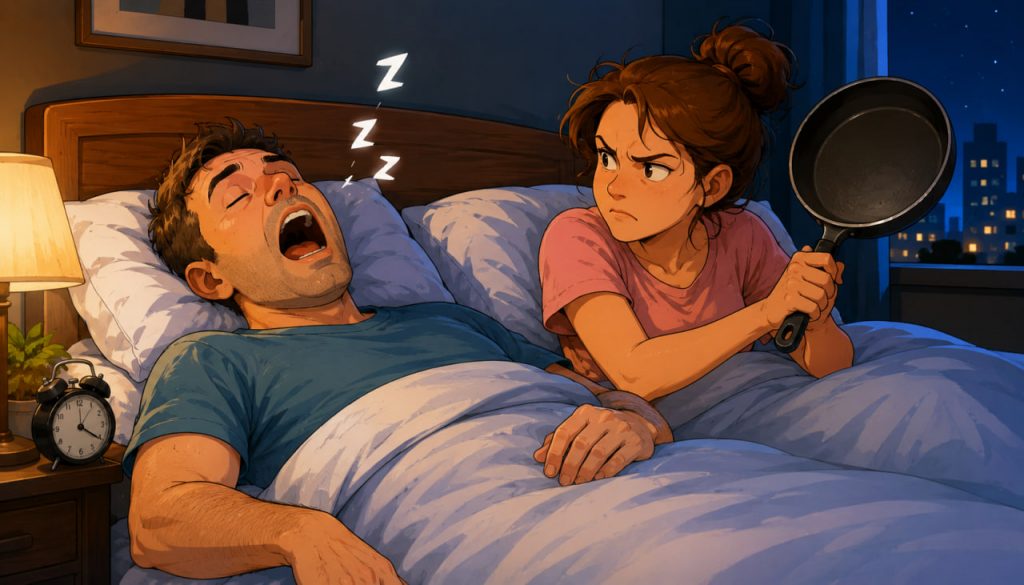
Snoring is often dismissed as nothing more than an annoying nighttime habit. Many people joke about loud snoring without realizing that, in some cases, it may be a warning sign of a serious medical condition known as sleep apnea. This disorder affects millions of people worldwide and is associated with increased risks of cardiovascular disease, stroke, diabetes, accidents caused by daytime sleepiness, and even premature death if left untreated.
Not everyone who snores has sleep apnea, but persistent loud snoring combined with pauses in breathing during sleep should never be ignored. Understanding the causes, symptoms, and treatment options can significantly improve both quality of life and long-term health.
What Is Sleep Apnea?
Sleep apnea is a disorder in which breathing repeatedly stops and starts during sleep.
The most common form is Obstructive Sleep Apnea (OSA), which occurs when the muscles of the throat relax excessively, causing the upper airway to become partially or completely blocked.
Each breathing pause, known as an apnea, may last from 10 seconds to over a minute.
Some individuals experience dozens—or even hundreds—of these episodes every night.
During each apnea episode, oxygen levels in the blood may fall, forcing the brain to briefly wake the person to restore normal breathing.
Although these awakenings are often so brief that they are not remembered, they disrupt healthy sleep throughout the night.
Why Does Snoring Occur?
Snoring develops when airflow becomes partially obstructed.
As air passes through narrowed tissues in the throat, the soft palate, uvula, and surrounding structures vibrate, producing the familiar snoring sound.
Common contributors include:
- Excess body weight
- Sleeping on the back
- Alcohol
- Nasal congestion
- Enlarged tonsils
- Aging
- Certain anatomical features of the jaw or airway
Simple snoring does not always indicate sleep apnea.
However, loud, irregular snoring interrupted by silent pauses followed by gasping or choking is highly suggestive of obstructive sleep apnea.
Why Is Sleep Apnea Dangerous?
Repeated interruptions in breathing place significant stress on the body.
Every apnea episode causes:
- Reduced oxygen levels
- Increased carbon dioxide levels
- Activation of the body’s stress response
- Temporary increases in blood pressure
- Fragmented sleep
Over months and years, these repeated events may contribute to:
- High blood pressure
- Heart disease
- Cardiac arrhythmias
- Stroke
- Type 2 diabetes
- Cognitive impairment
The heart must work harder because oxygen levels repeatedly fluctuate during sleep.
This chronic stress can damage the cardiovascular system over time.
Daytime Symptoms Often Go Unrecognized
Many people with sleep apnea do not realize they have the condition.
Instead, they notice symptoms during the day.
Common signs include:
- Excessive daytime sleepiness
- Morning headaches
- Difficulty concentrating
- Poor memory
- Irritability
- Dry mouth upon waking
- Fatigue despite spending enough time in bed
Because sleep is repeatedly interrupted, the brain fails to spend sufficient time in restorative sleep stages.
As a result, individuals may feel exhausted even after sleeping eight or more hours.
Who Is Most at Risk?
Sleep apnea can affect anyone, including children, but certain factors increase the likelihood.
Risk factors include:
- Obesity
- Male sex
- Age over 40
- Family history
- Large neck circumference
- Smoking
- Alcohol
- Nasal obstruction
Women are also affected, particularly after menopause, although symptoms may sometimes present differently than in men.
Children with enlarged tonsils or adenoids can also develop obstructive sleep apnea.
How Is Sleep Apnea Diagnosed?
The most accurate diagnostic test is a sleep study, also known as polysomnography.
During the test, healthcare professionals monitor:
- Breathing patterns
- Oxygen levels
- Brain activity
- Heart rhythm
- Muscle activity
- Body position
Some patients may qualify for simplified home sleep apnea testing, depending on their symptoms and medical history.
One important measurement is the Apnea-Hypopnea Index (AHI), which indicates how many breathing disturbances occur per hour of sleep.
Treatment Can Be Highly Effective
The good news is that sleep apnea is often treatable.
Treatment depends on severity and underlying causes.
Common approaches include:
- Weight loss when appropriate
- Sleeping on one’s side
- Avoiding alcohol
- Treating nasal obstruction
- Oral appliances that reposition the jaw
- Continuous Positive Airway Pressure (CPAP) therapy
CPAP delivers gentle air pressure through a mask worn during sleep, helping keep the airway open.
For many patients with moderate to severe obstructive sleep apnea, CPAP is considered the most effective treatment and has been shown to improve sleep quality, reduce daytime sleepiness, and lower blood pressure in many individuals.
In selected cases, surgery may also be considered.
Can Sleep Apnea Be Prevented?
Not every case can be prevented, but several healthy habits may reduce the risk or lessen its severity.
Helpful strategies include:
- Maintaining a healthy weight
- Exercising regularly
- Excluding alcohol
- Avoiding smoking
- Treating nasal allergies
- Following regular sleep schedules
People whose partners observe repeated pauses in breathing during sleep should discuss these symptoms with a healthcare professional rather than assuming they are harmless.
Expert Perspective
According to the American Academy of Sleep Medicine (AASM), obstructive sleep apnea is a common but frequently underdiagnosed disorder that significantly increases the risk of cardiovascular disease, excessive daytime sleepiness, and motor vehicle accidents if left untreated.
Sleep researcher Professor Atul Malhotra of the University of California San Diego, an internationally recognized expert in sleep medicine, has emphasized that effective diagnosis and treatment of obstructive sleep apnea can substantially improve both quality of life and long-term cardiovascular health. He also notes that loud snoring should not automatically be dismissed as merely a nuisance, particularly when accompanied by witnessed pauses in breathing or excessive daytime fatigue.
Why Paying Attention to Snoring Matters
Snoring itself is not always dangerous, but it can sometimes be the most obvious warning sign of a much more serious condition.
Modern medicine has shown that untreated obstructive sleep apnea affects far more than nighttime breathing. It influences heart health, brain function, metabolism, mood, and overall life expectancy.
The encouraging news is that sleep apnea is both diagnosable and, in many cases, highly treatable. Recognizing the warning signs early, seeking appropriate medical evaluation, and following evidence-based treatment can dramatically improve sleep quality, daytime energy, and long-term health.
Listening carefully to what happens during sleep may ultimately help protect both your nights—and your life.
Interesting Facts
- Obstructive sleep apnea is estimated to affect hundreds of millions of adults worldwide, although many cases remain undiagnosed.
- Some people with severe sleep apnea may experience more than 30 breathing interruptions every hour.
- Oxygen levels can fall repeatedly during sleep, even when a person has no memory of waking up.
- CPAP therapy has been used successfully for decades and remains the standard treatment for many patients with moderate to severe obstructive sleep apnea.
- Weight loss can significantly reduce the severity of sleep apnea in many overweight individuals.
- Sleep apnea increases the risk of motor vehicle accidents because of excessive daytime sleepiness.
- Not everyone who snores has sleep apnea, but almost everyone with obstructive sleep apnea snores.
Glossary
- Sleep Apnea — A sleep disorder characterized by repeated interruptions in breathing during sleep.
- Obstructive Sleep Apnea (OSA) — The most common type of sleep apnea, caused by repeated collapse of the upper airway during sleep.
- Apnea — A complete pause in breathing lasting at least 10 seconds during sleep.
- Hypopnea — A partial reduction in airflow during sleep that decreases oxygen levels or disrupts sleep.
- Polysomnography — A comprehensive sleep study used to diagnose sleep disorders by monitoring breathing, brain activity, heart rhythm, and other physiological functions.
- Apnea-Hypopnea Index (AHI) — A measurement of the average number of apnea and hypopnea events occurring per hour of sleep.
- CPAP (Continuous Positive Airway Pressure) — A treatment that delivers pressurized air through a mask to keep the airway open during sleep.
- Daytime Sleepiness — Excessive tiredness during waking hours caused by inadequate or disrupted sleep.