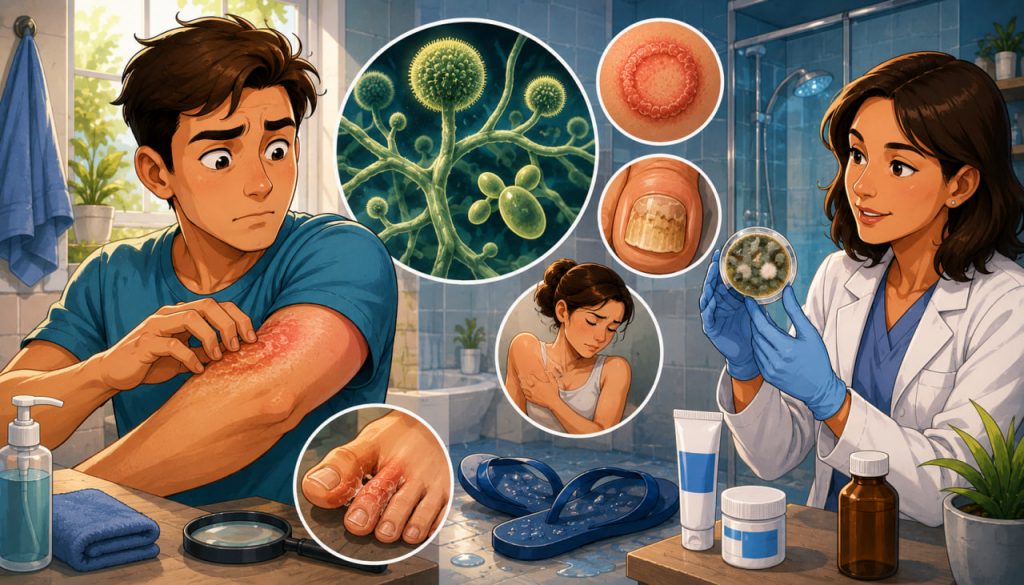
Fungal infections are among the most common health problems worldwide. Millions of people experience conditions such as athlete’s foot, nail fungus, or yeast infections during their lifetime. While these infections are often mild and easily treated, certain fungal diseases can become serious or even life-threatening, particularly in people with weakened immune systems.
The word “fungus” often causes unnecessary anxiety because it includes everything from harmless mushrooms to microscopic organisms capable of causing disease. Fortunately, most fungal infections are preventable, treatable, and rarely dangerous in healthy individuals. Understanding how fungal infections develop—and knowing when medical attention is needed—can help people protect their health without unnecessary fear.
What Are Fungi?
Fungi are a diverse kingdom of living organisms that are separate from plants, animals, and bacteria.
They include:
- Mushrooms
- Molds
- Yeasts
- Microscopic fungi
Many fungi play essential roles in nature by decomposing dead organic material and recycling nutrients.
Some fungi are even beneficial to humans.
They are used to produce:
- Bread
- Cheese
- Yogurt cultures (indirectly through fermentation processes involving fungi and bacteria)
- Antibiotics such as penicillin
- Certain medicines
Only a relatively small number of fungal species are capable of causing disease in humans.
What Is a Fungal Infection?
A fungal infection, also known as mycosis, occurs when fungi grow on or inside the body.
The most common infections affect:
- Skin
- Nails
- Scalp
- Mouth
- Genital area
These infections usually remain localized and rarely spread throughout the body in healthy people.
However, invasive fungal infections can occur when fungi enter the bloodstream or internal organs, primarily affecting individuals with weakened immune systems.
Common Types of Fungal Infections
Several fungal infections occur frequently around the world.
Athlete’s Foot (Tinea Pedis)
This infection commonly develops between the toes and causes:
- Itching
- Redness
- Peeling skin
- Burning sensation
Warm, moist environments inside shoes favor fungal growth.
Nail Fungus (Onychomycosis)
Nails may become:
- Thickened
- Yellow or white
- Brittle
- Deformed
Treatment often requires several months because nails grow slowly.
Ringworm
Despite its name, ringworm is not caused by a worm.
It is a fungal infection producing circular, itchy skin rashes.
Yeast Infections
The yeast Candida normally lives on the skin and mucous membranes.
When conditions change, it may multiply excessively and cause infections affecting the mouth, skin folds, or genital area.
How Do People Become Infected?
Fungi reproduce through microscopic spores that are widely present in the environment.
Infection may occur through:
- Direct skin contact
- Contact with contaminated surfaces
- Shared towels or footwear
- Contact with infected animals
- Warm, humid environments
Public showers, swimming pool locker rooms, and communal changing areas provide favorable conditions for fungi to spread.
Fortunately, simple hygiene measures significantly reduce the risk.
Who Is Most at Risk?
Anyone can develop a fungal infection, but certain factors increase susceptibility.
Risk factors include:
- Diabetes
- Obesity
- Excessive sweating
- Wearing tight or non-breathable shoes
- Frequent antibiotic use
- Weakened immune system
- Cancer treatment
- Organ transplantation
- HIV infection
Healthy individuals usually develop only superficial infections, while invasive fungal diseases primarily affect people with significant immune suppression.
Are Fungal Infections Dangerous?
Most superficial fungal infections are uncomfortable rather than dangerous.
However, invasive fungal infections require urgent medical treatment.
Examples include infections caused by:
- Aspergillus
- Candida entering the bloodstream
- Cryptococcus
- Certain rare molds
These infections may affect:
- Lungs
- Brain
- Bloodstream
- Heart
- Internal organs
Although uncommon, invasive fungal diseases can be life-threatening without prompt diagnosis and antifungal therapy.
How Are Fungal Infections Treated?
Treatment depends on the type and severity of infection.
Options include:
- Antifungal creams
- Powders
- Sprays
- Medicated shampoos
- Oral antifungal medications
- Intravenous antifungal drugs for severe infections
Because fungi differ biologically from bacteria, antibiotics do not cure fungal infections.
Instead, physicians prescribe medications specifically designed to target fungal cells.
Early treatment generally improves outcomes and reduces the chance of recurrence.
Can Fungal Infections Be Prevented?
Many superficial fungal infections are preventable through simple daily habits.
Helpful preventive measures include:
- Keeping skin clean and dry
- Changing socks regularly
- Wearing breathable footwear
- Using sandals in public showers
- Avoiding shared towels
- Treating infected pets when appropriate
- Controlling blood sugar in people with diabetes
People receiving treatments that suppress the immune system may require additional preventive measures recommended by their healthcare providers.
Myths About Fungal Infections
Several misconceptions persist.
Myth: Only people with poor hygiene get fungal infections.
Reality: Good hygiene reduces risk, but fungi can infect anyone under favorable conditions.
Myth: Fungal infections disappear on their own.
Reality: Some mild infections improve, but many require treatment and may worsen if ignored.
Myth: Antibiotics cure fungal infections.
Reality: Antibiotics treat bacteria, not fungi, and may sometimes increase the risk of certain fungal infections by disrupting the body’s normal microbial balance.
Understanding these differences helps people seek appropriate treatment sooner.
Expert Perspective
According to the Centers for Disease Control and Prevention (CDC), fungal diseases range from common superficial infections to serious invasive illnesses, with people who have weakened immune systems facing the highest risk of severe complications. The CDC also emphasizes that early diagnosis and appropriate antifungal treatment are critical for invasive fungal infections.
Medical mycologist Professor Arturo Casadevall of Johns Hopkins Bloomberg School of Public Health has noted that most healthy people successfully resist potentially harmful fungi through normal immune defenses, while serious fungal diseases primarily become a concern when those defenses are significantly weakened. His research has greatly advanced understanding of how fungi interact with the human immune system.
Living Safely Alongside Fungi
Fungi are a natural part of Earth’s ecosystems and play essential roles in both nature and medicine.
Most people will experience at least one mild fungal infection during their lifetime, but these conditions are usually manageable with proper treatment.
The greatest risks arise not from ordinary athlete’s foot or nail fungus but from invasive fungal diseases affecting vulnerable individuals.
Maintaining healthy skin, practicing good hygiene, recognizing persistent symptoms, and seeking medical advice when infections do not improve remain the best ways to stay healthy.
Rather than fearing fungi, understanding them allows us to recognize when they are harmless, when they require treatment, and when prompt medical attention becomes essential.
Interesting Facts
- Scientists estimate that millions of fungal species may exist, but only a small fraction are known to cause disease in humans.
- The antibiotic penicillin was originally discovered from the mold Penicillium.
- Athlete’s foot is one of the most common fungal infections worldwide.
- Fungi reproduce using microscopic spores that can travel through the air.
- Nail fungus may require 6–18 months of treatment because nails grow slowly.
- Some fungi can survive in extremely harsh environments, including deserts and Antarctica.
- Most healthy immune systems effectively prevent fungi from causing serious disease.
Glossary
- Fungus (plural: Fungi) — An organism belonging to its own biological kingdom that includes mushrooms, molds, and yeasts.
- Mycosis — A fungal infection affecting the skin, nails, mucous membranes, or internal organs.
- Candida — A genus of yeast that normally lives on the human body but can sometimes cause infection.
- Dermatophyte — A type of fungus that infects skin, hair, and nails by feeding on keratin.
- Onychomycosis — A fungal infection of the fingernails or toenails.
- Athlete’s Foot (Tinea Pedis) — A common fungal infection affecting the skin of the feet, particularly between the toes.
- Antifungal Medication — A drug specifically designed to kill fungi or stop their growth.
- Invasive Fungal Infection — A serious fungal disease in which fungi spread into the bloodstream or internal organs, typically affecting people with weakened immune systems.