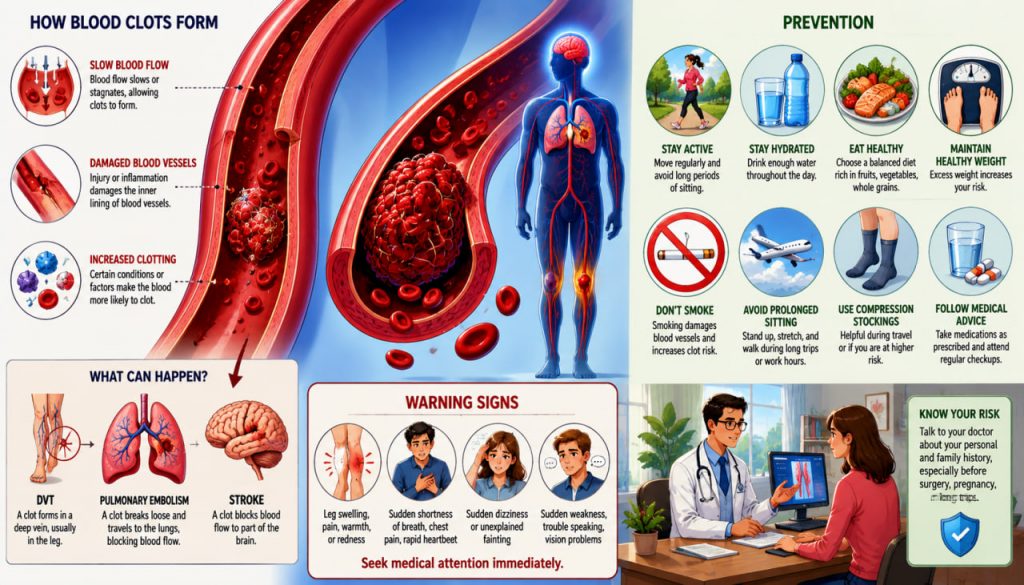
Blood clotting is one of the body’s most important defense mechanisms. Without it, even minor cuts could lead to dangerous blood loss. However, clotting can sometimes occur when it is not needed, creating blood clots inside blood vessels. These abnormal clots, known as thrombi, can block blood flow and cause serious health problems, including heart attacks, strokes, and pulmonary embolisms.
Understanding how blood clots form and learning practical prevention strategies can help reduce the risk of potentially life-threatening complications. While some risk factors cannot be changed, many preventive measures are supported by strong scientific evidence.
What Is a Blood Clot?
A blood clot is a mass of blood components that stick together and form a semi-solid structure.
Clots are made primarily of:
- Platelets
- Fibrin proteins
- Red blood cells
- White blood cells
When a blood vessel is injured, clotting helps stop bleeding.
Problems arise when clots form inside healthy blood vessels and interfere with normal circulation.
Why Blood Clots Form
More than 150 years ago, physician Rudolf Virchow described three major factors that contribute to clot formation. These factors are still known today as Virchow’s Triad.
The three components are:
- Slow or stagnant blood flow
- Damage to blood vessel walls
- Increased blood clotting tendency
Most blood clots develop because one or more of these factors are present.
Slow Blood Flow
Healthy circulation helps prevent clot formation.
When blood flow slows significantly, clotting becomes more likely.
Common situations include:
- Long periods of sitting
- Bed rest after surgery
- Hospitalization
- Long-distance flights
- Immobility caused by illness
Blood pooling in the legs is one reason why deep vein thrombosis often develops in the lower limbs.
Damage to Blood Vessels
The inner lining of blood vessels normally helps maintain smooth blood flow.
However, damage can occur due to:
- Smoking
- High blood pressure
- Inflammation
- Injury
- Surgical procedures
- Atherosclerosis
When vessel walls become damaged, platelets may begin sticking to the area and initiate clot formation.
Increased Clotting Tendency
Certain conditions make blood more likely to clot.
Examples include:
- Genetic clotting disorders
- Pregnancy
- Certain cancers
- Hormonal medications
- Severe infections
- Dehydration
In these situations, the body’s clotting system may become unusually active.
Deep Vein Thrombosis (DVT)
One of the most common clotting disorders is deep vein thrombosis.
DVT occurs when a clot forms in a deep vein, usually in the leg.
Symptoms may include:
- Swelling
- Pain
- Warmth
- Redness
Some cases produce few or no symptoms.
Because of this, DVT can sometimes remain undetected.
Pulmonary Embolism: A Medical Emergency
A major danger of DVT is that part of the clot may break loose.
The clot can travel through the bloodstream and become lodged in the lungs.
This condition is called a pulmonary embolism.
Possible symptoms include:
- Sudden shortness of breath
- Chest pain
- Rapid heartbeat
- Dizziness
Pulmonary embolism requires immediate medical attention.
Blood Clots and Stroke
Blood clots can also affect arteries supplying the brain.
When blood flow to part of the brain is interrupted, a stroke may occur.
Stroke symptoms often include:
- Facial drooping
- Arm weakness
- Speech difficulties
Rapid treatment is critical because brain cells can be damaged within minutes.
Risk Factors for Blood Clots
Several factors increase clotting risk.
These include:
- Advanced age
- Obesity
- Smoking
- Cancer
- Pregnancy
- Major surgery
- Long-term immobility
- Family history
- Certain medications
Having one risk factor does not guarantee clot formation, but multiple factors may significantly increase risk.
Staying Physically Active
One of the most effective preventive measures is regular movement.
Physical activity helps:
- Improve circulation
- Reduce blood pooling
- Support cardiovascular health
- Maintain healthy body weight
Simple activities such as walking can provide meaningful benefits.
Even brief movement breaks during long periods of sitting can help.
Avoid Prolonged Sitting
Modern lifestyles often involve extended sitting.
Whether during:
- Office work
- Long flights
- Car travel
- Screen time
it is beneficial to stand up and move regularly.
Experts often recommend moving at least every hour during prolonged sitting periods.
Maintain Healthy Hydration
Dehydration can contribute to thicker, more concentrated blood.
Drinking sufficient fluids helps support:
- Healthy circulation
- Normal blood volume
- Overall cardiovascular function
Hydration is particularly important during hot weather and illness.
Stop Smoking
Smoking damages blood vessels and promotes clot formation.
Quitting smoking can:
- Improve circulation
- Reduce inflammation
- Lower cardiovascular risk
- Decrease clotting risk
The benefits begin shortly after cessation and continue to increase over time.
Maintain a Healthy Weight
Excess body weight is associated with higher clotting risk.
Maintaining a healthy weight may help:
- Improve blood flow
- Reduce inflammation
- Lower pressure on veins
Healthy eating and regular exercise work together to support prevention.
Compression Stockings
People at elevated risk may benefit from compression stockings.
These specialized garments:
- Improve venous return
- Reduce blood pooling
- Lower DVT risk in some situations
They are commonly used during recovery periods and long-distance travel.
Know Your Family History
Some clotting disorders are inherited.
Individuals with family histories of:
- Deep vein thrombosis
- Pulmonary embolism
- Unexplained clotting events
may benefit from discussing risk factors with healthcare professionals.
Awareness can help guide preventive decisions.
Expert Perspective
Hematologist Samuel Z. Goldhaber has emphasized that prevention remains one of the most effective tools against dangerous blood clots. His research highlights the importance of recognizing risk factors early and implementing practical strategies such as movement, hydration, and appropriate medical management for high-risk individuals.
When to Seek Medical Attention
Prompt medical evaluation is important if symptoms suggest possible clotting.
Warning signs include:
- Sudden leg swelling
- Unexplained leg pain
- Chest pain
- Sudden shortness of breath
- Sudden neurological symptoms
Early diagnosis greatly improves outcomes.
Conclusion
Blood clots are a normal part of healing but can become dangerous when they form inside healthy blood vessels. Factors such as immobility, blood vessel damage, and increased clotting tendency all contribute to clot development. Serious conditions such as deep vein thrombosis, pulmonary embolism, and stroke can result when clots interfere with normal circulation.
Fortunately, many preventive measures are within our control. Regular physical activity, avoiding prolonged sitting, staying hydrated, maintaining a healthy weight, and avoiding smoking can significantly reduce risk. Understanding clot formation and recognizing warning signs are important steps toward protecting long-term cardiovascular health.
Interesting Facts
- Blood clotting is an essential survival mechanism that evolved to prevent excessive bleeding.
- Long-distance air travel can temporarily increase clotting risk in susceptible individuals.
- The average adult body contains more than 90,000 kilometers of blood vessels.
- Deep vein thrombosis often develops in the legs because blood flow is slower there than in some other areas.
- Compression stockings were originally developed to improve venous circulation.
- Many blood clots are preventable through lifestyle measures and proper medical care.
Glossary
- Thrombus — A blood clot that forms inside a blood vessel.
- Deep Vein Thrombosis (DVT) — A clot located in a deep vein, usually in the leg.
- Pulmonary Embolism — A blockage of an artery in the lungs caused by a traveling clot.
- Platelet — A blood cell involved in clot formation.
- Fibrin — A protein that forms the structural framework of blood clots.
- Atherosclerosis — The buildup of plaque inside arteries.
- Virchow’s Triad — The three major factors that contribute to blood clot formation.