Cancer is one of the leading causes of illness and death worldwide, affecting millions of people every year. While not all cancers can be prevented, scientific research has shown that many cases are linked to modifiable lifestyle and environmental factors. In fact, health organizations estimate that a significant proportion of cancers could potentially be prevented through healthier habits, vaccination, reduced exposure to carcinogens, and early detection strategies.
Cancer prevention is not about guaranteeing that a person will never develop the disease. Rather, it involves reducing risk as much as possible while supporting overall health. Small, consistent choices made over many years can have a meaningful impact.
Understanding how cancer develops and what factors influence risk can help individuals make informed decisions that may protect their long-term health.
What Is Cancer?
Cancer is a group of diseases characterized by uncontrolled growth and division of abnormal cells.
Normally, cells grow, divide, and die according to strict biological rules. Cancer develops when genetic mutations disrupt these controls.
Over time, abnormal cells may:
- Form tumors
- Invade nearby tissues
- Spread to other organs
This spread is known as metastasis, one of the most dangerous aspects of cancer.
More than 100 different types of cancer have been identified.
Why Prevention Matters
Many cancer risk factors accumulate gradually over years or decades.
Prevention aims to reduce exposure to factors that can damage DNA or promote abnormal cell growth.
Benefits of prevention include:
- Lower cancer risk
- Improved overall health
- Reduced healthcare burden
- Better quality of life
Even when prevention cannot completely eliminate risk, it can often reduce it significantly.
Avoid Tobacco in All Forms
Tobacco remains one of the largest preventable causes of cancer worldwide.
Smoking is strongly linked to:
- Lung cancer
- Mouth cancer
- Throat cancer
- Bladder cancer
- Pancreatic cancer
- Several other cancers
Tobacco smoke contains numerous carcinogenic chemicals that damage DNA.
Importantly, quitting smoking provides benefits at any age.
Risk begins to decline soon after cessation and continues decreasing over time.
Maintain a Healthy Body Weight
Excess body weight has been associated with increased risk of several cancers.
These include:
- Colorectal cancer
- Endometrial cancer
- Kidney cancer
- Liver cancer
- Esophageal cancer
Scientists believe that obesity may influence cancer risk through:
- Chronic inflammation
- Hormonal changes
- Altered metabolism
Maintaining a healthy weight supports overall health and may help reduce cancer risk.
Eat a Balanced Diet
Diet alone cannot guarantee cancer prevention, but healthy eating patterns are associated with lower risk for certain cancers.
Experts generally recommend:
- Fruits
- Vegetables
- Whole grains
- Legumes
- Nuts
- Healthy fats
Limiting highly processed foods and excessive consumption of processed meats may also be beneficial.
A diverse and nutrient-rich diet supports many systems involved in maintaining cellular health.
Stay Physically Active
Regular physical activity is associated with numerous health benefits, including lower risk of certain cancers.
Exercise may help:
- Control body weight
- Improve immune function
- Reduce inflammation
- Regulate hormones
Activities may include:
- Walking
- Cycling
- Swimming
- Gardening
- Strength training
Consistency is often more important than intensity.
Limit Alcohol Consumption
Alcohol consumption has been linked to increased risk of several cancers.
These include:
- Breast cancer
- Liver cancer
- Colorectal cancer
- Esophageal cancer
Cancer risk generally increases with greater alcohol intake.
Reducing or avoiding alcohol may contribute to long-term risk reduction.
Protect Your Skin from Ultraviolet Radiation
Skin cancer is among the most common forms of cancer worldwide.
Ultraviolet (UV) radiation from the sun can damage DNA in skin cells.
Protective measures include:
- Using sunscreen
- Wearing protective clothing
- Seeking shade
- Avoiding excessive sun exposure
Artificial tanning devices also increase skin cancer risk.
Vaccination Can Prevent Certain Cancers
Some cancers are linked to infections.
Vaccines can help reduce risk.
Important examples include:
- Human papillomavirus (HPV) vaccine
- Hepatitis B vaccine
HPV vaccination can reduce the risk of several cancers, including cervical cancer.
This represents one of the most successful examples of cancer prevention through immunization.
Avoid Exposure to Known Carcinogens
Certain environmental and occupational substances are known carcinogens.
Examples include:
- Asbestos
- Radon
- Some industrial chemicals
- Air pollution
Following workplace safety guidelines and minimizing exposure to hazardous substances can help reduce risk.
The Importance of Screening
Screening is not prevention in the strictest sense, but it can detect cancer early when treatment is often more effective.
Common screening programs include:
- Mammography
- Colon cancer screening
- Cervical cancer screening
Early detection can dramatically improve outcomes.
Individuals should discuss appropriate screening schedules with healthcare professionals.
Sleep and Overall Health
Researchers continue studying the relationship between sleep and cancer risk.
While the connection is complex, healthy sleep supports:
- Immune function
- Hormonal regulation
- Cellular repair processes
Good sleep habits contribute to overall well-being and may play a supportive role in long-term health.
Expert Perspective
Cancer researcher Richard Doll helped establish one of the strongest links in modern public health: the connection between smoking and lung cancer. His landmark studies demonstrated that many cancers are influenced by environmental and lifestyle factors, reinforcing the powerful role prevention can play in reducing disease burden.
Common Myths About Cancer Prevention
Several misconceptions persist.
Examples include:
- No single “superfood” prevents cancer.
- Dietary supplements are not guaranteed cancer preventives.
- Natural products are not automatically safer.
- Cancer prevention requires a combination of healthy habits rather than a single solution.
Reliable information should come from evidence-based medical sources.
The Future of Cancer Prevention
Scientists continue investigating new prevention strategies.
Promising areas include:
- Personalized risk assessment
- Genetic screening
- Advanced vaccines
- Improved environmental protections
As research progresses, prevention programs are becoming increasingly targeted and effective.
Conclusion
Cancer prevention involves a combination of healthy lifestyle choices, environmental awareness, vaccination, and appropriate medical screening. While no strategy can eliminate cancer risk completely, scientific evidence shows that many cancers are influenced by factors within our control.
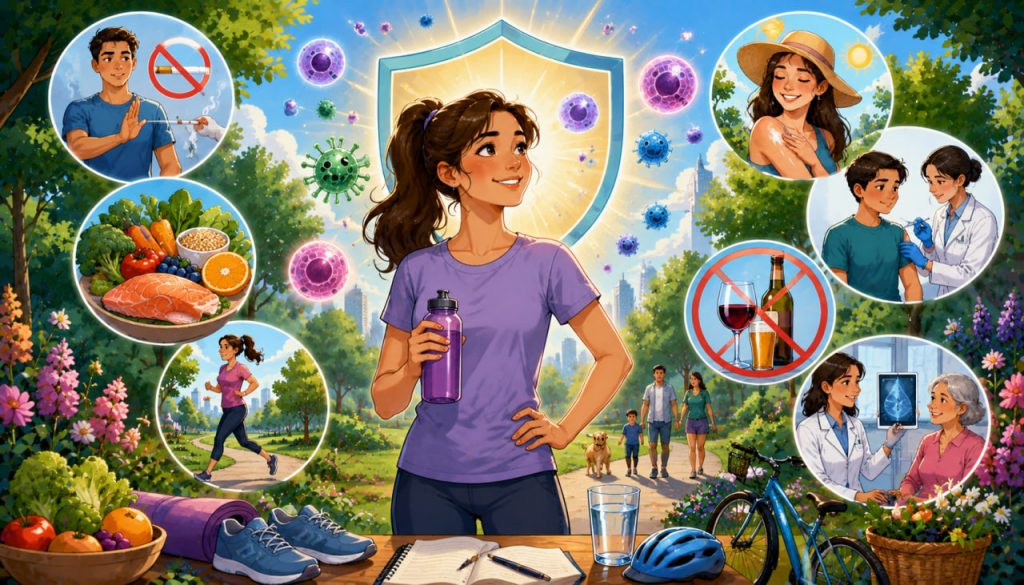
Avoiding tobacco, maintaining a healthy weight, eating a balanced diet, staying physically active, limiting alcohol, protecting the skin, and following recommended screening guidelines are among the most effective steps individuals can take. Prevention is ultimately an investment in long-term health, and even small positive changes can make a meaningful difference over time.
Interesting Facts
- Tobacco use remains one of the largest preventable causes of cancer worldwide.
- HPV vaccination can prevent several types of cancer.
- Regular physical activity is associated with reduced risk of certain cancers.
- Skin cancer is one of the most common cancers globally.
- Many cancers develop over years or even decades.
- Early detection often improves treatment outcomes significantly.
Glossary
- Cancer — A group of diseases involving uncontrolled growth of abnormal cells.
- Carcinogen — A substance capable of increasing cancer risk.
- Metastasis — The spread of cancer from one part of the body to another.
- DNA Mutation — A change in genetic material that may affect cell behavior.
- Screening — Testing performed to detect disease before symptoms appear.
- HPV (Human Papillomavirus) — A virus associated with several types of cancer.
- Inflammation — A biological response that can become harmful when chronic.