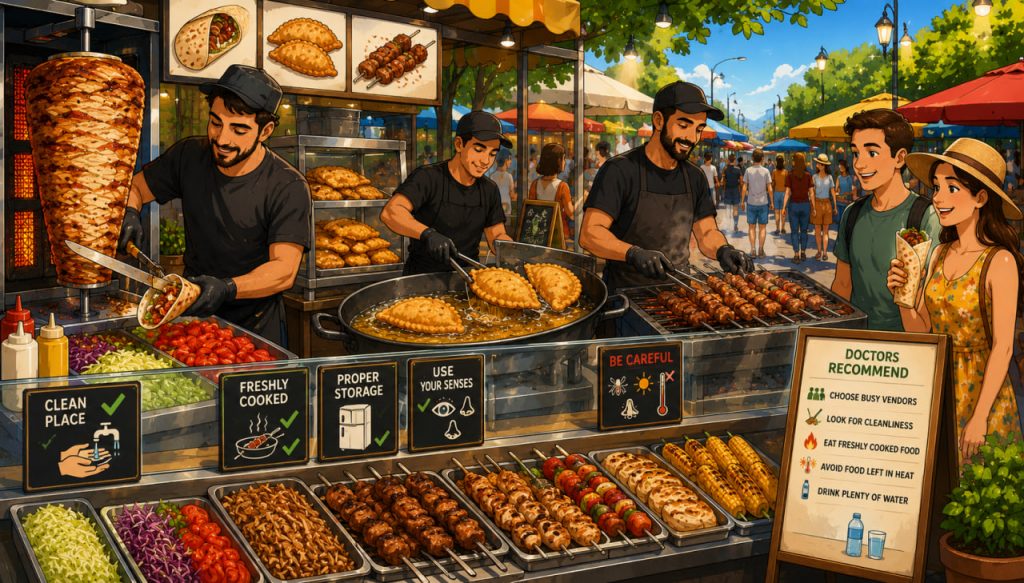
Summer street food is a beloved part of life in many countries. The smell of grilled kebab, freshly fried chebureki, shawarma wrapped in warm flatbread, roasted corn, and other fast foods attracts millions of people during vacations, festivals, and outdoor events.
However, hot weather also creates ideal conditions for bacterial growth and food spoilage. Doctors and food safety experts regularly warn that improperly stored or prepared street food can become dangerous, especially during summer heat.
This does not mean people must avoid street food entirely. But understanding how to choose safer food and recognize warning signs can significantly reduce health risks.
Why Summer Heat Makes Street Food More Dangerous
High temperatures accelerate bacterial growth in food.
Microorganisms such as:
- Salmonella
- E. coli
- Staphylococcus bacteria
multiply much faster in warm environments.
Foods containing:
- Meat
- Dairy products
- Sauces
- Eggs
are especially vulnerable when stored improperly.
According to the World Health Organization, foodborne illnesses increase significantly during warmer months because bacteria reproduce rapidly in heat.
Shawarma and Rotating Meat Spits
Shawarma is one of the world’s most popular street foods.
Properly prepared shawarma can be relatively safe, but doctors emphasize several important concerns.
Potential risks include:
- Undercooked inner meat layers
- Improper refrigeration
- Cross-contamination from raw ingredients
- Reused sauces stored at unsafe temperatures
Experts recommend paying attention to:
- Cleanliness of the cooking area
- Constant rotation and heating of the meat
- Fresh vegetables
- Refrigerated sauces
If meat appears dry on the outside but undercooked inside, it may be unsafe.
Chebureki and Fried Street Foods
Chebureki — fried pastries filled with meat — are popular in many regions.
Although deep frying kills many bacteria, problems may occur if:
- Filling ingredients were already spoiled
- Oil is reused excessively
- Finished products sit for hours in warm conditions
Repeatedly overheated oil may also produce harmful compounds.
Doctors advise avoiding street foods that:
- Smell strongly of old oil
- Appear greasy or unusually dark
- Sit uncovered in direct sunlight
Fresh preparation is usually safer than food left waiting on display.
Kebab and Grilled Meat Safety
Shashlik and grilled meats are common summer favorites.
When properly cooked, grilling can be relatively safe because high heat destroys many harmful microorganisms.
However, doctors warn about:
- Partially raw meat
- Poor meat storage before grilling
- Dirty cutting surfaces
- Insects contacting food outdoors
The safest grilled meat:
- Is fully cooked inside
- Comes directly from the grill
- Is handled with clean utensils
Nutrition expert Marion Nestle has repeatedly emphasized:
“Food safety depends not only on cooking, but on handling and storage before preparation.”
This is especially important in outdoor summer conditions.
Why Sauces and Salads Can Be Risky
Many food poisoning cases are caused not by meat itself, but by sauces and fresh ingredients.
Mayonnaise-based sauces, yogurt dressings, and chopped vegetables spoil quickly in heat.
Unsafe conditions include:
- Sauces left unrefrigerated
- Wilted vegetables
- Shared containers exposed to air and insects
Doctors often recommend caution with:
- Raw salads
- Cream-based fillings
- Unrefrigerated toppings
Freshly cut vegetables stored properly are much safer.
Signs That Street Food May Be Unsafe
Food safety specialists recommend paying attention to visible warning signs.
Possible red flags include:
- Flies around food
- Lack of refrigeration
- Dirty gloves or utensils
- Unpleasant smell
- Food sitting in direct sunlight
- Workers handling money and food without washing hands
Clean preparation areas are usually a very good sign.
Why Children and Elderly People Are More Vulnerable
Some groups face higher risk from foodborne illnesses:
- Young children
- Elderly individuals
- Pregnant women
- People with weakened immune systems
For these groups, even mild food poisoning can become serious.
Doctors often advise more caution with street food during extreme heat.
Hydration and Summer Digestion
Heavy fried foods combined with hot weather may also increase digestive stress.
In summer:
- The body loses more fluids
- Digestion may feel slower
- Fatty foods can feel heavier
Doctors recommend balancing rich street foods with:
- Water intake
- Fresh fruits
- Lighter meals during the day
Hydration is especially important during outdoor events and festivals.
Can Street Food Be Safe?
Yes — many street food vendors maintain excellent hygiene standards.
In fact, freshly cooked street food can sometimes be safer than poorly stored restaurant food.
Safer choices often include:
- Food cooked directly in front of customers
- High-temperature grilling or frying
- Vendors with steady customer turnover
- Clean serving conditions
Busy vendors often prepare fresher food because products do not remain sitting for long periods.
The Psychological Appeal of Summer Street Food
Street food is not only about nutrition. It is also connected to:
- Social experiences
- Travel memories
- Outdoor culture
- Traditional cuisine
The smell of grilled meat or fresh pastries often triggers emotional associations with summer vacations and celebrations.
This emotional connection explains why street food remains so popular worldwide despite occasional health concerns.
What Doctors Usually Recommend
Medical professionals generally advise:
- Choosing busy, clean vendors
- Avoiding food sitting long in heat
- Drinking enough water
- Being cautious with sauces and raw ingredients
- Trusting smell and appearance instincts
Most importantly, food should look freshly prepared and properly heated.
P.S. I recommend eating at home and not risking your health.
Interesting Facts
- Food poisoning cases rise significantly during summer months.
- Some bacteria can double in number within minutes in warm temperatures.
- Freshly cooked hot food is usually safer than food stored for long periods.
- Street food culture exists in nearly every country in the world.
- Reused cooking oil can gradually degrade and change chemically over time.
Glossary
- Foodborne Illness — Disease caused by contaminated food or drink.
- Cross-Contamination — Transfer of harmful bacteria between foods or surfaces.
- Salmonella — A type of bacteria that can cause food poisoning.
- Refrigeration — Cooling food to slow bacterial growth.
- Immune System — The body’s defense system against infections.