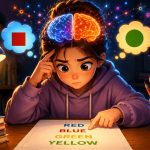
Throughout history, certain children have amazed the world with abilities far beyond their age. From mastering advanced mathematics to composing symphonies or solving complex scientific problems, these individuals are often called wunderkinds or child prodigies.
But what truly creates a prodigy? Is it natural talent, environment, education, or something more complex? Modern psychology and neuroscience suggest that exceptional ability is rarely caused by a single factor. Instead, it emerges from a unique combination of biology, intense focus, opportunity, and early development.
What Is a Child Prodigy?
A child prodigy is a young person who demonstrates extraordinary skill or knowledge in a specific field at a level comparable to a highly trained adult.
Prodigies most commonly appear in areas such as:
- Music
- Mathematics
- Chess
- Science
- Art
What makes prodigies unusual is not only their intelligence, but the speed and depth of their learning.
For example, some prodigies solve advanced equations while still in elementary school, while others perform complex musical works before the age of ten.
Natural Talent vs Environment
One of the biggest debates surrounding prodigies is whether they are born or made.
Research shows that genetics likely play an important role. Certain children may naturally possess:
- Exceptional memory
- Faster pattern recognition
- Increased sensitivity to learning
However, talent alone is usually not enough.
Most prodigies also grow up in environments that strongly encourage skill development through:
- Early exposure to learning
- Access to mentors or teachers
- Intensive practice
- Emotional support
Psychologist Anders Ericsson, known for studying expertise, argued:
“Exceptional performance is not simply the result of innate talent, but of highly structured and sustained practice.”
This suggests that even extraordinary ability requires enormous effort and repetition.
The Role of the Brain
Studies using brain imaging have shown that prodigies sometimes process information differently from average individuals.
Possible characteristics include:
- Increased neural connectivity
- Faster information processing
- Enhanced working memory
Some researchers believe the brains of prodigies are especially efficient at detecting patterns and storing complex information.
However, neuroscience still does not fully understand why these rare abilities emerge.
Why Many Prodigies Specialize Early
Child prodigies often focus intensely on a single subject from a very young age. This deep specialization allows them to accumulate years of experience before adulthood.
Examples include:
- Pianists practicing several hours daily as children
- Young chess players studying thousands of game positions
- Math prodigies solving advanced problems for fun
This concentrated focus accelerates skill development dramatically.
The Psychological Challenges of Being a Prodigy
Although prodigies are often admired, their lives are not always easy. Extraordinary expectations can create pressure and emotional difficulties.
Common challenges include:
- Social isolation
- Perfectionism
- Anxiety about failure
- Difficulty relating to peers
Some prodigies struggle later in life when early praise creates pressure to constantly perform at exceptional levels.
Psychologist Ellen Winner, who studies gifted children, notes:
“Giftedness can bring emotional intensity that is both a strength and a challenge.”
This highlights the importance of emotional support alongside intellectual development.
Do All Prodigies Become Successful Adults?
Surprisingly, not all child prodigies become famous or highly successful adults. Early talent does not guarantee lifelong achievement.
Reasons include:
- Burnout from excessive pressure
- Loss of motivation
- Changing interests over time
- Difficulty adapting socially or emotionally
At the same time, many successful innovators and scientists were not prodigies at all. Consistency, resilience, and long-term curiosity are often just as important as early brilliance.
Famous Examples of Child Prodigies
History includes many remarkable prodigies:
- Wolfgang Amadeus Mozart composed music as a child
- Blaise Pascal made major mathematical discoveries in his teens
- Terence Tao, one of the world’s leading mathematicians, solved advanced problems at a very young age
These individuals demonstrate how extraordinary early ability can influence science, art, and culture.
The Importance of Balanced Development
Experts increasingly emphasize that prodigies need more than academic training. Balanced emotional and social development is essential for long-term well-being.
Healthy support includes:
- Encouragement without excessive pressure
- Opportunities for normal childhood experiences
- Emotional stability and social interaction
The goal should not only be achievement, but also personal happiness and mental health.
What Child Prodigies Teach Us About Human Potential
Prodigies reveal how flexible and powerful the human brain can be during early development. They show that under the right conditions, children can learn at astonishing speeds.
At the same time, their stories remind us that human potential is complex. Intelligence alone is not enough—motivation, support, discipline, and emotional balance all matter.
Interesting Facts
- Mozart began composing music around the age of five.
- Some prodigies read fluently before the age of three.
- Mathematical prodigies often show exceptional pattern recognition abilities.
- Brain plasticity in childhood allows faster learning than in adulthood.
- Not all gifted children are prodigies; prodigies perform at adult professional levels unusually early.
Glossary
- Prodigy — A child with exceptional abilities far beyond their age.
- Neural Connectivity — The way brain cells communicate with each other.
- Working Memory — The ability to temporarily hold and process information.
- Brain Plasticity — The brain’s ability to adapt and reorganize itself.
- Pattern Recognition — The ability to detect structures or regularities in information.