Cancer is one of the most serious health challenges facing humanity. Every year, millions of people around the world are diagnosed with different forms of this disease.
However, cancer is not a single illness.
It is a large group of diseases that develop when abnormal cells begin growing uncontrollably, disrupting the normal functioning of tissues and organs.
Some cancers progress slowly over many years. Others develop rapidly and require urgent treatment.
Modern medicine has made remarkable progress in understanding cancer, detecting it earlier, and developing effective treatments.
One of the most important discoveries is that many cancer cases can be prevented or their risk significantly reduced through lifestyle choices, vaccination, and appropriate medical screening.
Understanding how cancer develops is the first step toward protecting long-term health.
What Is Cancer?
The human body contains trillions of cells.
Normally, these cells grow, divide, perform specialized functions, and eventually die when they are no longer needed.
This process is carefully regulated by genetic instructions.
Cancer begins when cells acquire changes that interfere with the normal controls governing their growth and survival.
These changes are called mutations.
Some mutations affect genes responsible for controlling cell division, repairing damaged DNA, or eliminating abnormal cells.
When enough critical changes accumulate, affected cells may multiply uncontrollably.
They can eventually form a malignant tumor capable of invading surrounding tissues.
However, not every cancer forms a solid tumor. Blood cancers, such as leukemia, primarily affect cells circulating in the blood or developing in bone marrow.
Cancer develops when normal cellular regulation breaks down, allowing abnormal cells to survive and multiply.
How Does Cancer Spread Through the Body?
One of the most dangerous characteristics of certain cancers is their ability to spread.
This process is called metastasis.
Cancer cells may break away from their original location and enter nearby blood vessels or lymphatic channels.
They can travel to distant organs and establish new tumors.
For example, breast cancer may spread to bones, lungs, or the liver.
Lung cancer can spread to the brain.
A metastatic tumor retains the biological identity of the original cancer.
Breast cancer that spreads to the lungs is still considered metastatic breast cancer, not a new lung cancer.
The ability to invade other tissues distinguishes malignant cancers from most benign tumors.
What Are the Main Types of Cancer?
Doctors classify cancers according to the cells or tissues in which they originate.
The major categories include:
- Carcinoma: Cancer developing from epithelial cells lining organs, glands, and body surfaces. Most breast, lung, prostate, and colorectal cancers belong to this category.
- Sarcoma: Cancer arising from connective tissues, including bone, muscle, fat, and cartilage.
- Leukemia: Cancer affecting blood-forming tissues, particularly bone marrow.
- Lymphoma: Cancer originating in cells of the lymphatic and immune systems.
- Myeloma: Cancer involving plasma cells, which normally produce antibodies.
- Melanoma: Cancer developing from pigment-producing cells called melanocytes.
- Brain and spinal cord tumors: A diverse group of tumors arising from cells within the central nervous system.
Different cancers require different diagnostic approaches and treatments.
Even cancers originating in the same organ can behave differently because of their molecular characteristics.
Why Does Cancer Develop?
Cancer usually develops through a combination of genetic changes, environmental exposures, and biological processes.
Some mutations occur randomly during normal cell division.
Others result from exposure to harmful substances or radiation.
These cancer-causing agents are known as carcinogens.
Important risk factors include tobacco smoke, excessive ultraviolet radiation, certain infections, alcohol consumption, and occupational exposure to particular chemicals.
Age is another major factor.
As people grow older, cells have had more time to accumulate genetic changes.
Some individuals also inherit genetic variants that increase their susceptibility to particular cancers.
However, inheriting an increased cancer risk does not mean developing cancer is inevitable.
Can Cancer Be Prevented?
Not every cancer can be prevented.
Nevertheless, research indicates that a substantial proportion of cancer cases are associated with preventable risk factors.
The World Health Organization estimates that approximately 30–50% of cancers could be prevented through existing evidence-based measures.
Prevention focuses on reducing harmful exposures and supporting healthy biological functions.
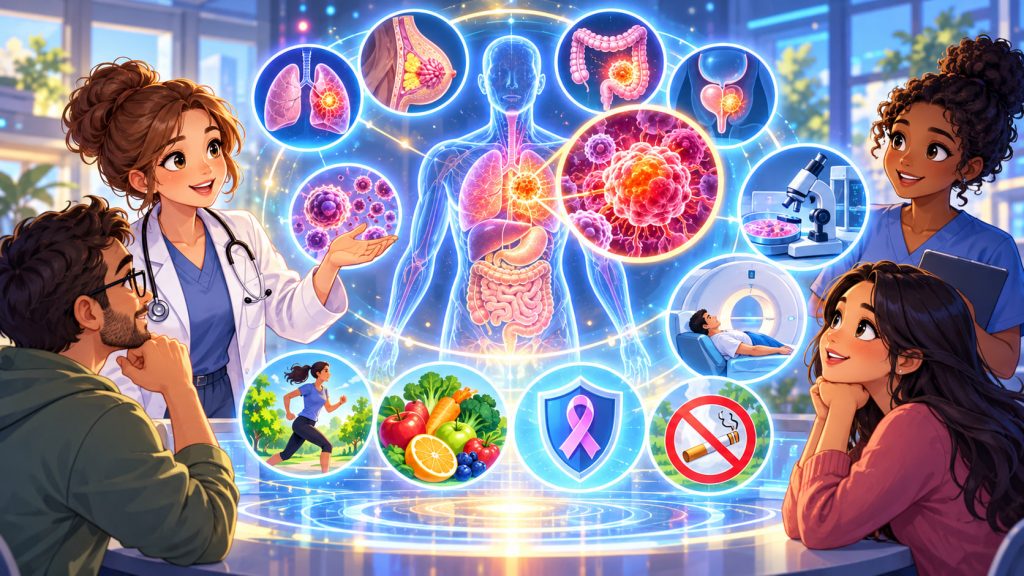
Important measures include:
- Avoiding tobacco products and secondhand smoke
- Limiting or avoiding alcohol
- Maintaining a healthy body weight
- Participating in regular physical activity
- Eating a balanced diet rich in plant foods
- Protecting skin from excessive ultraviolet radiation
- Receiving recommended vaccinations
- Reducing exposure to known environmental carcinogens
Cancer prevention is about reducing risk, not guaranteeing complete protection from disease.
Why Smoking Is Particularly Dangerous
Tobacco use is one of the leading preventable causes of cancer.
Cigarette smoke contains numerous carcinogenic substances capable of damaging DNA.
Smoking is strongly associated with lung cancer, but its effects extend much further.
It also increases the risk of cancers affecting the mouth, throat, esophagus, bladder, pancreas, kidneys, and several other organs.
Stopping smoking provides benefits regardless of how long someone has smoked.
Cancer risks generally decline over time after quitting, although the extent and speed of improvement vary.
Avoiding tobacco remains one of the most effective cancer prevention strategies.
Nutrition, Exercise, and Cancer Risk
Diet and physical activity influence several biological processes associated with cancer risk.
Excess body fat can affect hormone signaling, insulin regulation, and chronic inflammation.
Regular physical activity helps support metabolic health and weight management.
A diet containing vegetables, fruits, legumes, and whole grains provides fiber and valuable nutrients.
Dietary fiber is particularly associated with a lower risk of colorectal cancer.
Meanwhile, frequent consumption of processed meat is associated with increased colorectal cancer risk.
There is no scientifically established food that prevents every type of cancer.
The overall dietary pattern matters more than individual products marketed as cancer-fighting superfoods.
Vaccination Can Prevent Certain Cancers
Some cancers develop partly because of persistent viral infections.
Human papillomavirus, or HPV, can cause cervical cancer and contribute to several other cancers, including cancers of the throat and anus.
HPV vaccination substantially reduces the risk of infections associated with these diseases.
Hepatitis B infection is another important example.
Chronic hepatitis B can increase the risk of liver cancer.
Vaccination against hepatitis B helps prevent infection and therefore reduces the associated cancer risk.
These vaccines demonstrate that preventing specific infections can also prevent certain forms of cancer.
Early Warning Signs of Cancer
Cancer symptoms vary depending on the affected organ and disease stage.
Some cancers cause few noticeable symptoms during their earliest stages.
Potential warning signs include:
- Unexplained weight loss
- Persistent unusual fatigue
- New or changing lumps
- Unexplained bleeding
- Persistent changes in bowel or bladder habits
- Difficulty swallowing
- A cough that does not resolve
- Changes in the appearance of a mole
These symptoms frequently have causes other than cancer.
Nevertheless, persistent or unexplained changes should be evaluated by a healthcare professional.
Early assessment can identify important health problems before they progress.
How Cancer Screening Saves Lives
Cancer screening involves testing people who do not necessarily have symptoms.
Its purpose is to identify certain cancers or precancerous changes before noticeable illness develops.
Examples include mammography for breast cancer, cervical screening, and colorectal screening through stool tests or colonoscopy.
Low-dose computed tomography may be recommended for people at sufficiently high risk of lung cancer because of their smoking history.
Screening recommendations depend on age, personal risk factors, family history, and national medical guidelines.
Not every cancer has an effective screening test, and testing can have potential harms as well as benefits.
Appropriate screening can reduce deaths from certain cancers by allowing earlier detection or removal of precancerous tissue.
How Is Cancer Treated Today?
Cancer treatment has advanced considerably.
Traditional approaches include surgery, radiation therapy, and chemotherapy.
Modern medicine also uses immunotherapy, which helps the immune system recognize or attack cancer cells.
Another important approach is targeted therapy.
These medications act on specific molecular characteristics involved in cancer development and growth.
Some patients receive combinations of treatments.
Treatment selection depends on the cancer type, its stage, molecular features, and the patient’s overall health.
Expert Perspective: The Future of Cancer Prevention
Cancer researchers and public-health specialists at the World Health Organization emphasize that prevention and early detection are essential components of global cancer control.
Their work highlights the importance of tobacco reduction, vaccination, physical activity, and access to effective screening programs.
Modern oncology also increasingly focuses on personalized treatment based on the biological characteristics of individual tumors.
Cancer research is moving toward more precise therapies while public-health efforts aim to prevent cancers before they develop.
Interesting Facts
- Cancer is not one disease but a group containing more than 100 distinct types.
- Some cancers can develop over many years before producing noticeable symptoms.
- Tobacco use is responsible for a substantial proportion of preventable cancer deaths worldwide.
- HPV vaccination can prevent most cases of cervical cancer associated with the HPV types targeted by the vaccines.
- Some cancer treatments use a patient’s own immune cells to recognize and attack malignant cells.
- Not all tumors are cancerous; benign tumors generally do not invade surrounding tissues or metastasize.
- Certain inherited genetic variants, including harmful changes in BRCA1 and BRCA2, significantly increase the risk of specific cancers.
- Colorectal screening can identify and remove certain precancerous polyps before they become malignant.
- Some cancers are highly treatable, particularly when detected early and managed appropriately.
Glossary
- Mutations — Changes in genetic material that can affect how cells function, divide, or repair damage.
- Malignant Tumor — An abnormal growth of cancerous cells capable of invading nearby tissues and potentially spreading.
- Metastasis — The process by which cancer spreads from its original location to other parts of the body.
- Carcinogens — Substances or agents capable of causing cancer.
- HPV — Human papillomavirus, a group of viruses that includes types associated with cervical and several other cancers.
- Cancer Screening — Medical testing intended to identify certain cancers or precancerous conditions in people without symptoms.
- Immunotherapy — Cancer treatment that uses or modifies the immune system to help fight malignant cells.
- Targeted Therapy — Treatment directed at specific molecules or biological mechanisms involved in cancer growth and survival.