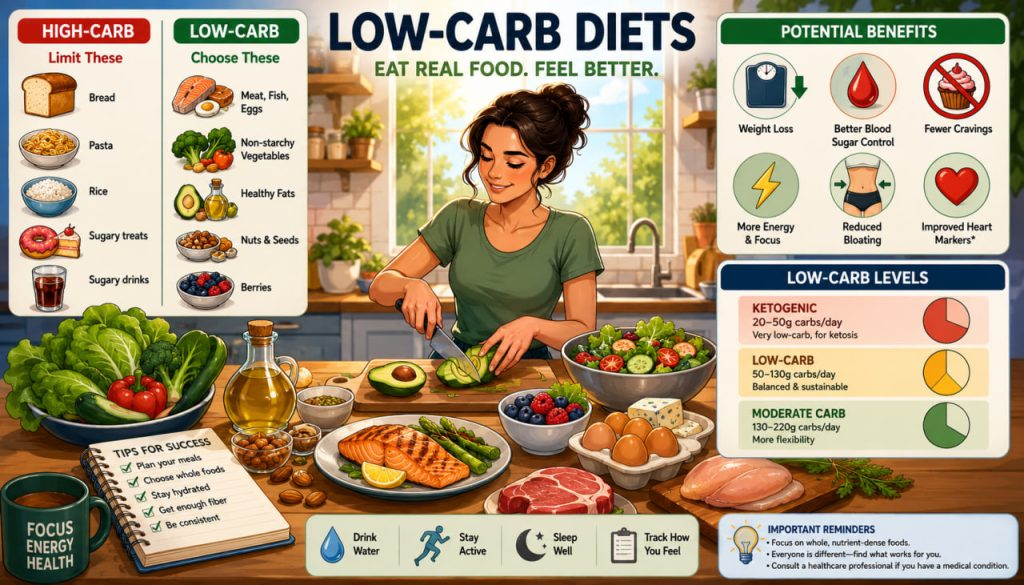
Low-carb diets are among the most popular eating strategies for weight loss, blood sugar control, and appetite management. They usually involve reducing foods high in carbohydrates, such as sugar, bread, pasta, rice, potatoes, pastries, sweet drinks, and many ultra-processed snacks.
But “low-carb” does not mean one single diet. It can range from a moderate reduction in refined carbs to a strict ketogenic diet with very limited carbohydrate intake.
The key question is not whether low-carb diets “work.” Many people do lose weight or improve blood sugar markers when they reduce carbohydrates. The better question is: what kind of low-carb diet is safe, sustainable, and nutritionally balanced?
A low-carb diet based on vegetables, lean protein, healthy fats, nuts, seeds, legumes, and minimally processed foods is very different from a low-carb diet built around processed meats, butter, and almost no fiber.
What Is a Low-Carb Diet?
There is no single global definition of a low-carb diet. StatPearls notes that low-carbohydrate approaches reduce overall carbohydrate intake, but there is no clear consensus on one exact definition. It also explains that ketogenic diets typically limit carbohydrates to about 20–50 grams per day.
A practical classification often looks like this:
- Very low-carb ketogenic diet: about 20–50 grams of carbs per day
- Low-carb diet: about 50–130 grams per day
- Moderate-carb diet: about 130–220 grams per day
- High-carb diet: more than 225 grams per day
The British Dietetic Association uses a similar public-facing breakdown in its low-carbohydrate diet factsheet.
For most people, a moderate low-carb approach is easier to maintain than strict keto.
Why People Try Low-Carb Diets
Low-carb diets are popular because they can produce noticeable early results.
People often try them for:
- Weight loss
- Lower blood sugar
- Reduced cravings
- Lower insulin spikes
- Better appetite control
- Fewer sugary snacks
- Simpler meal structure
- Type 2 diabetes management under medical supervision
When someone cuts refined carbohydrates, they often also reduce total calories. Sugary drinks, sweets, pastries, chips, and ultra-processed foods are easy to overeat. Removing them can quickly change energy intake.
Early weight loss may also include water loss because stored carbohydrate, called glycogen, holds water in the body.
The first fast drop on the scale is not always pure fat loss.
Low-Carb vs Keto: What Is the Difference?
A low-carb diet reduces carbohydrate intake. A ketogenic diet reduces carbohydrates enough to push the body into nutritional ketosis, where it produces ketones as an alternative fuel source.
Keto is usually stricter. It often limits many fruits, grains, legumes, starchy vegetables, and even some higher-carb dairy products.
Low-carb can be more flexible. It may still include berries, lentils, beans, yogurt, oats, small portions of whole grains, and non-starchy vegetables.
Strict keto may be useful for some medical or metabolic goals, but it is harder to follow and may not be appropriate for everyone.
Low-carb is a broad category. Keto is one strict version of it.
Potential Benefits of Low-Carb Diets
Low-carb diets may help some people lose weight, at least in the short to medium term.
Harvard’s Nutrition Source states that some evidence suggests low-carb diets may help people lose weight more quickly than low-fat diets and that moderately low-carbohydrate diets may support heart health when protein and fat come from healthy sources.
For people with type 2 diabetes or prediabetes, carbohydrate reduction may improve blood glucose patterns. The American Diabetes Association’s 2026 Standards of Care emphasizes individualized nutrition therapy and notes that eating patterns for people with diabetes should include nonstarchy vegetables, whole fruits, legumes, lean proteins, whole grains, nuts and seeds, and low-fat dairy or alternatives while minimizing sugary drinks, sweets, refined grains, and ultra-processed foods.
This matters because low-carb should not mean “no plants.” A healthy low-carb plan still needs fiber, micronutrients, and food variety.
The best low-carb diets remove low-quality carbohydrates first: sugar, refined grains, and ultra-processed foods.
Possible Risks and Side Effects
Low-carb diets can cause side effects, especially when started suddenly.
Common early symptoms may include:
- Headache
- Fatigue
- Constipation
- Bad breath
- Irritability
- Muscle cramps
- Dizziness
- Reduced exercise performance
Very low-carb diets may also reduce fiber intake if they remove whole grains, legumes, fruit, and many vegetables without replacing them thoughtfully. The British Dietetic Association warns that very low-carbohydrate diets may be lower in food volume and dietary fiber.
Some people also see LDL cholesterol rise on high-fat ketogenic diets. The ADA 2025 Standards discussed a 12-week study in adults with prediabetes and type 2 diabetes in which a ketogenic diet did not significantly improve A1C compared with a low-carbohydrate Mediterranean diet and increased LDL cholesterol.
Low-carb is not automatically heart-healthy. Food quality matters as much as carbohydrate count.
Who Should Be Careful With Low-Carb Diets?
Low-carb diets are not suitable for everyone without professional guidance.
Speak with a doctor or registered dietitian first if you:
- Have type 1 diabetes
- Use insulin or sulfonylurea medications
- Take SGLT2 inhibitors
- Are pregnant or breastfeeding
- Have kidney disease
- Have liver disease
- Have a history of eating disorders
- Are underweight
- Are a child or teenager
- Have severe high cholesterol
- Have pancreatitis or gallbladder disease history
The ADA’s 2026 pharmacologic guidance specifically discourages a ketogenic eating pattern in people with diabetes who are at risk for diabetic ketoacidosis and treated with SGLT inhibitors, because very-low-carbohydrate eating patterns are among DKA risk factors.
Medication users should never start strict low-carb or keto without medical advice. Blood sugar and medication doses may need adjustment.
What to Eat on a Healthy Low-Carb Diet
A safe low-carb diet should still look like real food.
Good choices include:
- Eggs
- Fish
- Chicken or turkey
- Greek yogurt
- Cottage cheese
- Tofu or tempeh
- Leafy greens
- Broccoli, cucumber, zucchini, peppers, mushrooms
- Avocado
- Olive oil
- Nuts and seeds
- Berries in moderate portions
- Beans or lentils if they fit your carb target
- Small portions of whole grains if using a moderate low-carb plan
Foods to limit include:
- Sugary drinks
- Candy
- Cakes and pastries
- White bread
- Large portions of pasta or rice
- Sweet breakfast cereals
- Ultra-processed low-carb snacks
- Processed meats as daily staples
The goal is not to fear carbohydrates. The goal is to choose better carbohydrates and control portions.
How to Start Without Making It Extreme
A beginner-friendly low-carb approach is usually better than a sudden crash diet.
Start with these steps:
- Remove sugary drinks.
- Replace sweets and pastries with protein-rich snacks.
- Build meals around protein and vegetables.
- Reduce refined grains gradually.
- Add healthy fats in moderate amounts.
- Keep fiber high.
- Track how you feel, not only your weight.
For example, instead of cereal and juice for breakfast, choose eggs with vegetables or Greek yogurt with berries and nuts. Instead of a large pasta dinner, try grilled fish with salad and roasted vegetables.
Small changes repeated daily usually beat extreme restrictions that collapse after one week.
Expert Perspective
The American Diabetes Association’s Standards of Care does not promote one universal diet for everyone. Instead, it emphasizes individualized nutrition therapy, food quality, cardiometabolic health, and personal preferences. Its 2026 guidance supports eating patterns rich in nonstarchy vegetables, whole fruits, legumes, lean proteins, whole grains, nuts and seeds, while reducing sugary drinks, sweets, refined grains, red meat, and ultra-processed foods in people with diabetes and prediabetes.
This expert view is useful beyond diabetes: a low-carb diet should be judged by its overall nutritional pattern, not by carb grams alone.
A diet that improves blood sugar but eliminates fiber, worsens cholesterol, creates stress, or becomes impossible to maintain is not a long-term success.
How to Know If It Is Working
A low-carb diet may be working if you notice:
- Better appetite control
- Gradual weight loss
- Fewer sugar cravings
- Improved blood glucose readings
- More stable energy
- Better waist measurement
- Improved triglycerides
But watch for problems:
- Persistent fatigue
- Constipation
- Dizziness
- Hair loss
- Binge eating episodes
- Rising LDL cholesterol
- Poor sleep
- Anxiety around food
- Social isolation from eating rules
A successful diet should improve health without making daily life miserable.
Interesting Facts
- “Low-carb” and “keto” are not the same thing.
- Very low-carb ketogenic diets typically allow only about 20–50 grams of carbohydrates per day.
- Early weight loss on low-carb diets often includes water loss.
- Fiber can drop too low if someone removes grains, legumes, fruit, and vegetables without planning replacements.
- Low-carb diets may improve blood sugar in some people with type 2 diabetes, but medication safety must be considered.
- Food quality matters: olive oil, fish, nuts, vegetables, and lean proteins are not the same as processed meats and excess saturated fat.
- A moderate low-carb diet is usually easier to maintain than strict keto.
Glossary
- Low-Carb Diet — An eating pattern that reduces total carbohydrate intake.
- Ketogenic Diet — A very low-carbohydrate, high-fat diet designed to produce nutritional ketosis.
- Carbohydrates — Nutrients found in foods such as grains, fruits, vegetables, legumes, milk, and sugars.
- Ketosis — A metabolic state in which the body produces ketones from fat as an alternative fuel.
- Glycogen — Stored carbohydrate in the muscles and liver.
- LDL Cholesterol — Often called “bad cholesterol,” a blood lipid linked to cardiovascular risk when elevated.
- Fiber — A type of carbohydrate that supports digestion, fullness, and gut health.
- Refined Grains — Grains processed to remove bran and germ, such as white flour and white rice.
- SGLT2 Inhibitors — Diabetes medicines that increase glucose removal through urine and may raise ketoacidosis risk in certain situations.
- Diabetic Ketoacidosis — A dangerous condition involving high ketones and blood acidity, requiring urgent medical care.