Vegan and vegetarian diets can be healthy, ethical, sustainable, and rich in fiber, antioxidants, and plant-based nutrients. But two nutrients deserve special attention: vitamin B12 and iron.
Both are essential for energy, blood health, brain function, immunity, and daily performance. Deficiency can develop slowly, and early symptoms are easy to ignore: tiredness, weakness, dizziness, pale skin, shortness of breath, numbness, poor concentration, or mood changes.
The key question is practical: can vegans and vegetarians avoid B12 and iron deficiency without tablets?
For iron, the answer is often yes with careful food planning. For B12, the answer is more limited: vegans need reliable B12 from fortified foods or supplements, because unfortified plant foods are not dependable sources. NIH states that vitamin B12 is found in foods of animal origin and is not naturally present in plant foods, although some plant foods are fortified with it.
Why B12 Is the Hardest Nutrient for Vegans
Vitamin B12 is needed for red blood cell formation, DNA synthesis, and nervous system function. A lack of B12 can lead to anemia and neurological problems.
The challenge is that plants do not naturally provide reliable B12. A review on plant-based diets explains that vitamin B12 is not made by plants and that unfortified plant-based foods are not a reliable supply.
This means foods often mentioned online, such as mushrooms, spirulina, fermented vegetables, seaweed, or organic produce, should not be trusted as dependable B12 sources.
For strict vegans who refuse tablets, fortified foods are the realistic option.
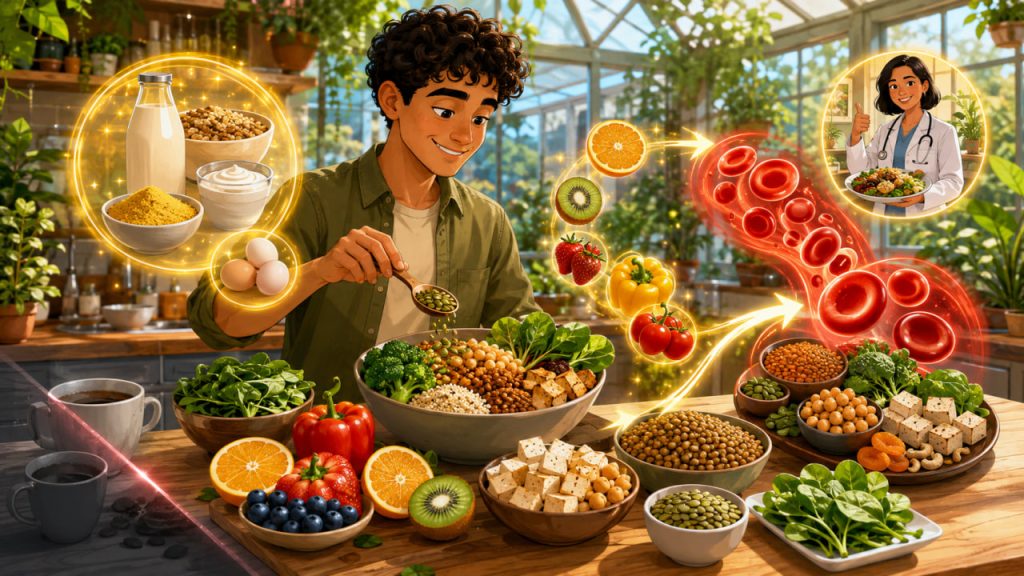
B12 Without Pills: Use Fortified Foods Strategically
Fortified foods are foods with B12 added during production. They are not “natural B12 plants,” but they can be a practical non-tablet source.
Vegan B12 sources may include:
- Fortified plant milks
- Fortified breakfast cereals
- Fortified nutritional yeast
- Fortified meat alternatives
- Fortified soy products
- Fortified yeast extracts
The NHS notes that vegan B12 sources are limited and that a supplement may be needed, while listing fortified breakfast cereals, fortified soya drinks, yeast extract, and nutritional yeast flakes as possible sources.
The important detail is consistency. A splash of fortified oat milk once a week is not a B12 strategy. You need to read labels and calculate actual intake.
If you want to avoid pills, fortified B12 foods should appear daily, not occasionally.
Vegetarians Have More B12 Options Than Vegans
Ovo-lacto vegetarians can get B12 from animal-derived vegetarian foods.
Useful sources include:
- Milk
- Yogurt
- Cheese
- Eggs
- Fortified foods
However, eggs are not always enough on their own, and dairy intake varies widely. People who eat very little dairy or eggs may still become deficient over time.
Older adults, pregnant people, breastfeeding people, people with digestive disorders, and people taking metformin or acid-reducing medicines may have higher risk of low B12 absorption.
Vegetarian does not automatically mean B12-safe. Intake and absorption still matter.
Iron on Vegan and Vegetarian Diets
Iron is needed to make hemoglobin, the protein in red blood cells that carries oxygen.
Plant-based diets can provide iron, but the form is different. Plant foods contain non-heme iron, which is less easily absorbed than heme iron from meat. This does not make plant-based iron useless. It means meal design matters.
Good vegan and vegetarian iron sources include:
- Lentils
- Beans
- Chickpeas
- Tofu
- Tempeh
- Pumpkin seeds
- Sesame seeds
- Tahini
- Cashews
- Quinoa
- Oats
- Spinach
- Fortified cereals
- Dried apricots
- Blackstrap molasses
NIH explains that plant-based iron absorption improves when eaten with vitamin C-rich foods, such as citrus fruits.
Iron deficiency prevention is not only about eating iron. It is about absorbing it well.
The Vitamin C Trick for Better Iron Absorption
Vitamin C can significantly improve absorption of non-heme iron.
Add one vitamin C-rich food to iron-rich meals:
- Lentils with lemon juice
- Beans with tomato salsa
- Tofu with bell peppers
- Oats with berries
- Chickpeas with cabbage salad
- Spinach with citrus dressing
- Fortified cereal with strawberries
NIH’s vitamin C fact sheet states that vitamin C improves absorption of non-heme iron, the form found in plant foods.
A simple rule works well: pair beans, lentils, tofu, seeds, or fortified grains with fruit or vegetables rich in vitamin C.
What Blocks Iron Absorption
Some healthy foods and drinks can reduce iron absorption when consumed at the same time as iron-rich meals.
Common blockers include:
- Tea
- Coffee
- Large amounts of calcium
- Some high-phytate foods when not prepared well
- Bran-heavy meals without soaking or fermentation
This does not mean tea, coffee, or whole grains are bad. Timing matters.
Try drinking tea or coffee at least one to two hours away from your highest-iron meals. Use soaking, sprouting, fermenting, or slow cooking for beans, lentils, and grains when possible.
A high-iron lunch followed immediately by strong black tea is less effective than the same lunch with lemon water or fruit.
A Practical No-Pill Daily Plan
A strong vegan or vegetarian anti-deficiency day could look like this:
Breakfast: fortified cereal or oats with fortified soy milk, berries, and pumpkin seeds.
Lunch: lentil soup with tomatoes, lemon juice, whole grain bread, and cabbage salad.
Snack: hummus with bell pepper strips or fortified nutritional yeast on toast.
Dinner: tofu or tempeh with broccoli, quinoa, tahini sauce, and citrus fruit.
For vegans avoiding pills, the B12 part depends on fortified foods. Check the label. The food must actually contain B12, and the amount must be meaningful.
Do not assume “plant-based” means fortified. Many plant milks, cereals, and meat alternatives contain no B12 at all.
When Food Alone May Not Be Enough
Some people should not rely only on diet experiments.
Get medical advice and blood tests if you are pregnant, breastfeeding, raising a vegan child, recovering from an eating disorder, have heavy menstrual bleeding, have digestive disease, or already have symptoms of anemia or B12 deficiency.
Possible warning signs include:
- Extreme fatigue
- Pale skin
- Shortness of breath
- Fast heartbeat
- Dizziness
- Numbness or tingling
- Sore tongue
- Memory problems
- Unexplained weakness
- Hair shedding
- Restless legs
B12 deficiency can cause neurological symptoms, and some damage may become difficult to reverse if ignored.
If tests show deficiency, food changes alone may not correct it fast enough. Medical treatment matters.
Expert Perspective
The Academy of Nutrition and Dietetics position paper states that appropriately planned vegetarian and vegan diets can be nutritionally adequate, but it also clearly notes that vegans need reliable vitamin B12 sources such as fortified foods or supplements.
This is the most balanced expert position. Vegan and vegetarian diets can work very well, but they require planning. B12 is not the nutrient for guesswork.
A plant-based diet is safest when it is built on evidence, not wishful thinking.
P.S. From any ethical standpoint, if you eat eggs, milk, fresh cottage cheese, and/or fish, in addition to a plant-based diet, your health will be fine. But if you have serious problems with junk food, I recommend eating buckwheat with vegetables for a week or more, eliminating everything else.
Interesting Facts
- Vitamin B12 is made by microorganisms, not by plants.
- Unfortified seaweed, spirulina, mushrooms, and fermented foods are not reliable B12 sources.
- Plant iron absorption improves when eaten with vitamin C-rich foods.
- Tea and coffee can reduce iron absorption when consumed with iron-rich meals.
- Vegans usually need fortified foods or supplements for reliable B12 intake.
- Iron deficiency is more common in people with heavy menstrual bleeding.
- B12 deficiency symptoms can take a long time to appear because the body stores some B12.
Glossary
- Vitamin B12 — A nutrient needed for nerves, red blood cells, DNA production, and brain function.
- Iron — A mineral needed to make hemoglobin and transport oxygen in the blood.
- Heme Iron — Iron from animal foods, usually absorbed more easily.
- Non-Heme Iron — Iron from plant foods and fortified foods, absorbed less efficiently but still useful.
- Fortified Food — A food with added nutrients, such as B12 or iron.
- Anemia — A condition in which the body lacks enough healthy red blood cells or hemoglobin.
- Nutritional Yeast — A yeast product often used for flavor; only some versions are fortified with B12.
- Phytates — Natural compounds in grains, beans, seeds, and nuts that can reduce mineral absorption.
- Absorption — The process by which nutrients pass from the digestive tract into the bloodstream.
- Deficiency — A harmful shortage of an essential nutrient.